
3 Advantages of the Turret Punch Press

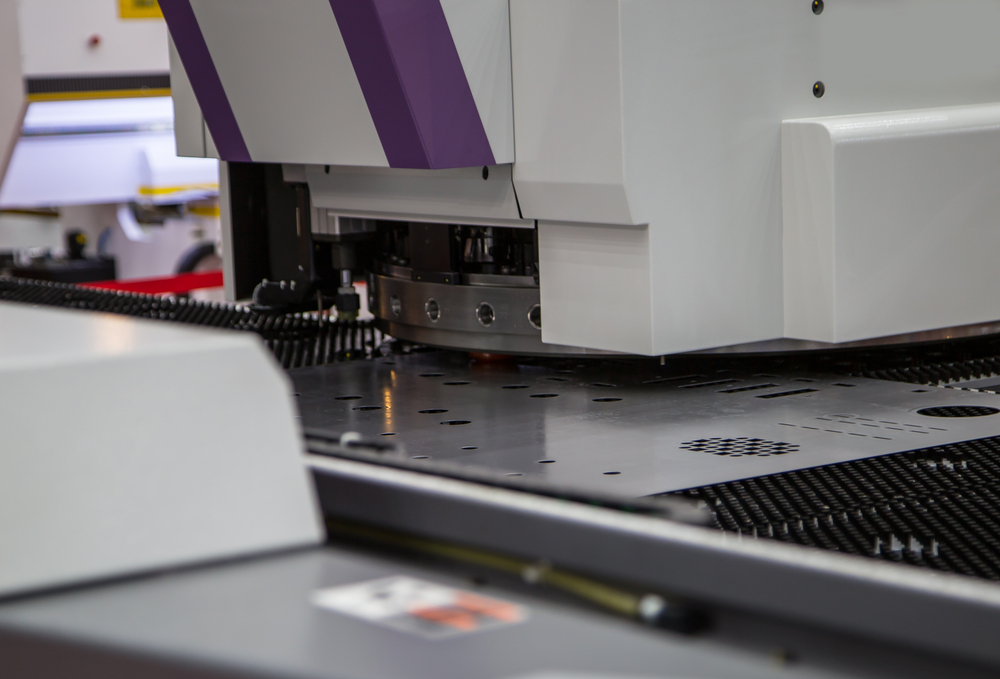
In the sheet metal fabrication process, a turret punch press punches holes and shapes of different diameters quickly and efficiently. The machinery functions by pressing a punch into the metal material and pushing the excess metal into the die. The turret punch allows multiple tool sizes to be within one machine which can have a myriad of applications and advantages for your sheet metal manufacturing process. Here, the experts at ACRA Machinery have outlined some of the benefits of using a turret punch press so you can determine if it’s the right choice for your next sheet metal project.
 

1. Versatility

This soft tooling machinery has the capability of producing an infinite number of shapes and holes needed for your unique project. With interchangeable tool sizing and the ability to use multiple strokes quickly and efficiently, a turret punch can create circular holes, square holes, different shapes, perforations and forms. The variety of tooling configurations allows the machine to process complex parts with ease, and without having to stop the process to change parts due to the multiple tooling in one device.


2. Cost-effectiveness

Soft tooling is cheap to buy or replace as needed, which makes it the perfect choice for those one-off sheet metal projects or low to medium production runs. Turret punch machines also have high functioning speeds and extreme efficiency which causes less production time, less wasted materials and more money saved. Using the controller, the operator can quickly rotate the turret to select a different punching tool as needed, without needing to manually replace the tooling.

A turret punch also allows the assembly of larger projects to be tested with soft tooling. This allows businesses to avoid purchasing and constructing individualised stamping dies that could later need costly modification or redesign. This makes the turret punch machine a great choice for prototypes and projects with a more flexible design.

Turret punches and laser cutters have similar capabilities and versatility however, turret punch machines are perfect for cutting many repetitive shapes in a row and are often more efficient than laser cutters due to the faster stroke speed and higher number of hits per minute. Although they have a similar versatility to laser cutters, turret punch machines also include secondary operations like extruding, deburring, blanking, and tapping that a laser cutter cannot complete.

Punching also allows more of the galvanised coating to remain on the sheet metal’s edges which prevents rusting, although may not produce the same smooth quality that is preferred by some industries. This allows the turret punch to reduce production costs in comparison to laser cutting.


3. Technology advancements for increased safety

There are many recent innovations in turret punch technology that have made the use of the machine safer and components less time-consuming. This includes self-stripping punch tools and multifunctional combination tools that do not require the need to individually index the turret for each tool. The development of CNC programming has also increased the machine’s efficiency to achieve the maximum yield from the workpiece, reducing costs and wasted materials.

Our Durma Turret Punch features automated loading and unloading for increased efficiency and to reduce manual handling and the associated risks. The computer-aided design features allow it to be operated with supervision, further reducing the risk of punch, crush and squash points that can be exacerbated by repeated tool changing. With automated clamp positioning and tool lubrication, the CAD technology of the turret punch has reduced the number of steps in the operation process, leaving operators to simply follow the appropriate shear and punch machine safety procedures.


Interested in acquiring a turret punch press for your business?

ACRA Machinery stocks a variety of new and used turret punch presses for your workshop’s sheet metal fabrication needs. Our Durma Turret Punch offers faster punching speeds than mechanical presses with the added feature of automatic loading and unloading reducing manual labour time for your operators. With over 150 years of experience, our expert technicians are available for all your sheet metal machinery needs to help give your turret punch the best possible operational life.

If you’re looking to increase your workshop’s capabilities or if you have any questions regarding our sheet metal machinery repair or maintenance services, get in touch with us by calling 03 9794 6674 or contact us via our online enquiry form.

Air filtration and your laser cutter

Laser cutting technology is widely used due to its incredible accuracy and ability to reduce workpiece contamination. The precision of laser cutters is changing sheet metal manufacturing. Although precise, laser cutters do require a certain level of maintenance including fume extraction or air filtration. As experts in laser cutting technology, the team at ACRA Machinery have detailed some of the different methods of air filtration for laser cutters so that you can find the right fume extractor for your workshop and avoid laser cutting mistakes.


Why is air filtration necessary?

While laser cutting technology is perfect for marking, engraving and cutting needs, they do emit smoke, dust, fumes, gas and debris from the metal cutting process. These fumes are unsafe for human health and so require an air filtration or fume extractor to avoid damaging the laser system or affecting the operator’s health. Laser fume extractors are important to ensure a safe workplace but there are a variety of factors that can impact which laser cutter fume extractor is right for your factory.


Factors to consider for your fume extraction needs

Before selecting the appropriate extraction method for your laser cutter, it is important to identify the contaminants that need to be extracted. Knowing the types of contaminants being released into the air from the removed materials or by the laser (in some cases) will determine the right filter and extraction units for your workplace.

To identify which by-products are released into the air by the sheet metal, read through the material safety data sheet or consult the manufacturer. Also consider if there are any assist gases such as nitrogen, oxygen or helium involved with the type of laser used in your sheet metal machinery. This will also need to be removed from the work environment.

Other factors could include the space available near the laser cutter and the workplace’s noise control needs. The type of airflow volume necessary also depends on whether the operator is simply marking or cutting the workpiece, so be sure to speak to trusted experts like ACRA Machinery when installing your laser cutting technology.


Non-filtered extraction

Non-filtered extractors prevent harmful fumes and respirable dust from entering the environment by capturing the emitted smells and particles from the laser cutter. However, this method does not remove the harmful particles from the captured air. These extractors can hold the fumes for safe removal at the end of the laser cutting process or the extractor can be fitted with a hose to directly vent the fumes outside of the workplace and into the atmosphere. It is the responsibility of the business to ensure that no harmful particles are exposed to the environment with this method.


Filtered extraction

If the fumes from your workpiece or laser cannot be safely vented into the environment, your laser cutter will need filtered extraction. A filtration system also draws the harmful fumes and air from the work area via ducting to prevent the air from entering the workplace atmosphere. Unlike exhaust blowers, filtered extractors don’t simply vent the particles and gas from the laser cutter into the environment. The fumes pass through filters that capture the airborne particles and release clean air, often at the opposite side to the intake.

Often filtered extractors will use charcoal filters that absorb chemicals and HEPA filters that catch metal and dust fumes, but there is a range of additional filtration options available to suit your needs. As part of maintaining your laser cutter, the pre-filter inner pads will need to be changed roughly once per week and HEPA filters will need to be replaced yearly at a minimum.

Filtered extractors can also have the benefit of being more portable than non-filtered extraction, which may have more permanently installed hosing for safe venting. Ultimately, the right fume extraction system will depend on how the laser cutter is used, the types of workpiece material and the site’s individual needs.


Looking to improve your laser cutting technology?

ACRA Machinery stocks a variety of laser cutting technology for your workshop including both new and used laser cutters. Our Durma laser cutters are all fitted with compact dust extraction filters for your operator’s safety and peace of mind. With over 150 years of experience, our expert technicians are available for all your sheet metal machinery needs to help give your laser cutter the best possible operational life.

If you’re looking to increase your workshop’s laser cutting capabilities or if you have any questions about effective air filtration, get in touch with us by calling 03 9794 6674 or contact us via our online enquiry form.

3 Tips for Reducing Sheet Metal Wastage when Laser Cutting

Reducing sheet metal wastage and offcuts is an important aspect in making your laser cutting machines more cost-efficient. While some wasted materials will be inevitable when cutting or bending metal, aiming to reduce the offcuts and scrap metal is at the forefront of every sheet metal manufacturer’s mind. At ACRA Machinery, we know how best to maximise the use of your offcuts and avoid scrap wastage when using your laser cutter. Read on for some quick ideas to reduce your business’ scrap metal waste.


Why is reducing wastage important?

Reducing metal waste when using a laser cutter has significant economic and environmental benefits. By planning your metal cutting techniques as efficiently as possible, you can control your manufacturing costs by maximising your material’s utilisation.

Reducing the unnecessary production of scrap metal saves your business money on material, reduces costs related to the transport of waste and reduces time spent cutting materials. It also minimises the amount of metal that heads to landfills and the emissions caused by unnecessary usage of your business’ sheet metal machines. After limiting your offcuts from your workpieces, consider investigating the process of recycling scrap metal for additional income.


1. Group pieces close together

Assess your current nesting of shapes when laser cutting. Is there a better method of arrangement that would get you a greater number of useful parts? If you are using manual nesting, be very intentional with your arrangement and group shapes together to fit the maximum number of useful pieces. For more complex or detailed projects, consider investing in automated nesting tools.

Automated nesting will combine shapes and quickly arrange designs into a pattern that allows less wastage of the workpiece, reducing your sheet metal costs. Preparing your arrangement and optimising your file layout from the beginning is also a very savvy and efficient approach for repeat orders.


2. Introduce shared cutting lines

A simple method of improving the use of your material is to always confirm that all shapes are sharing cutting lines when nesting. Rather than unnecessarily leaving space between shapes, arrange rectangular edges to share straight lines on the workpiece. This method prevents wasted material and shortens the machine’s cutting path, further reducing the usage time and running costs of the laser cutter.

Check that the laser cutting file has single cutting lines when the shapes are placed side-by-side and that you’ve accounted for how much the material the laser burns away. If your design features double lines or any overlap, your laser cutter will incorrectly cut twice.


3. Reduce curves and unnecessary components

Check for any curves or unnecessarily complex shapes during nesting to use the metal sheet as efficiently as possible. Curves and extreme details slow down the laser cutting process, so consider if there is a way to eliminate or replace these components. If the curved shapes are integral to the project, consider reducing the laser cutter’s traverse time by setting starting cuts at different positions for increased efficiency. This could be as simple as setting the first circle’s starting cut at the 3 o’clock position and setting the second circle’s starting cut at the 9 o’clock position for a shorter distance between cutting points. Remember, if the project contains many unavoidable curves and details, be sure to account for the increased process complexity in the client cost.


Keep trimmed material for future laser cutting projects

Not all scrap pieces are useless. Before simply dismissing your offcuts as wasted material, determine if there are pieces that can be reused to cut out more delicate parts. As laser cutting is highly detailed and accurate, there is little burring on the material, making the metal perfect for other projects. This could include smaller detailed work or test runs.  Although, keep in mind that many of these metals will have lost their tensile strength. Good quality storage will keep your offcuts fit for your next project by preventing damage or marks, so ensure that all scrap pieces are stored appropriately


Looking for a laser cutter?

ACRA Machinery stock a variety of laser cutters for your workshop including both new and used options. With over 150 years of experience, our expert technicians are available for all your sheet metal machinery needs to help give your laser cutter the best possible operational life.

If you’re looking to increase your workshop’s laser cutting capabilities, get in touch with us by calling 03 9794 6674 or contact us via our online enquiry form.

4 Potential Press Brake Injuries (And How to Prevent Them)

The press brake is one of the most versatile machines on the fabricating floor but, as with all heavy machinery, press brakes can be dangerous if used unsafely. Whether mechanic or hydraulic, press brakes form, punch or shear metals and other materials using high pressure which can injure workers during the operating or cleaning process, from heavy bruising to loss of limbs. At ACRA Machinery, we strive to improve worker safety in the sheet metal fabrication industry, so we’ve compiled some safety tips that can be implemented at your factory to avoid injuries unique to press brake operation.


1. Hearing loss or impairment

Press brakes are noisy during operation and may exceed safe noise intensity which can cause harm to those working near or operating the machinery. This long-term injury can be prevented by providing all workers on the factory floor with hearing protection such as earplugs or earmuffs. Regular assessments of noise levels should also occur to ensure the level of sound is safe. If following PPE guidelines in the metal workshop still does not reduce the sound to an appropriate decibel, consider installing a noise barrier or isolating your louder machines to protect your workers.


2. Cuts from sharp sheet metal

Handling sheet metal and scraps can also cause injuries unique to the workforce of sheet metal manufacturers. Sharp materials can cause cuts and lacerations to workers when performing actions like removing the workpiece from the press brake, but this risk can be reduced with safe handling procedures and protective gloves. All workers should be equipped with appropriate protective gear like hard hats, clothing that covers arms and legs, as debris and small shards of metal can enter the air during the fabrication process, causing cuts or blindness. Workpieces heat up a lot during the metalworking process, so to prevent skin injuries like cuts and burns bare skin must be covered at all times.


3. Muscle strains and back injuries

In the sheet metal sector, moving heavy pieces of sheet metal and machinery is a necessary part of the job and one of the many things to consider when designing your workshop. Strained necks and backs, and physical stress are serious risks in the industrial sector if workers lift, push or pull bulky material or machinery incorrectly or too frequently. There are also unique physical requirements in this sector such as exerting force to use tin snips on sheet metal.

To prevent muscle strains in your workplace, begin by reading WorkSafe Victoria’s Hazardous Manual Handling Compliance Code and ensure that workers have been trained in the proper lifting techniques for difficult-to-handle objects from the ground, low levels and above shoulder height. Workers should also disclose any physical limitations and know when they are required to find a second person or appropriate machinery.

Workplaces also have legal duties under the Occupational Health and Safety Act 2004 to provide and maintain a working environment that is safe and without health risks. Practices to avoid muscle strains include:

  • Ensuring that there are appropriate storage facilities at the correct height.
  • Wearing non-slip footwear with steel caps to prevent toe damage.
  • Implementing non-slip mats across even work surfaces.
  • Ensuring an appropriate workspace layout.
  • Providing and encouraging mechanical aids such as trolleys.
  • Ensuring there are enough employees and time for the task with job rotation where necessary.


4. Crushes and amputations

Crushing and amputations are arguably the scariest and the most severe press brake injuries. No workplace wants these injuries to occur to their workers and in Victoria, there is a range of safety systems and standards in place that machinery must comply with to prevent this injury. Permanently fixed guards are there to prevent workers from accessing any pinch or squash points. An unguarded press brake risks workers’ hands from becoming too close to moving parts or entering the hazardous trapping space.

There is a range of press brake guards available including two-hand controls which force the operator to maintain a safe distance during the sequence mode or a light curtain mounted close to the dies which stop the machine upon disruption. Physical perimeter guards that are permanently fixed or require tooling to be removed, particularly to prevent reaching the dies from the back, also help stop workers from becoming too close to the moving parts of the machinery and injuring themselves.

Outside of physical guards and engineering controls, there are also safety procedures in place to prevent a worker from accessing moving parts while the machine is operational.

  • Slip mats should be in place to prevent accidents.
  • The working area should be left clean and tidy to prevent tripping hazards.
  • The operator should not be on their phone or otherwise distracted from the press brake.
  • An operator should always be monitored by a highly trained supervisor.
  • The press brake must never be left unattended while operational.
  • Maintenance should be performed by a qualified professional.

When cleaning or repairing the press brake, lock out all power supplies, add chocks to prevent the ram from falling and isolate the controls to prevent accidents and entanglements with the machine. Remember to adequately train operators in all safety and harm minimisation procedures and ensure your press brake is regularly inspected and maintained to comply with all safety requirements.


Are you looking for a new or used press brake in Melbourne?

ACRA Machinery is a one-stop-shop for all your sheet metal machinery requirements including new and used press brakes from trusted brands. Browse our online catalogue or chat with one of our specialists to find the right bending machine for your sheet metal fabrication needs. We also offer on-site repair and maintenance services so you can keep your machines in prime condition.

To get in touch with our expert team, give us a call today on 03 9794 6675 or fill out our online contact form.


4 Easy Ways for Sheet Metal Manufacturers to Improve their Sustainability

As experts in sheet metal machinery repair, we value improving the longevity and efficiency of the machines we maintain and recognise that implementing greener processes within modern manufacturing plants is necessary. There are many key environmental sustainability issues in the sheet metal fabrication industryincluding creating more sustainable systems and ensuring factories rely less on toxic chemicals, produce less waste and use less power. However, there are some small measures you can take now to immediately improve your workplace’s environmental impact and save you money. Here, we’ve detailed four easy ways to make your factory more sustainable to benefit you and the environment.


1. Training and precision

Extensive training and precise cutting can reduce the negative environmental impact of wastage. For instance, sheet metal manufacturers rely on a range of toxic chemicals like solvents, cutting agents, surface treatments and hydraulic fluid which can pose a risk to the environment if not appropriately disposed of. It is important to train sheet metal workers on the appropriate amount and usage of chemicals, such as machine lubricant, to reduce waste production and ensure safety precautions are followed.

By being precise and simply selecting the best sheet metal material for your project, you can ensure that you don’t make costly mistakes, waste resources, or add to the carbon footprint of creating a whole new sheet.Many products within the sheet metal fabrication industry are sourced from non-renewable resources, so it’s important to use each item with care.


2. Invest in repairs and maintenance services

Sheet metal machinery repair can be an urgent necessity within the sheet metal industry, as machine breakdown can result in limited productivity and lost income. Rather than attempting to find poor workarounds by using the incorrect tools, repair your machines as needed to prevent mistakes and reduce metal wastage.

Routine safety checks and preventative maintenance is encouraged for all sheet metal machinery to improve the longevity of the machine and prevent costly repairs. By ensuring your machines are properly cared for with appropriate cleaning practices and regularly scheduled maintenance, you prevent wasting resources on needlessly replacing costly machinery.


3. Consider used machinery instead of buying new

For companies looking to expand their production process, buying used machinery is the most affordable option. This economic solution can allow the buyer to witness the machine’s operation in a live inspection, and it reduces the cost of depreciation that can occur when buying new machinery. This convenient practice is also more beneficial to the environment as it reduces the pollution and resources needed to manufacture and transport brand new equipment. By extending the life of used guillotines or press brakes through more sustainable purchases, the machinery gets to be used to its full capacity, preventing it from ending up in a landfill.


4. Choose greener technology

If you must buy new equipment for your factory, consider researching the options available to ensure that you have the most environmentally friendly solution. This could include small equipment changes like operating your plasma cutter with hydrogen gas to reduce the emission of carbon dioxide into the atmosphere. Implementing different techniques could also be effective such as introducing friction welding which produces less energy and toxic by-products than traditional welding practices.

At ACRA Machinery, we value continuous improvements to sheet metal machinery, which is why we note the usefulness of the environmentally-friendly features of press brakes and stock the greener Durma AD-Servo press brakes. This technology was designed to be more durable and precise, reducing wastage and improving the lifespan of the high-quality equipment. Yet another way that simply researching options and choosing more sustainable equipment can be more convenient and economical for your business.


In need of maintenance services or used machinery?

At ACRA Machinery, we are available for all your sheet metal machinery repairs and needs. We stock a wide variety of used and new sheet metal machinery including various models of mechanical, hydraulic, electric and hybrid press brakes. Our friendly team can help with all the materials you need to start your workshop and offers on-site maintenance and repair services.

For assistance in repairing your sheet metal machinery or professional advice, get in touch by calling us on 03 9794 6675 or filling out our online contact form.

8 Welding Safety Hazards (And How to Fix Them)

A weld is a necessary component of many sheet metal machinery projects, but it does come with risks due to the use of flammable gas or the high heat input of plasma. Thankfully, ACRA Machinery is here to outline the safety hazards improper welding setups and processes can pose and discuss techniques to improve worker safety in the sheet metal fabrication industry.


1. Inexperienced welders

Similarly to the operation of several sheet metal machinery, welding is a hazardous manual task. The welder should be experienced and knowledgeable in the welding technique being performed and trained in harm minimisation procedures. Improper training is a common issue within the sheet metal fabrication industry, so you should ensure that all welders strictly follow operational procedures. Supervisors should ensure that junior welders or welders who are not as familiar with a type of welding technique are never working alone.


2. Ensure the sheet metal is ready for welding

Before you weld your materials, it is important to visually inspect the surface for any potential problems. A thorough inspection of the metal beforehand and investigation of the properties of the materials and surface coating of the metal could prevent serious mistakes. Observable risks to successful and safe welds could include deep grooves, thin surfaces or if the metal is still wet.

Remember to clean metal before welding to avoid contaminants that can create resistance to the weld or cause a reaction while welding. There are many options to remove unwanted rust, paint, dust or mill scale from your sheet metal, including rubbing coarse sandpaper across the surface, sandblasting the sheet metal or using a wire brush.


3. Noise reduction

According to regulations from Safe Work Australia, welding, particularly plasma arc welding, can generate varying levels and frequencies of noise that exceed the safe exposure standard. It has been shown that surpassing the exposure standard can cause gradual hearing loss or be loud enough to cause immediate hearing loss. To effectively control the amount of noise that workers are exposed to while welding and reduce the risk of harm, it is recommended that the noise source is isolated from people by using distance and welding bays that feature sound-absorbing surfaces.

To lessen the risk, limitations should be applied to reduce how long workers can be exposed to noise over their shift. Additionally, personal hearing protection should also be provided to protect workers. For further advice on noise control, visit the Work Safe Victoria website or read their step by step approach.


4. Gases

Compressed gases are used as fuel or shielding gases for many types of welding. Precautions need to be taken to prevent gas leakage, asphyxiation or fire risks. Store and handle gas cylinders appropriately, check cylinders, including their fittings, hoses and connections, for any dents or leaks, and ensure that flashback arrestors are fitted at both ends of the oxygen and fuel gas lines.


5. Ventilation

Ventilation also prevents the risk of asphyxiation from leaking gases and welding fumes and prevents the risk of the welder overheating. Determine the risk of exposure to fumes by identifying the materials in use and the level of fumes, dust, vapour and gases generated. Common airborne contaminants from welding include nitrogen oxides formed in the weld arc, phosphine from the reaction of a rust inhibitor with welding radiation, and the lead coating on steels.

Airborne contaminants can cause many health problems such as irritation to your respiratory system, wheezing, lung damage or cancer. Consider engineering control measures by installing ventilation systems and providing respiratory protection. In the case of a dangerous, confined space, air-supplied respirators may be required.


6. Fires and explosions

Welding and grinding generate heat and sparks which pose a risk of fire and explosions. This hazard can be minimised by keeping your work area clear from any potential fuel sources and isolating flammable gases and liquids from the welding area. Firefighting equipment should also be near and easily accessible from the welding area, an evacuation plan should also be established and well-known in case of a fire.


7. Burns

Burns are one of the most common injuries of welding, with a welding arc capable of reaching 6000 °C. This can cause burns to exposed skin (similar to sunburn) or heat stress/heat stroke due to the symptoms of fatigue, lethargy and confusion going undetected by the worker. The risk of burns can be reduced by labelling hot equipment and wearing personal protective equipment and the risk of overexposure to heat can be reduced with ventilated work areas, regularly drinking water and scheduled rest breaks.


8. Electric shocks

Electric shock can occur through direct contact with the electrode or live parts, particularly when performing electric arc welding. When welding, prevent direct contact with electrodes or welding wire and ensure that the working area does not have any live components or wet surfaces. Electric shock can also be avoided by thoroughly inspecting the device before use, not leaning against the material when welding, avoiding working alone and not changing electrodes by hand while touching the workpiece.


Looking for welders and sheet metal machinery?

For safe operation, welding requires careful examination of the tool, material and environment. The experienced staff at ACRA Machinery can cater to all your sheet metal machinery needs and help you with any welding or sheet metal fabrication questions. Our passionate team also provides sheet metal machinery repairs or maintenance services to give your machines the best possible operational life.

If you would like to know more about welding or our repair services, please give us a call on 03 9794 6675 or fill out our online contact form today.

5 Tooth Types of Bandsaw Blades

Bandsaws are a versatile machine for all metal cutting needs, as one of the easiest and fastest ways to cut all kinds of metal. When it comes to straight cuts or irregular cuts, the bandsaw blade choice can really impact the final outcome. Each type of blade features different blade widths and a number of teeth for a wide or narrow cut with a smooth or rough finish.

At ACRA Machinery, we stock a range of new parts for bandsaw maintenance, including bandsaw blades. As experts in vertical and horizontal bandsaws, we’ve outlined the different tooth patterns of bandsaw blades with an explanation of their function and benefits.


The different characteristics of the blades

There are many characteristics to know when choosing the right bandsaw blade. Blades need to be hard-wearing to withstand the stress of initial impact with the material. This longevity is mainly dependent on the blade’s hardness and tooth geometry. Thicker blades are stronger and so generally produce straight cuts but can break due to the wear of bending and twisting actions.

Another important distinction is that the more teeth per inch, the finer the cut will be, whilst fewer teeth per inch creates a rougher cut, and this type is generally used for thicker sections. Each tooth type features different angles of tilt, referred to as the tooth rake, although typically at least 3 – 6 teeth should be involved in the cut at all times.

Remember to first identify what size blade your bandsaw requires within the manufacturer’s manual and that once you’ve selected the appropriate blade for your project’s requirements, you will need to break in your bandsaw blade properly. Choosing the correct blade depends on the specific needs of your project and your type of bandsaw, an incorrect tooth pattern can dramatically reduce the life of the blade. Regardless, all tooth pattern types require ongoing care to properly maintain your bandsaw blades.


1. Regular tooth blades

A common tooth pattern, regular tooth bandsaw blades feature straight teeth with deep gullets, often with a straight rake. This tooth pattern is suited for both contour and cut-off cutting. It is a general-purpose metal cutting blade for thin materials including metals and wood.


2. Hook tooth blades

This type of blade has sharp teeth that look similar to the shape of a hook. These larger teeth are widely spaced and feature an undercut face with a 10° rake angle. This teeth type will produce more coarse cuts. It can also be used for longer cuts due to the deep gullet and rake angle allowing more of the cut material to be moved aside. A hook-tooth blade is best suited for hard, nonferrous alloys and hardwoods.


3. Skip tooth blades

Similar to hook teeth blades, these types of blades have widely spaced teeth and reduce clogging when using materials like softwoods, plastics or nonferrous metals. This type of blade has a shallow gullet and a 90° tooth angle that allows the chips to come out cleanly, but the widely spaced teeth pattern makes it difficult to produce a smooth finish.


4. Variable pitch blades

This tooth pattern involves a variety of teeth in different sizes and settings. The varying angles and gullet depths reduce the vibrations, making this blade perfect for smooth but fast finish cuts and ideal for cutting curves and contouring.


5. Wavy tooth blade

This blade is different from the other types as the teeth are not aligned perfectly straight. The wavy tooth pattern involves blending groups of teeth that are angled right and left. This type of blade is suitable for cutting thin sheets, tubes and metal sections.


In need of new bandsaw blades?

With a selection of blades for all your bandsaw requirements, ACRA Machinery is ready to help with your next metal fabrication project. Our expert team offers a range of quality new and used machinery including bandsaw blades, laser cutters and press brake machines.

To learn more about our product range or the maintenance services we can provide to Melbourne sheet metal fabricators, please contact us by filling out our online enquiry form or by calling 03 9794 6675 today.

Top Notch! An Introduction to Notching

At ACRA Machinery, we recognise that notching remains an essential process for many metalworking projects. Notching is performed on the edges of the sheet metal to remove unwanted pieces from the perimeter, creating a uniquely shaped workpiece that is ready for further sheet metal processes. Notching can be used to create many complex shapes depending on the punch and die tool and can be performed on aluminium, stainless steel, high-carbon steel, titanium and alloys.


How notching differs from punching

Punching uses force to push the die through the metal and leave behind a shape outline in the workpiece that is the same size. Steel notching is very similar as it also uses force and dies to pierce and shear the sheet metal, but instead of producing a hole, notching removes shapes and excess material from the edge of the workpiece.

This can make the next step of fabrication easier by removing material that would be awkward for a bend, fold or curve, eliminating the risk of bulges or awkward, overlapping material at the join seams and edges. This process of cutting an edge or multiple edges turns the workpiece into a more feasible shape for assembly and is useful for shearing corners to create edges that join neatly into trays, boxes and brackets.


Notching options

Notching is typically performed with a turret punch press, laser cutter or corner notcher. Many different notches are available to allow you to smoothly fold or conjoin your pieces of metal and all notching angles should be carefully considered to ensure a perfect join for your project. Some notching methods include:

  • Straight notch or slit: Straight cuts made from the edge to where it is to be bent, to create a fold flap in the metal workpiece.
  • Square notch: Removes a square from the corner of the workpiece allowing for better joins with no metal overlap when the sheet is bent into a rectangular box.
  • Slant notch: Cuts the sheet metal corners at an angle of 45 degrees to make the sheet metals sides meet at right angles when bent.
  • V notch: This cuts a V shape into the edge of the sheet metal and is the perfect process for a job with a 90° bend and inside flange.
  • Wire notch: The wire notch is used on work that has wired edges to prevent the edge from overlapping at the seam.
  • Tube notch: Notching can also be helpful for hollow metal workpieces including removing material from one or both ends of a tube or removing material from the side of the tube for an easier bend without material overlap.


The function of the corner notcher

A corner notcher is a specialist machine that can easily create a new corner on the workpiece using a V-shaped blade. It can be used for a corner bend with two sides that can be folded together to form a tray shape or box without seam overlap. It functions similarly to a sheet metal guillotine, with a steel blade on the top and bottom that meet to shear unwanted material from the corners of the sheet metal. If you’ve noticed that the edges and joints of your sheet metal have unsightly bulges, a corner notcher may be a useful addition to your factory floor.

If you’re interested in creating the right angles for your next project, the Durma Corner Notcher cuts angles from 30°through to 140° with a cutting capacity of 4-6mm, leaving you with a perfectly shaped workpiece. With premium components, a small footprint for your factory floor and a convenient foot switch, it is a quality choice for every sheet metal manufacturer. The Durma Corner Notcher is a durable machine creating the specific workpiece shape required for your project to improve the accuracy of folding and other fabrication processes.


In need of sheet metal machinery?

ACRA Machinery stocks a diverse range of quality new and used machinery including the premium Durma Corner Notcher.

To learn more about our products or the maintenance services we can provide to Melbourne sheet metal manufacturers, please contact us by filling out our enquiry form or by calling 03 9794 6675.


Why you Should Maintain and Repair your Sheet Metal Machinery (4 Key Areas to Consider)

Keeping your sheet metal machinery in appropriate working order is a task that can be easily neglected — but one that is imperative. Our sheet metal machinery repair and maintenance services are designed to extend the life of your machinery — but failing to do so when appropriate can result in severe circumstances for your machinery, projects and staff in extreme cases. Our specialists have compiled a few critical reasons why you should repair your machine.


Maintaining accuracy

The more a machine is used the more it will wear. The wear and tear will vary between machines but it’s highly likely that this general wear and tear will affect your machine’s accuracy in one way or another. For a laser cutter, the focusing lens may move slightly periodically or even fail to stay in position as it should — causing the alignment to be inaccurate and therefore the result to differ from the calculations. Similarly, a press brake’s tooling may be misaligned or blunt and therefore produce subpar bends.

Accuracy is something that all sheet metal fabrication projects rely on regardless of the machine; a worn-out or ill-functioning machine can put your entire project at risk by producing poor results. This will cost you time and money and will only get worse the longer you leave it, so schedule your repair or maintenance session with us today.


Extending operational life

All machines (and most items, for that matter) will last longer if you maintain them. If one element requires repair, but you ignore it, then the issue will grow more severe and affect other parts of the machine. The longer you wait, the worse it will be. This may reach the point where it would actually be easier to purchase a new machine, which can often be more expensive.

This is why staying on top of your machine’s health is important. Minimising costs play a big part and, if you play your cards right and maintain the machine properly, you may never need to actually replace it. Preventative maintenance is the key to extending your machine’s operational life; regular maintenance checks can ensure that everything is in top working condition and will mitigate issues from occurring.


Avoiding accidents

Workshop accidents are more likely to occur if the machines are not functioning as they should. This may be for a number of reasons such as worn-out parts, damaged parts or even grime/dirt build-ups in key areas. The latter is an example of why it is important to clean the machines at least once a week at the minimum.

Sometimes grime build-ups can actually affect the performance of the machine and, in some cases, cause malfunctions — which may lead to accidents. Every machine is different, so for the most effective result, you should consult the machine’s manual or contact ACRA (or the manufacturer) directly for further clarification. Establishing a weekly cleaning schedule is essential and can help keep your machines in prime working condition.

As for work-out or damaged components, failing to repair your sheet metal machinery in these instances means you may risk a major malfunction. This can result in sheet metal inventory being destroyed or irreparably damaged as well as, in some extreme cases, team members being injured.


Saving time and money

The price of repairing a metal fabrication machine is not the only associated cost; if you wait until it’s too late to repair the machine, then you may risk delaying your projects or in worse cases, shutting down your entire factory (depending on the machine in question). This means that large amounts of operational costs will essentially go to waste — not to mention that if you’re on a tight deadline you may have to cover additional unnecessary overheads.

If you know you have a large project approaching, then perhaps you should contact our specialists prior to ensure that all your machines are in correct working order; that way, you won’t have to worry about any breakdowns or interruptions occurring midway through the project. Planning ahead is a crucial preventative measure and one that will go a long way.


Are you looking to repair your sheet metal machinery?

ACRA Machinery specialise in complete sheet metal machinery repair and maintenance services; we also stock new and used machinery from trusted international brands such as Jorns and Durma.

If you would like to book your machine in for a service or repair, then please give us a call on 03 9794 6675 or fill out our online enquiry form so one of our team members can get back to you as soon as possible.