
A Complete Cleaning Schedule for your Durma Laser Cutter

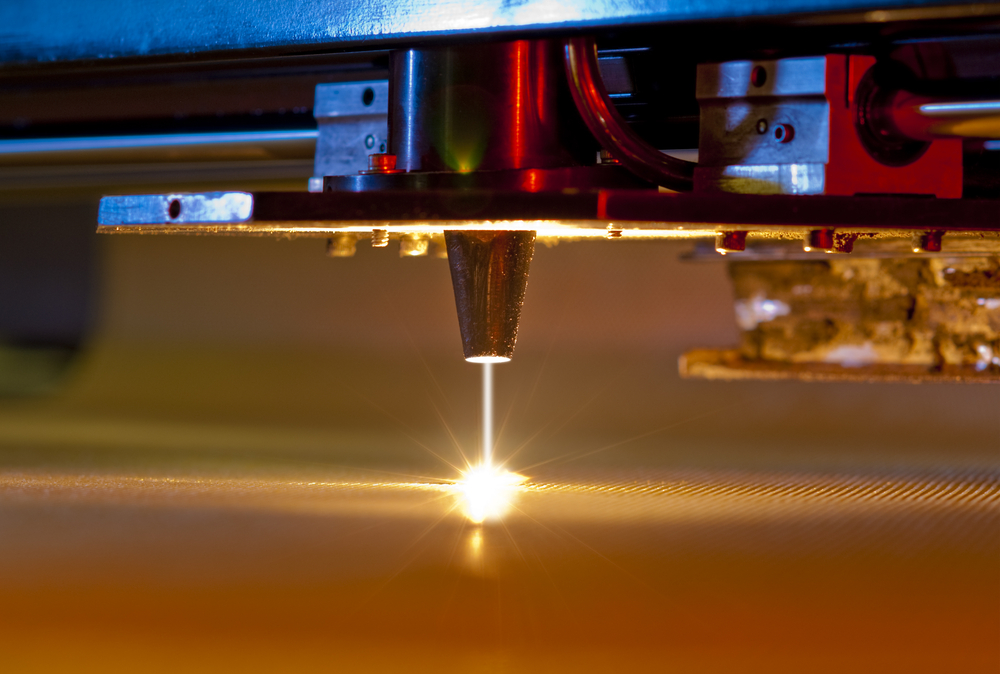
Renowned for their precision and capable of cutting intricate shapes with clean edges, laser cutters are multifunctional machines for cutting, engraving and welding metal. Although an extremely durable asset, the ensuing metal dust after cutting a workpiece requires careful cleaning. Regularly cleaning your laser cutter not only lengthens the machine’s life but reduces the risk of workplace hazards.

The thermal cutting process involves extremely high temperatures which can result in unwanted fires if dirt and debris are not cleaned away. To help you establish a cleaning schedule for your operators, ACRA Machinery has compiled a list of components that require cleaning in your laser cutter following Durma’s recommended schedule.
 

Safety tips when cleaning your laser cutter

It may seem obvious, but it cannot be overstated, ensure that the main power switch is turned off while performing laser cutter maintenance or cleaning. Your operator should also allow some time to pass so the device can cool down. When cleaning the internal mechanical components like the gear’s bearings, remember to wear PPE equipment such as gloves and long sleeves to avoid direct contact with metal dust.

It is also recommended to not clean the electrical devices with water or combustion liquid. The operator cleaning the laser cutter should have a strong knowledge of the machine and should not change hydraulic equipment or electrical devices without consulting professional technicians like the team at ACRA Machinery.


Daily cleaning

Daily cleaning is important to prevent dust from building up in parts of the machine, such as the optics. Before using the laser cutter, check that the lens is clean and if necessary, blow off debris with an air duster or wipe gently with lens cleaning paper to maintain the machine’s accuracy. This is only necessary if the lens is cloudy or dusty, as frequent cleaning of the optics can cause damage if done in excess.

When cutting aluminium, copper, brass and similar alloy materials, the pan of the chips and conveyors must be cleaned after use. Vacuum the dust box and ensure all areas are clear of debris before introducing a different material. When cleaning the dust box, wear a mask to prevent inhalation of the metal grit and wear gloves to prevent touching the metal debris directly.

After the cleaning process is complete, use a suction brush to prevent the dust from flying off your clothing around the workstation, or shake the dust off outdoors. It is also important to clean the scrap drawers and worktable after use to prevent the mixing of metals.


Weekly cleaning

The surrounding environment and conveyors should be cleaned weekly to prevent safety hazards. Not only will this prevent flammable debris from making its way into the machine, but it will prevent any nearby scrap from causing tripping hazards or issues for the operator of the laser cutter. It is also recommended that the spark separator of the dust collector and ducting is cleaned weekly and if necessary, the air filters and water filters should be cleaned during their weekly maintenance check.


Monthly cleaning

The central lubrication system should be maintained and cleaned monthly. This includes visually inspecting all gears and cleaning dust and particles. Components of the laser cutter that require cleaning every month also include the linear guides of the X-, Y-, and Z-axis, and the cutting head and its surroundings.


Long term cleaning

While there are many aspects of the laser cutter that require frequent cleaning for precision accuracy and safety, the mechanisms that require less attention should not be forgotten. This includes taking out the scrap conveyors for cleaning once every two to three months. For exterior cleaning, spray a cleaning product onto a cloth and gently use the cloth to clean the outside of the machine.

Adhering to a strict cleaning schedule is important for the longevity of the laser cutter and the safety of your operators. Thankfully, our Durma laser cutters are very resilient and easy to clean. Low maintenance is at the forefront of their design as many of the working parts and surfaces are covered by special protective material to prevent rusting. If any aspect of your machine is unable to be cleaned or not performing efficiently, it may require a maintenance check or replacement parts from ACRA Machinery.


Looking to invest in a quality plasma cutter?

Durable laser cutters are an excellent investment for all your metal fabrication needs. Laser cutters are quick and accurate, causing less mechanical stress than traditional machinery for less material wastage, whilst also offering smaller energy usage over plasma cutters. The knowledgeable team at ACRA Machinery is available for all your laser cutting needs and our technicians are available for on-site repairs.

Contact us today by filling out our enquiry form or call us on 03 9794 6675 to find out more about our range of new and used laser cutters.
Press Brake Tooling: Misalignment and Maintenance

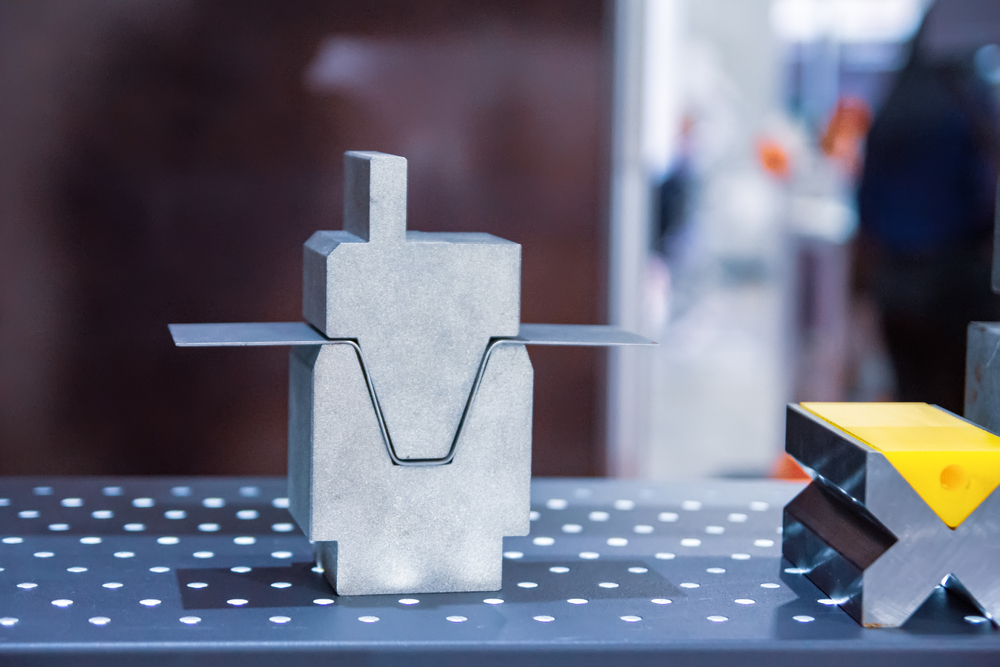
A press brake is one of the most versatile and reliable tools in sheet metal manufacturing, but when it comes to tight-tolerance precision work and maintaining consistency, it’s all in the tooling. Press brake tooling varies to incorporate L-shape, R-shape, U-shape and Z-shape bending. When running into issues with your press brake, one of the first steps is to check if there are issues with the die or punch tooling.  Remember, the die is the only aspect of the press brake that touches the sheet metal during the bending process.

Many modern press brakes are self-aligning with fast clamps or hydraulic systems in place to allow your top and bottom die to be clamped neatly into place, every time. However, older press brakes with multi-V blocks that need manual alignment by turning front and rear handles are still reliable machines used to bend sheet metal today. For jobs that require precision, manually setting up the correct bend angles can be time-consuming, so it is best to recognise early when the tooling is incorrect or misaligned. If you suspect your tooling is not aligning accurately or not performing well, here are some simple checks that may solve the issue.


Check cleanliness of tooling

Before using the press brake, ensure the tooling appears spotless. If there is dust or debris from previous metal materials on the tooling or under the die, you risk denting the tooling or the metal sheet. Before manually aligning the V of the die in the press brake, clean all sides of the tooling and the bed with WD 40. This will prevent the metallic flakes and debris from being compressed into the tooling or the seating, causing gradual changes to the press brake tooling height that will impact your sheet metal bends and reduce accuracy.


Tooling wear and tear

If during the cleaning it is revealed that there is wear and tear on your press tooling, it is time for it to be replaced. Dies will deteriorate over time, and even slightly worn tooling will produce inaccurate and inconsistent bends for an overall poor result. Upgrading older tooling with faults will be much cheaper in the long run than the wastage of metal and time.

You can inspect for wear by measuring from the nose to shoulder on the punches and from shoulder to shoulder on the dies. To properly maintain your press brake tooling after usage, remember to store the die in a cabinet with accurately displayed markings, clean them regularly and apply anti-rust oil to avoid reducing their precision over time.


Confirm appropriate tooling in use

If the press brake isn’t performing as well as you had hoped, it may be due to the usage of incorrect or incompatible tooling. There are many tooling types and choosing the right upper die and lower die is dependent on many factors including sheet metal hardness, thickness and length. Tooling selection is also impacted by the bending method used. Generally, the slot width of the lower die needs to account for the width of the upper die and the length should be longer than the workpiece.

A wider lower die slot is also necessary when using sheet metal that has a higher density or strength. Always confirm that the tooling in place is appropriate for your material and desired shape by noting the punch angle, die angle and die opening. If you don’t check your tooling before attempting to bend sheet metal you risk damaging your tooling or exceeding the safety limits of the press brake.


Tooling seating check

If your die seems correct and in shape, take a moment to check the seating of the upper and lower tooling. When using hydraulic clamping, the tooling will always be accurately seated. With older models, an operator will need to ensure the tools are correctly seated by bringing down the ram and applying light tonnage before tightening them. After placing the tooling into the top and bottom gauges, move your machine into slow speed to check alignment.

If your press brake has front and rear handles, the operator will have to adjust them carefully while looking down the centre. It is also important to confirm that the workpiece is steady against the back gauge to prevent minor sheet metal movement. If you’ve checked the top and bottom tooling and confirmed the alignment is correct but your press brake is still not cooperating, it may be time for a maintenance check-up of the press brake machinery.


In need of new tooling?

At ACRA Machinery, we stock press brake tooling and dies alongside a wide variety of models of mechanical, hydraulic, electric and hybrid press brakes.

For assistance in selecting the right press brake model for your metal fabrication needs, or to expand your tool library, get in touch by calling us on 03 9794 6675 or filling out our online contact form.


3 Ways CNC Machining Has Revolutionised Jewellery Making

The art of jewellery making has been around for thousands of years and, through the generations, the methods of creation have been improved at various points. The most recent improvement comes in the form of CNC sheet metal machinery — a truly innovative and advanced metal fabrication method that combines geometrically accurate CAD conceptions and engineering with precise, software-driven fabrication processes. So how has CNC machining revolutionised jewellery making exactly?


1.     Moulding jewellery models and casts

Jewellery casts are created using three primary materials — wax, plaster and metal. This is an old method known as lost wax casting. A model of the desired object is first created from wax and placed inside of a plaster block. The plaster block is then placed inside a kiln so the wax model can evaporate. This allows the jeweller to fill the plaster mould with liquid metal. Once the metal has cooled and hardened, the plaster can be dissolved in water — leaving a metal model.

This is a fairly lengthy process — but a tried and true one, nonetheless. This process can become even longer and more tedious when you consider that some jewellers calve the wax model by hand. Thanks to CNC sheet metal machinery, however, this process can be drastically shortened and optimised for a more efficient outcome. CNC machines can create both models from wax as well as moulds from plastics and metals — bypassing the kilning phase altogether.

The benefit here is that with the appropriately created CAD file, the process of creating the moulds is made more efficient in both speed and cost. One disadvantage to look out for, however, is whilst a CNC machine is either milling, drilling or turning it could accidentally deform or distort some parts because wax is such a soft material. If you are going to use your CNC machine for such a process — then we recommend you look into specialised cooling systems that are specifically designed to circumvent such occurrences.


2.     Engraving jewellery

Jewellery can be engraved/decorated in two ways — by hand (which, when it comes to engraving, can occur at any point after it’s been created) or during the carving of the wax model. Now — there’s a third way. CNC machines have made it easier to engrave whilst creating the wax model or straight onto the metal mould itself. The best part is that the accuracy is uncanny as ultimately there’s no human error/variation involved (which is great for mass-produced engraving and decorations). There are five ways in which CNC machines can engrave jewellery:

  1. Milling — uses a metal tool that rotates at various speeds, carving away pieces of the material.
  2. Laser engraving — only melts the surface of the material.
  3. Deep engraving — utilises a laser to engrave deeper into the material, creating a tangible cavity.
  4. Colour engraving — uses acrylic powder or paints to laser contrasting colour onto the material.
  5. Sub-surface engraving — an interesting method used with glass to create an image below the surface without actually creating cavities on the surface.


3.     Expanding the metal repertoire

CNC sheet metal machinery has made it possible for jewellery to be crafted from more materials than what was once possible thanks to the versatility of the machines which can shape, cut, bend and fabricate not just different types of metals, but other materials as well. This rings especially true for metals such as steel that are quite hard and more difficult to alter by hand.

This advantage has opened up a realm of possibilities to all sorts of jewellers and artists — especially in the watchmaking realm where unconventional materials such as ceramic tantalum and even sapphire crystal are being used to create cases in varying degrees. These incredible developments have allowed watchmakers to produce some outstanding and ground-breaking pieces that have not previously been possible due to technological limitations.


Are you looking for CNC sheet metal machinery in Melbourne?

If you’re looking to take your jewellery making to the next level or are simply in the market for a reliable and high-quality CNC metal fabrication machine, then ACRA Machinery have you covered. We are the Melbournian experts when it comes to sheet metal machinery, stocking various machines both new and used from internationally renowned brands such as Durma and Jorns.

Already have a machine that needs repairing or maintenance? We can handle that too with our premium repair and maintenance service available on-site, so you don’t have to worry about transportation. We also offer regular maintenance scheduling to ensure your machine runs optimally for many years to come.

Give us a call on 03 9794 6675 if you would like to know more about our products and services or fill out our online contact form so we can get back to you as soon as possible.

4 Common Mistakes Made When Operating a Press Brake

The press brake is one of the most useful and common sheet metal machines used on a fabricating floor. Its versatility for bending a variety of materials in different thicknesses and compatibility with a wide range of different tools makes it a staple piece that can solely achieve dozens of different bends and shapes.

But if you don’t know what you’re doing, then, like any other sheet metal machine, a press brake can be a dangerous machine. Today’s article will highlight four common mistakes that are made by new press brake operators.


1.     Performing pre-work checks

Something that every operator should get in the habit of doing is performing pre-work checks to ensure that all elements of the machine are in appropriate, functioning order. There should be a checklist that you can follow before operating the press brake each time from your supervisor.

Elements such as ensuring the die is correctly aligned and confirming that the flanges are the same measurement are crucial to an effective operation and mitigating any bending mistakes. If you are unsure about what needs to be checked – talk to your supervisor about putting an effective process in place.


2.     Bending the flange the wrong way

Possibly the most common mistake made by operators – even seasoned ones – is bending the flange in the wrong direction. There are many reasons why this may occur, but one of the main ones relates to misreading the instructions.

For example, you may think the bend is meant to go one way because of how it’s instructed on paper – but it is actually inverted. This results in the bend going in the opposite direction. Every detail must be taken into account so a true and accurate bend can be achieved.

A handy trick is to place the metal pieces you’ll be bending down in the orientation they’re intended to be bent in. This way when you carry them across to the press brake – you won’t need to change their orientation and they’ll be ready to be placed in the correct alignment.


3.     Incorrectly reading the instructions

The easiest way to ensure a successful bend is to meticulously read the instructions and guarantee that every minute detail is considered and understood. Sometimes the daftest mistakes can be made because a particular measurement was misunderstood or overlooked.

Knowing the language and process standards will help you decipher the instructions confidently and with ease as some things may be written a certain way. At least a basic understanding of mathematics will also help immensely when going over bending instructions.

Some common mistakes associated with misreading the instructions include bending in the wrong direction, misinterpreting or misreading the tolerances and overlooking special instructions. There may be particular pieces that require specialised instructions like being bent partially and then realigning some tools or calculations before continuing the bend.

This advice doesn’t only apply to press brake operators. All sheet metal machinery operators should ensure that the instructions are comprehensively and carefully read to guarantee a smooth operation.


4.     Using the wrong tooling

Tools are an essential part of a press brake and part of what makes it such a versatile machine. Unfortunately, it’s also the element that can cause many issues if not handled correctly. Using the wrong tool can produce disastrous results such as delaying jobs, wasting resources and sometimes even damaging the machine. Always ensure that you’re using the correct tool for the job before proceeding.

Additionally, you must know the type of bend that is required. Bottoming when you were meant to be air bending may put unnecessary strain onto the machine and ultimately ruin the bend (and y damage the machine).

In tandem with ensuring the right tools are being used, the correct tools must also be checked before every use to ensure they’re in proper condition. Worn out tools will provide subpar bends that aren’t up to the appropriate standard that the finished product should be.


Are you looking for a new or used press brake in Melbourne?

ACRA Machinery is a one-stop-shop for all your sheet metal machinery requirements including new and used press brakes from some of the world’s leading brands. Browse our online catalogue or chat with one of our specialists to find the right bending machine for your needs. We also offer on-site repair and maintenance services so you can keep your machines in prime condition and make the most of their operational capacity.

Give us a call today on 03 9794 6675 or fill out our online contact form and we’ll get back to you as soon as is convenient.

5 Key Elements to Consider When Operating a Press Brake

When it comes to bending sheet metal – the press brake is a tried and true sheet metal machine that is a staple of any metal fabrication workshop. But there are some things to keep in mind when operating a press brake and certain common mistakes that should be avoided. Today we’re going to be taking a look at five key elements that you should always have at the front of your mind when operating a press brake.


1.     Keeping the machine clean

One of the easiest and most common mistakes to make is not cleaning your press brake. A dirty machine can lead to a myriad of problems that vary in severity. Some extreme cases could even lead to OH&S issues and also result in serious damage to the machinery. Additionally, allowing dirt and other particles to build up can actually damage the sheet metal you’re working on and impact the bend.

You should remove debris and oil with a dry cloth daily (oil can attract dust and dirt that may be floating around the shop floor) and use compressed air to clean the parts weekly. By maintaining a regular and proactive cleaning schedule, your press brake can be kept in prime operating condition and will also last longer.


2.     Ensure the tooling is correct and aligned

The right tooling is key to a smooth bend as using the wrong one could result in damage to both the sheet metal and the machine. Additionally, the tooling must be aligned properly so the machine can operate efficiently and accurately. Whilst the position of the punch will be fixed (granted the gibs are tight – which they should be), the die is adjustable. The centre of both the punch and die must be in the same plane for the length of the press brake to ensure correct alignment and precise machining results.


3.     Keep an eye out for worn tools

Unfortunately, the nose of a tool will wear down over time. How rapidly this happens will depend on how often each tool is used. Worn out tools will result in imperfect bends and could stifle productivity immensely – so it’s imperative you keep an eye on it and remedy the issue before it becomes an issue. If you find your machine is producing crooked flanges or erratic bends, it could be due to a worn-out tool.

Thankfully, there are a few things you can do to both prevent and remedy this issue. For starters, always use the correct bend loads and recommended tolerances for each tool – your tool supplier will be able to help you with the specific tolerances – that way, you’re not unnecessarily overworking it. When your tool does eventually wear out, you can actually have it re-machined, which ends up being more cost-effective than purchasing a brand-new tool.


4.     Always know your bending load

The bending load is inherently important to not only a successful bend – but also to preventing machine damage. The bending load is determined by the metal type and thickness, required tooling and bending length. The idea is that the bending load can be distributed to avoid damage to the bend itself as well as the ram and tooling. The bending load should always be checked before using a press brake.


5.     Monitoring gibs

The gibs are the parts of a press brake that direct the ram and tool upwards and downwards. Gibs should be adjusted per the manufacturer’s recommended clearance. If there is too little clearance, then they’ll hold the ram as a brake, whereas too much clearance will make the ram float – resulting in inconsistent bends and negatively affecting flange widths. These should be adjusted every so often to account for the wear of the machine.


Are you looking for sheet metal machinery in Melbourne?

Whether you’re just starting a workshop or are looking to add more machines to your existing shop, ACRA Machinery has you covered. With a wide range of new and used sheet metal machines from some of the world’s most trusted brands like Durma and Jorns, you’ll be pretty hard-pressed not to find the right metal fabrication machine for your workshop.

Looking to repair your machine or schedule a regular maintenance service? ACRA can handle that for you too. Our on-site repair and maintenance service is designed to be simple and accommodating to your needs. Our experts know there way around fabrication machines and can bring them back to optimal operating capacity in no time.

If you would like to get in touch with us regarding our products or require any advice, then please don’t hesitate to call us on 03 9794 6675 or fill out our online contact form.

Defining Malleability

When working with sheet metal machinery, it pays to understand what the different characteristics of the various types of sheet metal you’ll be working with are. Their characteristics are what makes them ideal for certain applications as well as easier to use with some machines over others. Today, we’ll be talking about malleability – a characteristic that a few types of sheet metal share.


What is malleability?

Malleability pertains to a metal’s ability to be rolled, pressed or hammered into a new shape without breaking. Another way to look at it is how much pressure a sheet of metal can withstand without breaking. Malleability is quite an important characteristic as its quite prominent in the metal fabrication industry. The malleability of a metal relies on its crystal structure (how its atoms are arranged) – the variance of each metal’s crystal structure is fundamental to its deformation tolerance.


What makes a metal malleable?

Let’s get a bit scientific for a moment, the degree of a metal’s malleability depends on its atom arrangement, its crystal structure. The keys are the valence electrons. Valence electrons reside on the outer shell of an atom and can easily form chemical bonds. When the metals with valence electrons are heated, they become highly malleable due to the atoms being able to easily slide over each other – thus allowing the shape of the metal itself to be deformed and altered.


Which metals are malleable?

There are a few metals that are malleable, but we’re just going to talk a bit about the popular ones that you’re likely to fabricate.


Iron

Iron is the most common element on our planet. In its purest form, it is malleable. Wrought iron, is also highly malleable. Cast iron, however, is brittle. One of the reasons for this is because cast iron is actually an alloy – so the iron’s natural properties become somewhat muddled with the introduction of the other elements like silicon – which is not malleable.

Copper

Copper is a very versatile metal. It’s highly conductive of both heat and electricity and of course, is very malleable. Most commonly used for wiring applications and water piping, copper is also a very ductile metal and has excellent corrosion resistance.


Aluminium

Aluminium is used for a wide variety of applications ranging from power lines and creating small electronic devices to being utilised heavily in the aerospace and transportation industries. The latter two industries alone require a number of oddly shaped components which makes aluminium the perfect option. Not only is it incredibly malleable and ductile, but it also has an outstanding strength to weight ratio (aluminium is very light whilst still being very strong).


Gold

Gold is actually the most malleable metal in the world and can be pushed to insane limits before breaking. However, due to its cost, it is rarely used in commercial industries.


What’s the difference between malleability and ductility?

Whilst malleability deals with how much metal can be hammered and deformed, ductility is the characteristic that defines how much metal can be drawn out into a thin wire before breaking. It is common for the two to be mistakenly used interchangeably due to their similarities. Ductility is arguably more important to copper, for example, as copper wiring needs to be drawn out to achieve its shape.


Are you looking to purchase sheet metal machinery in Melbourne?

Whether you’re a seasoned professional or a newcomer to the industry – quality sheet metal machinery is absolutely essential for any fabricator. ACRA Machinery stock a range of new and used sheet metal machinery from a number of trusted and reputable international brands like Durma and Jorns.

We also provide repair and maintenance services, so your machine is always in tip-top condition. We provide this service on-site, so you don’t have to worry about transporting your machine anywhere. Keeping your machine in prime condition will save you time and money in the future.

If you would like to get in touch with us regarding our products or services, then please don’t hesitate to fill out our online contact form or call 03 9794 6675.

Top 5 Industries that are Sustained by Sheet Metal Fabrication

Sheet metal machinery can be used to create a wide range of products that are useful for an enormous number of applications. So, we thought we’d take this opportunity to actually detail some of those industries that rely on fabricated sheet metal products and what they use them for. We’ll start with the most obvious one – construction.


1.     Construction

The construction industry is vast and encompasses many types of buildings. Whilst one of the obvious uses of fabricated sheet metal would be as a building’s external material – it can also be used for internal purposes. Steel frame buildings, for example, will use steel beams and columns to act as the supports. This type of structure is often favoured for high-rise buildings like apartments, office complexes or even skyscrapers due to the fantastic strength to weight ratio and high durability.

Arguably more crucial, though, are the nuts, bolts, screws and nails that are used in every facet of the construction industry. These are all manufactured from sheet metal and, without them, construction would not be able to be completed.


2.     Automotive

Cars and other automotive vehicles are made up of quite a lot of metal. Steel, stainless steelaluminium and copper are just a few of the frequently used types of metal that go into constructing the car’s frame, doors, engine, internal and external components and even electronics. The malleability and forming properties that a lot of sheet metals have makes them ideal for the automotive industry as the sheets can be shaped in any way required using different die whilst still retaining their characteristics and integrity.


3.     Transport

The public and commercial transport sector have long relied on fabricated sheet metal – just take a look at any bus, tram or train and you’ll instantly notice the metal. Whether it’s the vertical poles aimed to assist those that have trouble walking or the hardware around the seats on the trams – there’s metal everywhere. Trains are widely made from aluminium nowadays due to the light-weight properties that allow it to travel at such high speeds.


4.     Aerospace

There are a variety of different components fabricated from sheet metal that are used in aeroplanes including steel, aluminium and even titanium. Aeroplane wings and fuselages are crafted from a special aluminium alloy that combines the lightness of aluminium with the strength of steel to ensure the plane itself stays together whilst flying but isn’t too heavy to fall out of the sky.

In military applications and large passenger planes, titanium is used in addition to carbon-epoxy composite – which is used to create the fuselage. This carbon fibre composite features similar characteristics to the specialised aluminium alloy – boasting superior strength at a low weight.

Again, aluminium alloys and composites shine brightly when we look at a space shuttle and realise that its exterior hull must endure high-velocity speeds and the accompanying heat that is generated upon exiting the Earth’s atmosphere. The heavier a ship is, the harder it is for it to escape Earth’s gravitational pull and thus aluminium alloys and composites are perfect. Ceramic and titanium alloys are also used to strengthen the hull.


5.     Infrastructure

Whilst tram and train tracks used to be made from wood – they’re now made from stainless steel. Things that you wouldn’t notice much because they’re just a part of everyday life like street signs and traffic lights are all infrastructure that utilise metal. Power cables are made from aluminium alloy strands because they’re strong, light and a good conductor of electricity. Even large bridges use steel for reinforcement. You’d be surprised how much fabricated sheet metal you will encounter out in your local municipal each day.


Are you looking to purchase quality sheet metal machinery in Melbourne?

ACRA Machinery are premium and trusted suppliers of a range of sheet metal machinery both new and used. From slitter folders to plasma cutters, we can help find the right piece of sheet metal machinery for you. We officially represent several trusted international brands including Durma, Jorns and Escco. We also offer on-site repair and scheduled maintenance services to ensure your machine stays in optimal condition.

If you would like to know more about our products or have any questions, then please fill out our online contact form or call 03 9794 6675 to chat with one of our experts today.

Metal Profiling: Brass

When we think of brass, what generally comes to mind is old fashioned pipes, rustic looking hardware or musical instruments. And, of course, those are all very common associations for the metal – but there’s a little more to it. Brass is commonly machined using sheet metal machinery so it’s worth learning a few things about the metal – and that’s exactly what this metal profiling article is going to be covering.


What is brass?

First and foremost, we should establish that brass is actually a copper alloy primarily made up of copper and a small amount of zinc which generally either looks like yellow/gold, copper or anywhere in between. The volume of zinc present determines its colour – the more zinc, the lighter the metal will appear.

As we know, copper itself is not very strong so combining it with other elements hardens it. This makes brass a lot stronger than copper, but still not to the point where it would surpass steel. Brass is used for several different applications that take advantage of both its practical characteristics as well as its rustic aesthetic.


Characteristics

Since brass is an alloy, some of its characteristics and their weight vary depending on the copper to zinc ratio. For example, the more zinc in brass, the stronger and harder it will be – however, it will also be less machinable and resistant to corrosion. So, depending on what you’re using it for, more zinc may or may not be favourable.

There are still some general properties that more or less stay true across the board, though. Its two most significant properties are its thermal conduction and acoustic properties. Brass has what is known as acoustic brightness, which means the sound in brass instruments are emitted for a long time.

It is also a great electrical conductor (just like copper and aluminium) as well as being generally resistant to corrosion. It is ductile and easy to machine into different shapes – making it great for use with sheet metal machinery. These qualities make it a preferred metal for certain applications such as piping.


Applications

Brass has been used for pipe fittings for centuries. The fact that it can withstand high temperatures, resist corrosion and can be shaped in a variety of ways makes it ideal for this application as there are a wide variety of fittings that cater to different purposes. Brass is also used for low friction applications such as machine gears, hose couplings, locks or hinges.

Musical instruments account for a large portion of brass’ applications and include trumpets, trombones, tubas and French horns to name a few. These instruments require a lot of precision to create and are typically made with sheet metal machinery nowadays. Similarly to copper, brass also has anti-bacterial qualities and is one of the reasons it makes such a great material for door handles.

Finally, brass is heavily used for decorative purposes. Its varying aesthetic ranging from reddish-brown to yellow gives it an unmistakeable rustic and vintage charm that compliments many darker colours and also materials such as timber or even stainless steel. Combining stainless steel or aluminium with brass can form an industrial aesthetic that makes for a great café or bar.


Recyclability

Brass is completely recyclable. It retains all of its qualities after it’s recycled so it’s ready for its new life. This highly advantageous quality makes it a sustainable metal option that can technically be recycled an infinite number of times. On top of that, the recycling process for brass actually expends less energy when compared to the recycling process of both aluminium and steel and also bears a smaller carbon footprint.


Are you looking for sheet metal machinery?

Whether you’re bending, rolling or cutting brass – you’re going to need some quality sheet metal machinery to do the job and that’s where ACRA Machinery comes into it. We can supply you with a wide range of new and used sheet metal machinery from slitter folders to laser cutters to guillotines. With machines coming from the biggest global brands like Durma and Jorns, you’ll be hard-pressed not to find what you’re looking for.

Having trouble with your machine? Our repair and maintenance service is administered on-site to avoid you having to transport the machine anywhere. We can even schedule regular maintenance visits to ensure your machines run effectively through and through.

Please give us a call on 03 9794 6675 or fill out the contact form on our website if you’d like to get in touch with us.

Metal Profiling: Copper

Continuing our series on popular sheet metal varieties – today’s article will be concentrating on copper. A highly versatile and flexible metal, copper is predominately used to create wires due to its incredible thermal and electrical conductivity. Keep reading to find out a few fundamentals about copper as you’ll probably come across copper sheets when working with sheet metal machinery.


Electrical conductivity

Copper’s extraordinary electrical conductivity is easily considered one of its key qualities. This makes it the most popular metal used for electronic components and wiring. Of all the non-precious metals, copper has the highest conductivity and is 65% more conductive than aluminium.

This is due to its low electrical resistance – meaning the electricity doesn’t require much help from an external source such as a battery to push it along – hence why it’s favoured for wiring. Its high ductility is the other side of the wiring coin. This allows the metal to be shaped and stretched out into thin strands without losing its properties.


Thermal conductivity

Like electrical currents, copper is a great conductor of heat, and, because of its resistance to corrosion and high melting point, it’s fantastic when used to heat other objects. Because heat passes through copper so rapidly, it’s commonly used for the pipes in heat exchangers. Refrigeration, air conditioners and hot water tanks are a few of the applications that take advantage of copper pipes within their heat exchangers. This also applies to heat sinks in electronics such as computers or televisions.

This property also comes in handy when using copper cookware. However, it must be lined with another non-reactive metal. Traditionally, this non-reactive metal is tin, yet, due to its low melting point, you should avoid pre-heating without any food in the actual pan. Stainless steel is a modern alternative but is not without its pitfalls as it will cause food to stick to the surface. Copper pans are fantastic because they can heat food swiftly and evenly across the surface (since the heat travels so fast across the metal) but the heat will also dissipate quickly when the heat is not being supplied anymore.


Corrosion resistance

Like stainless steel, copper is highly resistant to corrosion which makes it fantastic for things like jewellery, wiring and water pipes. The lack of iron within copper is one of the reasons it’s so resistant to corrosion and rust. Copper will also oxidize over time making it more resistant as well as giving it a patina. The natural, bronze hue of copper and even the green-ish patina it can develop over time are a couple of the properties that make it so popular for jewellery and enhance the vintage, rustic allure and aesthetic.


Other useful properties

Easily Alloyed – Copper can be easily fused with other metals to create alloys, which are harder than pure copper. Some famous alloys include bronze (copper and tin), which was the first copper alloy to be made and brass (copper and zinc).

Great joinability – Joinery is important when working with metal, especially when it comes to pipes. Copper is easily joinable through brazing, bolting, adhesives and of course soldering – making it easier for joining plumbing pipes, busbars and even creating jewellery.

Recyclable – An inherently useful property, copper is 100% recyclable and retains all of its characteristics upon being repurposed.

Durable – Copper is a very tough metal. It won’t shatter or crack if it’s dropped and it won’t become brittle if it’s cooled below 0° C. When combined to create an alloy it becomes even more durable.

Hygienic – A little known fact about copper is that it’s actually quite hygienic. You might think this to be untrue, but antimicrobial copper alloys are indeed able to kill more than 99.9% of bacteria within two hours of contact.

Catalytic – Copper can act as the catalyst between various chemicals, speeding up their process. For example, they’re often used to convert both water and carbon monoxide into hydrogen, carbon dioxide and methanol.


Are you looking for sheet metal machinery?

ACRA Machinery is your one-stop-shop for new and used sheet metal machinery. We offer a range of fantastic machines ranging from plasma cutters to CNC panel benders. We also offer on-site repair and maintenance services so you can ensure your sheet metal machinery is in tip-top condition and ready to go.

If you have any questions regarding our products or services, please don’t hesitate to get in touch by filling out our online contact form or by calling 03 9794 6675.