
Metal Profiling: Aluminium

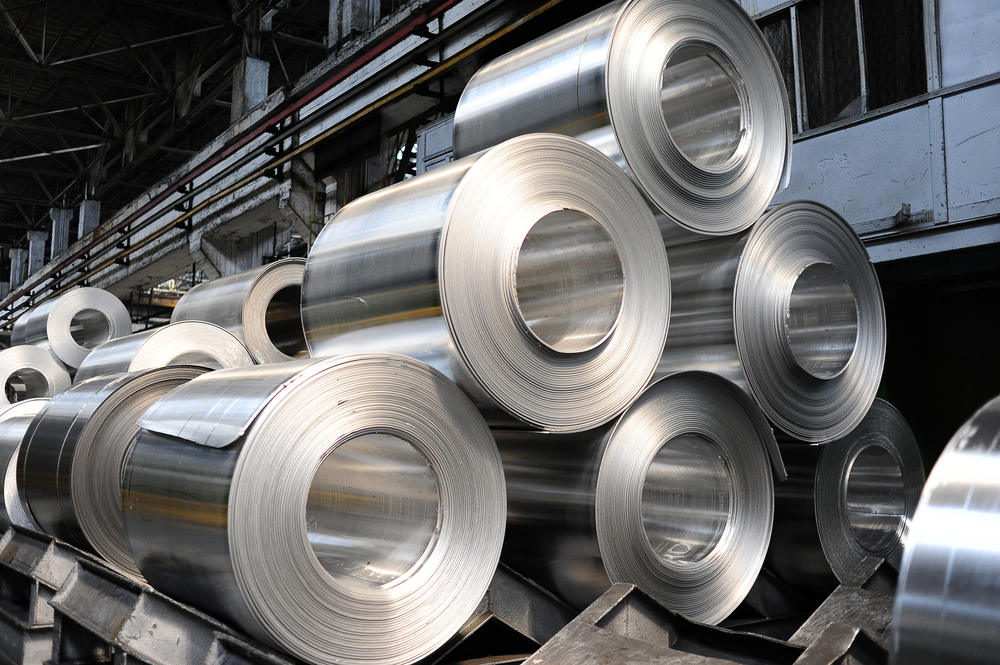
Aluminium is a widely machined sheet metal and for good reason – it can be shaped a lot easier than other metals like iron or steel and the machining process is generally three-four times quicker in comparison. In our last article, we had a look at stainless steel – today we’re going to be doing the same to aluminium – an essential metal to understand when working with sheet metal machinery.
Key properties

When you look at the key facts, aluminium is an impressive metal and holds several properties that make it highly ideal for a wide variety of applications. Some of those key properties include:

  • Strength to weight ratio – This is possibly the most important aspect of aluminium as though it is incredibly light, it is still very strong. This makes it suitable for several industries including aeronautical applications and ground-based transport vehicles.
  • Resistance to corrosion – Aluminium can form a natural oxide layer on its surface (similarly to stainless steel) which is responsible for its corrosion-resistant property.
  • Malleability and ductility – Aluminium can be easily shaped and stretched which is one of the reasons it is so easy to use with sheet metal machinery.
  • Durability – As well as being easy to shape, its strength ensures it doesn’t break whilst being machined and in real-world applications.
  • Thermal and electrical Conductivity – Though it’s not as conductive as copper, it’s lighter and more ductile properties make it a more favoured option over copper in some cases.


Applications

Aluminium can be used for a range of different purposes extending from computer parts to aerospace components. It’s also quite popular in the transportation industry due to its incredible strength to weight ratio and corrosion resistance. The strength to weight ratio allows vehicles constructed from it to gain higher speeds more rapidly (since less force is required) – which also allows for more efficient fuel consumption. Aeroplanes and space shuttles both contain aluminium alloys throughout their structure and components. Before aeroplanes, zeppelins were constructed out of aluminium. It has always been a favoured metal for aeronautical endeavours – again, mainly due to its strength to weight ratio.

Aluminium is also frequently used in the construction industry as it’s a cost-effective option that is easier to work with. Aluminium’s strength to weight ratio is a core property that is responsible for it being favoured over other materials in all of these industries. Even modern laptops – Apple’s MacBooks for example – are constructed out of aluminium giving them a sleek and shiny design whilst also keeping them light and easy to carry around. Smartphones and tablets are both in the same boat – further showcasing just how widespread aluminium usage goes. For electronics and power lines – aluminium wires are used because of their strength to weight ratio, conductivity and ductility. All these characteristics make aluminium a much more favourable material compared to copper – especially for power lines.


Environmental benefits

One of the great things about aluminium is that it’s a highly sustainable material. Approximately 75% of all aluminium that’s ever been produced is still currently being used. This is because it can be recycled over and over again without losing any of its properties. In fact, the recycling process only emits 5% of the greenhouse gasses that mining for fresh ore does.


Common aluminium types

There are dozens of grades of aluminium alloys and choosing the right one to work with can be daunting – so we’ve picked a few essential grades that are easily machinable:

  • Alloy 2011 – Has superb machinability at high speeds with fairly heavy feeds. It also has great strength and excellent corrosive resistance.
  • Alloy 1100 – A soft and ductile aluminium grade. It’s ideal for intricate forms as it hardens slower than other alloys. Other than the dedicated electrical conductor-alloys, 1100 has the best electrical conductivity as well as having high thermal conductivity. It has good machinability which is even better if it’s a hard temper variety.
  • Alloy 3003 – This alloy is one of the most widely used aluminium alloys and is used for things like cooking utensils, kitchen equipment and storage tanks. It has manganese in it which boosts its strength to be 20% higher than alloy 1100. It has fantastic corrosive-resistant properties and can be welded, brazed, deep drawn or spun easily.


Are you looking for sheet metal machinery in Melbourne?

If you’re going to be working with aluminium, then you’re going to need the right tools. ACRA Machinery is your one-stop-shop for all your sheet metal machinery needs and advice. We stock a range of new and used products ranging from slitter folders to laser cutters. We also provide on-site repair and maintenance services so you can ensure your machinery is in prime condition.

If you’d like to find out more about our services, then please give us a call on 03 9794 6675 or fill out the contact form on our site.

Metal Profiling: Stainless Steel

It’s pretty likely that if you’re working with sheet metal machines, you’re going to come across stainless steel. Stainless steel is commonly used to construct a variety of structures/vehicles across a range of industries such as construction, aeronautical and automobile manufacturing. It’s not all about the large products though – stainless steel is used for other applications such as mobile phones and cutlery. We feel it’s important for sheet metal fabricators to understand the fundamentals of the types of metal they’re working with which is why we’ll be exploring stainless steel and its characteristics in today’s article.


Putting the stainless in steel

Stainless steel is a corrosion-resistant steel alloy made up of various elements such as iron, chromium and carbon. This resistance is one of stainless steel’s defining properties and greatly contributes to its popularity – chromium being the secret ingredient. When combined with oxygen, it creates a thin layer of oxide film that coats the stainless steel – giving it its resistive properties.

Stainless steel materials must contain at least 10.5% chromium. Additionally, any damage caused by machining, cutting or abrasions is of little concern as the film repairs itself quite promptly thanks to the constant supply of oxygen. The oxide film itself is actually quite thin but works very effectively. Some of the other properties of stainless steel include:

  • Fantastic durability;
  • Easy formability – making it great for fabrication;
  • High tensile strength;
  • Long-lasting; and
  • Temperature resistance.


The five different types of stainless steel

Stainless steel is actually more of an umbrella term as there are various types and grades of the alloy. The primary five types are:

  1. Austenitic: The most commonly used type of stainless steel (being used in a range of industrial applications as well as cookware and food processing equipment), Austenitic stainless steel is characterised by containing 18% chromium and 8% nickel.
  2. Ferritic: This type tends to have between 12% – 18% chromium and has poor weldability and formability compared to austenitic stainless steel. Some examples of uses are automotive exhaust systems and hot water tanks.
  3. Martensitic: Containing between 12% – 18% chromium and 0.1% – 1.2% carbon – giving it a higher carbon content than other stainless-steel types – martensitic stainless steel is magnetic and has great strength/hardness when it’s been heat-treated. Cookware, cutlery and dental/surgical instruments are a few of the many purposes martensitic stainless steel is used for.
  4. Precipitation hardening: This type of stainless steel has a very high strength-to-weight ratio and can be classified as either martensitic or semi-austenitic. Pump and valve shafts as well as aerospace components are just a couple of the possible applications for precipitation hardening stainless steel.
  5. Duplex: Combining both austenite and ferrite, Duplex stainless steel is the best of both worlds with higher strength and ductility. With a fairly high chromium component of anywhere between 18% – 28% and modest amounts of nickel ranging between 4.5% – 8%, duplex stainless steel is used in desalination plants and for marine applications. It possesses fantastic weldability and formability properties.


Recycling stainless steel

Stainless steel is 100% recyclable. What this means is that it can be smelted and reformed to be used in a new application and still retain all of its properties. And, since the metal recycling process expends significantly less energy compared to mining for fresh ore, it actually makes stainless steel a fairly eco-friendly material. What’s more, is that the elements that make up stainless steel are fairly easy to separate during the recycling process.


Stainless steel grades

Stainless steel grades are categorised by five series.

  • 200 Series – Austenitic chromium-nickel-manganese alloys.
  • 300 series – Austenitic chromium-nickel alloys.
    • Type 301 – Good weldability and highly ductile.
    • Type 302 – High corrosion resistance and strength thanks to an additional amount of carbon.
    • Type 303 – Essentially the same as Type 304 with easier machinability due to added sulphur and phosphorus.
    • Type 304 – The most common grade of stainless steel. The same corrosion resistance as Type 302 but not as strong. Also known as A2 per the International Organisation for Standardisation ISO 3506.
    • Type 309 – higher temperature resistance than Type 304.
    • Type 316 – Second most common grade – regularly used for food and surgical applications.
    • Type 321 – Similar to Type 304 but with added titanium for a lower risk of weld decay.
  • 400 Series – Ferritic and martensitic chromium alloys.
    • Type 408 – Good heat resistance yet poor corrosion resistance.
    • Type 409 – Ferritic stainless steel used for automobile exhausts.
    • Type 410 – Martensitic stainless steel that has good wear resistance but poor corrosion resistance.
    • Type 416 – Contains sulphur making it easy to machine.
    • Type 420 – Also known as “cutlery grade” or “surgical grade” that is very easy to polish.
    • Type 430 – Decorative stainless steel with reduced temperature and corrosion resistance.
    • Type 440 – High-end cutlery steel that contains carbon for better edge retention (when the steel is appropriately heat-treated).
  • 500 Series – Heat-resisting chromium alloys.
  • 600 Series – Martensitic precipitation hardening alloys.
    • Type 630 – The most common precipitation hardening stainless steel.


Looking for a sheet metal machine in Melbourne?

ACRA Machinery is your one-stop-shop for all your sheet metal machinery needs whether they be new or used machines or repair/maintenance services.

Give us a call today on 03 9794 6675 or fill out the contact form on our site and we’ll get back to you ASAP.

4 Conveniences the IIoT has Brought to the Sheet Metal World

In our last article, we mentioned the IIoT (industry internet of things) and spoke about the security risk that a modern, internet-facing sheet metal machine can pose to your network and workshop. But what about the improvements and conveniences that the IIoT has brought to the metal fabrication world? Spoiler alert – there’s a few of them and they’re a pretty big deal, so let’s take a look at four of the fundamental ones.


1.     Improved efficiency

The obvious benefit of the IIoT is the improved efficiency across the board. Automation, for example, is one specific convenience that allows production to move much faster with little need for human involvement. This streamlines entire operations with little room for error (since CNC and other automated machines are incredibly accurate). The ability to schedule and monitor these automated processes from anywhere via the internet is also a huge benefit.

Scheduling automations isn’t the only thing that can be done remotely, however, as you’ll also be able to track specific sheet metal machines (or all the machines in your workshop) and analyse their efficiency and progress in addition to receiving updates if any issues arise or when jobs have been completed. Micro adjustments can also be made when necessary after data has been analysed from a previous batch to further improve efficiency.


2.     Maintenance standards

Of course, improved efficiency across the board also applies to maintenance – one of the ever-present elements of a sheet metal machine. Maintenance can halt production processes in its tracks and end up costing a pretty penny if handled incorrectly. The advantage that modern machines have is that the comprehensive performance reports and data they produce will work to simplify this process. How is that done? Well, you’ll be able to consult the data and use it as a baseline to gauge when the next maintenance will be required.

Therefore, you can actually begin to make the necessary adjustments to your schedule and processes in order to minimise the negative impact the maintenance will have on your business. This may include moving your production to different machines for a time or even just having the parts ready to go (for example if there’s a particular component that wears down faster than others).


3.     Safer operating

With the likes of automation playing a larger role in modern sheet metal fabrication, the need for manual labour decreases – meaning less chance of injury occurring. Whilst only trained and qualified users should be operating sheet metal machinery – accidents can still occur and can be quite severe. Additionally ¬– those machines that still require a human element have advanced to the point where smart sensors are able to greatly mitigate accidents from occurring – forming a safer working environment.

In the event that an accident does occur, then everyone in the workshop can be alerted so the appropriate action can be taken – cutting down the incident response time significantly and potentially saving lives. This demonstrates both the active and passive safety role that modern innovations are playing in the industry. Additionally, each time an incident occurs or is prevented, the data is recorded and can be reviewed for further training and learning purposes.


4.     Big investment – bigger profit

Whilst investing in new technology is always expensive upfront – it’s usually the long-term outcome that needs to be looked at. That’s definitely the case for the sheet metal fabrication industry as the improved efficiency and meticulous control you’ll have over your workshop of machines will work towards cutting your processes drastically without tarnishing the quality of the finished products. In the long run, investing in IIoT technology and systems will actually reduce your costs as the advancements and data will allow you to improve your operations and follow alternate and more proficient avenues. The sheer fact that you’re able to monitor your workshop from anywhere in the world at any time without physically being there is a convenient and ultimately profitable advantage.


Are you looking to purchase a sheet metal machine?

ACRA Machinery is your one-stop-shop for new and used sheet metal machinery. If you’re looking to take your workshop to the next level and take advantage of the IIoT then check out the CNC panel bending centre from Durma. We also offer an on-site repair and maintenance service for your convenience.

If you’d like to find out more, then please give us a call on 03 9794 6675 or fill out the contact form on our website.

CNC Machines, IIoT and Cybersecurity

The sheet metal fabrication industry has changed significantly since CNC machines and CAD/CAM software have become more readily available. Whilst it’s starting to become more common for automation to feature in workshops – this also opens up certain threats that were not previously there. Since CNC machines require the internet to function and communicate with other devices – your CNC sheet metal machine could be vulnerable to a cyberattack. Don’t worry though – today we’re going to be focusing on clearing up this element of CNC machinery so you can take the necessary steps to lock down your IT infrastructure.


Understanding the IoT

You may have heard of IoT (internet of things) – it’s defined by any device that can connect to the internet such as a smartphone or watch. Well, in our industry, we have the IIoT (also known as Industry 4.0) – which is the industrial internet of things. It’s the same thing, just relates specifically to the industrial sector with CNC machines and other manufacturing components that contain sensors that connect to the internet.


Why is there such a strong IIoT presence in manufacturing workshops?

If you have even one CNC machine, then there’s a good chance you’re taking full advantage of it by using automations from your smart device from around the workstation or even whilst outside of the office – as well as receiving notifications and feedback from the machine itself. This ability to seamlessly schedule on the go, upload new CAD files and receive instant updates is a convenient element that has improved the efficiency of many workshops and processes. Not just from a productivity standpoint – but also a safety one as there’s less chance of injury occurring.

The IIoT has become not just a convenient tool for simplifying and streamlining manufacturing processes, however – but an advance system that manufacturers will leverage to streamline all processes such as inventory and stock management as well as smarter actions like taking real-world delays into account when producing items. Manufacturers would then be able to leverage the IIoT to account for demand increases and optimise for the best solution.


The security risk posed by this system

For all the conveniences and innovations that the IIoT presents – each and every device connected to it is a potential attack vector – a security vulnerability that can be exploited by malicious cyberagents. These can be used to access sensitive documents, upload malware/ransomware to your system or even to send DDoS attacks and cripple your production. It’s irrelevant if your workshop’s main computer is secured – if any of your other devices (including your CNC sheet metal machine) are left open then they can be used as a doorway into your system.


What can you do to secure your devices?

The best way to circumvent cyberattacks from occurring on your systems is to make them as secure as possible – limiting access to areas that CNC machines don’t need to access and improving data encryption are a couple of examples. The following steps are a few methods you can use to help you establish firm security hygiene for your IT infrastructure as well as create a routine for you to conduct regular checks.


Keep software up to date

One of the easiest ways your system can become compromised is through outdated firmware – this is especially the case for your CNC machine. Ensure that all patches are downloaded as soon as they become available and when the machine is not being operated.

Establish an effective firewall

An effective firewall placed between your CNC sheet metal machine and your network is a highly practical means of keeping your machine and network safe. The firewall will actively scan for viruses and only allow essential communication between the machine and network.

Virtual local area network

If a machine doesn’t receive updates anymore (or you just want to be extra careful) then you can place it on a VLAN so it doesn’t have access to your primary network. This way, you can restrict it from having access to data and files it doesn’t need to access should it become compromised.

WPA protection and strong passwords

For wireless networks – opt for WPA wireless encryption for increased protection. Additionally, you shouldn’t be using the same passwords for your systems – nor should they be simple ones that can be hacked via brute-force methods.


Are you looking for a CNC sheet metal machine?

Here at ACRA Machinery, we pride ourselves on the high-quality machines (both new and used) in our catalogue – including CNC machines – that can be used for a variety of applications. We also offer on-siterepair and maintenance services for several machines – so you don’t have to worry about transporting the machine to our workshop.

If you’d like to know more about our products or services, please don’t hesitate to contact us using the enquiry form on our website or by calling 03 9794 6675.

How Is Sheet Metal Made? (And A Bit About Finishes)

Sheet metal is an infinitely useful commodity that has helped our civilisation achieve some impressive feats such as erecting tall structures or constructing impressive machines that have worked towards benefiting people in their day-to-day lives. But whilst sheet metal machinery is responsible for shaping and refining this commodity into useful applications – what about the sheet metal itself? What process is used to create it? How is sheet metal finished? Well, stick around to find out.

The four stages

Sheet metal is created in just five stages: meltingpouringpicklingoxidisation and rust protection and rolling and annealing

  1. Melting

As we know – sheet metal can be made from several different types of metal such as aluminium, stainless steel and copper – each with their own properties. There are also different types of thicknesses (known as gauges) that they can be forged into which each has its own preferred uses. The melting stage is fairly self-explanatory as it’s where the metal is melted down into liquid form.

  1. Pouring

Once in liquid form – the metal can be poured into rectangular moulds so that it can take its shape. Once it has filled the mould it can begin to cool and harden into a solid piece.

  1. Pickling

Pickling is a process whereby impurities or any surface stains/marks are removed. This is done via an acid bath. Essentially – it’s a cleaning phase for the newly formed sheet to ensure the final product is in tip-top physical quality.

  1. Oxidisation protection (oiled steel)

Some metals need a little more work to be future-proofed. In other words, they must be protected from rust and oxidisation that may occur in the near future. Whilst aluminium, for example, forms its own oxide layer upon exposure to our atmosphere – materials such as steel do not have this luxury. So, a thin layer of oil is introduced onto a newly formed steel sheet to protect it. This is what the term oiled steel refers to.

  1. Rolling and annealing

After the sheet is rust-proof and cleared of physical abrasions – it can be altered to suit different lengths and gauges. This is done with rollers that constantly roll over the sheet to thin and stretch it out. The more times a sheet is rolled – the harder it becomes. Sometimes, annealing (the process of heating metal and letting it slowly cool) is required to counteract this and to ensure the desired outcome is achieved. If annealing is required – then the pickling process is also repeated. This does not mean the metal is melted back into liquid form, however – just made hot enough to alter.

Finishing sheet metal

Sometimes sheet metal is finished with a special coating to make it applicable to certain applications where standard sheets just won’t do the trick. We’ve spoken about the galvanisation process – but what about some of the other finishing methods?

  • Anodised coating is the process of hardening the oxide layer to improve overall durability. It is often done to aluminium sheet metal. It also makes it:
    • Easier to colour the metal during the process;
    • More adhesive for paint and primers; and
    • Flake and peel resistant.
  • Powder coating is mostly used to create sturdy, coloured metal by applying paint powder electrostatically and allowing it to cure under heat. Some advantages include:
    • A diverse range of possible colours and effects;
    • Thicker coats and longer-lasting colours in comparison to liquid finishing methods; and
    • The fact that it releases almost no volatile organic compounds into the environment – making it a green finishing alternative.
  • Tinning is a fairly simple coating process where tinplate is electrolytically applied to steel or copper sheet metal. This is to prepare it for being turned into items such as food cans. Tinning is:
    • Cost-effective;
    • Highly durable; and
    • Able to produce both a matte grey/white finish or a shiny, metallic one.

Are you looking to purchase sheet metal machinery?

Now that you know the basics of how sheet metal is made and some of the finishing processes that are used – it’s time to look at some quality sheet metal machinery to get your workshop started or to update your existing one. ACRA Machinery is your port of call for all your sheet metal machinery requirements. We stock a variety of new and used sheet metal machines such as slitter folders and laser cutters as well as offer on-site maintenance and repair services.

Please give us a call on 03 9794 6675 or fill out the contact form on our website if you’d like to get in touch with us.

The Eiffel Tower: The Origin And Construction Of The Most Iconic Metal Structure In The World

Out of all the wondrous structures of the world – none are as iconic as the Eiffel Tower. It’s a testament to the achievements of man that the French wonder was built using far less superior machines compared to the sheet metal machinery we utilise today – and in such a short time period. Let’s take a look back at its origin and construction.

The inception

There was always a plan to build a 300-metre-tall structure in Paris as part of the 1889 World Trade Fair – what the structure would be, however, was not finalised or even roughly decided. A competition was held and received 107 applications – the winner of which was an entrepreneur named Gustave Eiffel and his team of two engineers (Maurice Koechlin and Emile Nouguier) and architect, Stephen Sauvestre.

Koechlin and Nouguier actually had the idea for their tower in 1884 – four columns with latticework girders that were separated at the base but would come together to meet at the top – secured by more metal girders periodically. The architect, Sauvestre, was brought on board to make the project more agreeable in the public’s eye – shaping its aesthetic value.

First plans

The initial plan was a lot more decorative than the simplified end-result we’ve become accustomed to. This included a bulb-shaped design for the top and large glass-walled halls on each level. Initial designs also had a narrower tower with bridging girders being used more frequently going up the tower. It also lacked the iconic archway formed by the lowest girder. According to Eiffel, the curvature of the upright beams is mathematically determined to optimise the structure’s resistance to wind.

The construction

The project commenced in January 1887 and construction on the supports and foundations began on the 1st of July later that year. A high-level of mathematic engineering and efficiency was used to calculate the design and manufacturing of each of the 18000 pieces used in the tower’s construction. Each of these pieces was accurate to a tenth of a millimetre and then combined to form larger, five-metre pieces – which were held together by bolts.

These bolts were replaced by thermally assembled rivets later on. The benefit of thermally assembled rivets is that they contracted whilst they were cooling – guaranteeing a tight fit. It took four men to assemble a single rivet (one to heat it, one to hold it in place, another to shape the head and the final person to beat it with a sledgehammer). To put that into perspective – 2.5 million rivets were created and, yet, only a third of them were used directly on site.

The four foundations of the tower (which were positioned to align with the four points of the compass) were made from concrete that extended a few metres below ground – this is where the upright beams were slotted into. So they could work below the water – metal caissons (a type of watertight chamber) with compressed air injected into them were used. 

In terms of the machinery, wooden scaffolding and small steam cranes were used – the latter of which was attached to the tower to make working at greater heights achievable. The foundations were completed in five months – which is long thought to be an impressive feat considering the technological shortcomings of the time.

March 31, 1889, marked the completion of the tower – only a little over a month shy of the beginning of the 1889 World’s Fair. It took two years, two months and five days to complete the tower – at the end of which Gustave Eiffel himself climbed up the 1710 steps and placed a French flag at the top.

The legacy

Funnily enough, the Eiffel Tower was always meant to be a temporary placement and was scheduled to be scrapped in 1909. It was discovered that the tower possessed particular radiotelegraph capabilities, however, which were proved during the first world war years later as the tower was used as a station that relayed friendly communications and intercepted enemy ones.

Though when it was first completed it did receive its fair share of negativity, it is now one of the most iconic and recognisable structures in the world – something that will forever and uniquely be synonymous with Paris and France.

Looking for sheet metal machinery?

Though the Eiffel Tower was impressively constructed using some old methods and technology – the modern innovations and developments we’ve had over the years when it comes to sheet metal machinery are truly incredible. ACRA Machinery is your one-stop-shop for all your new and used sheet metal machine solutions – including repair and maintenance services.

So, if you’re looking for sheet metal machinery to add to your arsenal, please don’t hesitate to give us a call on 03 9794 6675 or fill out the contact form on our website.

Plasma Cutting Innovations (6 Advancements To Know)

Plasma cutting machines have been staples of fabrication workshops for decades – offering cost-efficient and quality cutting solutions for conductive metals such as steel, stainless steel and aluminium. In recent years, however, there have been a number of advancements to various aspects of the plasma cutting process – further refining the art.

1.     Oxyfuel cutting

Oxyfuel cutting has always been an alternative solution to use with plasma cutters and is great for thicker metals in particular. Oxyfuel usage has become more efficient in recent years with internal igniters that simplify things and the addition of integrated height controls that keeps the torch out of the way. This is opposed to old-school optional height controls and igniters that were nowhere near as efficient as current iterations. 

A lot of systems are also automated with servo controls providing smooth and dependable movements. Additionally, there are no supplementary tools required to change the tip of the torch. When it comes to CNC technology – the improvements are even greater with ratio adjustments being automatically made to account for the flow rates for various thicknesses.

2.     CNC integration

The obvious innovations and advancements here are that CNC technology no longer relies on archaic methods such as tape drives to be operated. Cutting edge CAM software is behind some of the best CNC plasma cutters that guarantee fully automated cuts with a variety of parameters able to be manually set (or even automatically adjusted by the computer itself to compensate for the data it already has).

Another key benefit of modern CNC technology is the connectivity which allows capabilities such as controlling, diagnostics and troubleshooting to be done remotely. And, because it is run by software, the plasma cutter’s scope of capabilities is multiplied considerably allowing for different and more complex processes to be automated.

3.     Power source

The specifications and source of power for plasma cutters have improved drastically over the decades. Old systems typically ran on 600 amps of power and used a tungsten electrode. Nowadays, 300-amp systems – that use hafnium electrodes – are considered the norm. These translate to more accurate and faster cuts whilst still being far more efficient than older, larger-amp systems.

In fact, Durma’s PL-C plasma cutter uses a 260-amp Hypertherm system that is highly efficient and built to last. The HPR260XD also allows for further upgrades if any further power or performance is required for the plasma cutter. It also boasts high levels of versatility when it comes to marking, cutting and bevelling on surfaces such as carbon and stainless steel (amongst others).

4.     More gasses to work with

Technological advancements have meant that more gasses can be used with plasma cutters. This gives operators more options to consider from both an energy and economic standpoint as well as overall efficiency. These include:

  • Argon;
  • CO2;
  • Hydrogen;
  • Nitrogen;
  • Methane; and
  • Oxygen.

5.     Additional systems

A modern plasma cutter is more than just a cutting machine with several optional secondary systems being made available such as drills, mills, tube cutting tools and bevelling tools – turning the machine into a central hub for machine fabrication. The best part is that these secondary features aren’t just tacked on to increase the size of the features list – but are actually properly incorporated and highly efficient. 

This means they can be effortlessly integrated into a process (especially if it’s a CNC plasma cutter) – mitigating additional handling steps. The end result is some cost-efficient bonuses for smaller workshops as it essentially eliminates the need for dedicated machines such as drills that may only be needed in small capacities.

6.     General upgrades

In terms of broad advancements – the overall quality of plasma cutting machines is excellent nowadays with sturdy construction and more efficient power sources and processes. This means your machine can endure for longer and – with the right maintenance practices – could enjoy a very fulfilling and long life. And, since many modern plasma cutters are easy to clean (such as the PL­­­–C) this is made even easier. In addition to this, you can enjoy high definition cuts with varying thicknesses that were previously unachievable.

Are you looking for plasma cutters?

ACRA Machinery is your go-to source for all your sheet metal machinery needs including new and used plasma cutters from trusted brands such as Durma. Not sure what you’re looking for? Chat to our friendly staff who can help you find the best solution. We also provide on-site maintenance and repair services to ensure your machine is kept in the best shape possible.

If you’d like to know more about our plasma cutting machines – then please get in touch with us by calling 03 9794 6675 or filling out the contact form on our website.

Spotlight: 4 Of The Best CAD Software Options for CNC Machines

CNC (computer numerical control) machinery is steadily evolving as the technology that supports it does – becoming better and more accessible. With this in mind, we thought we’d have a look at four pieces of software that support CAD (computer-aided design) and can be used with a sheet metal machine that supports CAM (computer-aided manufacturing).

1.     AutoCAD

Easily the most recognisable and widely used CAD software, AutoCAD was first released in 1982 and is now available on Mac OSX, Windows and even on both Android and iOS devices. Several specialised, industry-specific toolsets are available to beef up the user’s repertoire – making it easier to work within their parameters.

AutoCAD boasts cloud collaboration and storage capabilities, quick measurement displays and enhanced speeds in addition to simplified comparisons of current models with older designs and external references. The ability to work on your project anywhere also gives AutoCAD a portable edge – whether it be on your smart device or through the browser on a computer that doesn’t have the software installed. 

2.     Rhinoceros

Rhinoceros is a full suite CAD software that allows you to create any 3D shape you can imagine with the only limits coming from your hardware. With that in mind, this intuitive and easy to use software is based on a command-line system (much like early AutoCAD software) which means you can hypothetically control it all with just your keyboard.

This core element is combined with an easily navigable layout and features that include wide compatibly with other software and file formats as well as a long list of compatible third-party plugins – making it highly versatile and desirable. Another attractive feature of Rhinoceros is the fact that the licenses are linked to an account and not a machine – meaning you don’t need to update licenses if you use multiple machines – simply log in and you’ll have the full software at your disposal.

3.     SOLIDWORKS

Used by several different industries, SOLIDWORKS is a highly regarded piece of CAD software – just like Rhinoceros and AutoCAD. So, what makes SOLIDWORKS different? It’s parametric software (compared to AutoCAD which is non-parametric) which means the user can define classes of shapes. This definition can then be applied to all future models. 

For example, in a non-parametric setting if you’d want to change the dimensions of a triangle then you’d have to change all three sides – but parametric software will automatically adjust the other two sides to compensate. SOLIDWORKS is also part of the 3DEXPERIENCE cloud package which was created by the parent company, Dassault Systèmes. The new version of SOLIDWORKS also boasts almost instantaneous loading times when it comes to opening files from older versions.

4.     cncKAD

cncKAD is a specialised piece of CAD/CAM software that actually integrates both the elements into one module – meaning that once you’ve designed a product you can instantly push it through into production without using separate CAM software. This is opposed to the other three pieces of software we looked at which are purely design-based. cncKAD is capable of punching, cutting, drilling, milling and tube cutting amongst other specialties. 

This CAD/CAM integration makes it highly desirable for CNC sheet metal machine operators. It also imports a variety of formats from designs made on other software for easy and quick manufacturing processes. The 2D drafting feature allows you to easily conjure up geometric shapes and specific sheet metal parts – a bonus of software being made specifically for metal fabrication solutions. Onboard QA features also check all parameters and adjust any contours where necessary so it’s ready for processing.

Are you looking for the right sheet metal machine?

ACRA Machinery is home to a plethora of sheet metal machines including several CNC options like Durma’s brilliant CNC panel bending centre. We stock both new and used machines that cover a variety of categories. Not sure which machine will suit you best? Have a chat to one of our friendly and knowledgeable staff members.

We also offer on-site machine repair and maintenance services so your machine is kept in tip-top condition. We can schedule regular check-up sessions to ensure it runs efficiently and to further prolong its operational life.

If you’d like to know more about our metal fabrication services, then you can contact us via the enquiry form on our website or by giving us a call on 03 9794 6675.

How COVID-19 Could Affect Australia’s Manufacturing Industry

We’ve all felt the effects of the recent COVID-19 pandemic and whilst they’ve predominantly been negative – there is a silver lining that could make this pandemic the catalyst for a new chapter in Australia’s manufacturing industry. And, who better to detail those possibilities than our sheet metal machinery experts.

Looking from afar

It’s a well-known fact that Australia receives a lot of its manufactured goods from overseas because it’s cheaper. As we learnt in one of our earlier blogs, there was a time when we manufactured the bulk of our products locally. Over the last 50 years, however, we’ve seen a steep decline in that sector. We saw the end of an era only a few years ago when the final Australian automotive factory shut down. Now it seems that this new pandemic has sparked debate over the state of our manufacturing industry and how this could be the opportunity to jump-start it – so-to-speak.

Closing borders

The demand for everyday products and materials is starting to pile up with the pressure falling on the countries we rely on for manufacturing. But, their supply is falling short as well. This is due to several reasons such as tighter border restrictions on both ends as well as factories shutting down for longer than expected periods during the brunt of the virus’ wave. In addition to this, just recently tensions between China and Australia have seemed to heighten with the former having imposed a tariff of 12% on beef imported from Australia.

Our import industry works harmoniously with our exports but our imports have already experienced a sudden decline. It’s not impossible for tariffs to be placed on other items in the near future – and, with this in mind, our own government may also do the same and instead look locally for manufacturing needs. As it stands, a lot of sheet metal fabricators end up filling in the gaps with their work – providing to various small or niche markets here and there where they can. But will these changes be the start of Australia’s second manufacturing boom?

Baby steps

No one is expecting a boom to happen overnight. There is plenty of groundwork that needs to be laid in order to kickstart the industry. Developing key, smaller markets is a good place to start – get the various clusters going in order to work towards the larger ones. Earlier in the year, Federal Treasurer, Josh Frydenberg, allegedly promised a re-evaluation of Australia’s supply chains in an effort to take further advantage of those niche markets. He also went on to state that it would “not make economic sense” to manufacture everything in Australia.

This pandemic has highlighted that certain supply chains are flawed for various reasons and that countries need to be self-sufficient in some areas. A former manufacturing advisor to the Federal Government, Professor Roy Green, has even stated that whilst plans to “kickstart” the industry have come and gone – he has noticed a genuine change in the government’s attitude during the COVID-19 pandemic. Whatever the result, the industry needs to start small, playing to its strengths before it can develop large-scale manufacturing processes.

The power of lithium

Australia (and particularly Western Australia) is home to large quantities of lithium which we export overseas to be used in batteries for several consumer devices such as smartphones and energy storage devices. As part of an initiative to open the door to battery manufacturing – a research hub was announced last year that would operate out of Perth’s Curtin University. 

The $135 million centre will concentrate on ways that we can efficiently source the minerals as well as process them into chemicals – and thus use them to create lithium batteries. If successful, we could be looking at a new battery manufacturing industry right here in Australia instead of relying on other countries such as China to utilise our own resources.

The unplanned future

Australia is in a unique opportunity at present. COVID-19 has provided us with the evidence and inspiration to reassess our own supply chains and look inwards at how we can take advantage of our manufacturing industry for the new era that our country and indeed the whole world is about to emerge into.

Looking for sheet metal machinery?

Thankfully, ACRA Machinery has all the best new and used sheet metal machinery for a diverse range of tasks. Additionally, we offer regular maintenance and repair visits to ensure your machine is kept in tip-top condition. 

Not sure what the best piece of sheet metal machinery for your job is? Chat to one of our friendly experts today by calling 03 9794 6675 or by filling out the contact form on our website.