Learning About Bandsaws, Can They Cut Metal?

If you are unfamiliar with industrial grade machinery, you may not have heard of a band saw and how it differentiates from other slicing equipment. Bandsaws are a staple piece of industrial hardware, but what are they used for specifically? How do they stack up to other slicing machinery, and are they safe? In this article, we will discuss the details of bandsaws so you can get an understanding of their operative capabilities and use case.

What is a bandsaw?

So, let’s get started with the basics, what is a bandsaw? A band saw is a piece of industrial machinery used to slice materials. The main cutting mechanism is a thin, high-powered blade, positioned between rotating mechanisms, (although modern, industrial bandsaw machines will simply have metal boxes visible above and below the saw.) The blade remains stable and stays in the same position, whilst the material is positioned on a flat surface at the base of the blade for it to slice through. This makes the bandsaw incredibly stable, accurate, and able to cut curved shapes.
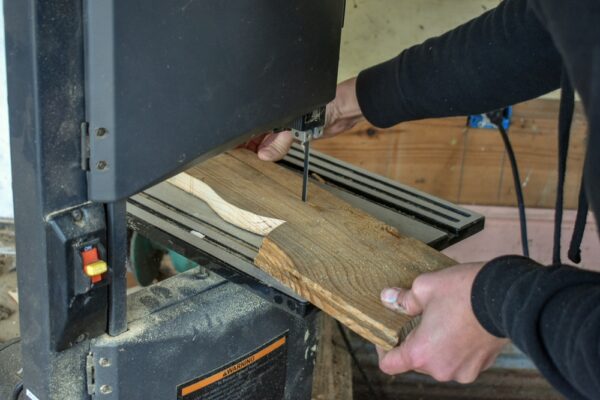
Bandsaw cutting wood

Can band saws cut metal?

Although bandsaws are commonly used for wood, they can be utilised for cutting soft metals and even steel. Industrial grade bandsaws such as the Karmetal Bandsaw range are designed specifically with sheet metal slicing in mind. Woodworking bandsaws usually have a vertical blade. Whilst sheet metal bandsaws usually have a horizontal blade for downward motion. If you don’t have a dedicated metal cutting bandsaw, the ability of the machine to cut metal will depend on the teeth in the blade. Smaller teeth and a higher tooth count per cm/ inch on the blade are recommended for slicing materials other than wood. The blade speed for cutting metals should be 30-90m per minute, whereas the common band saw speed for slicing wood is around 300 metres per minute.

When to use a bandsaw.

Bandsaws generally have longer blades, meaning you can stack and cut multiple workpieces if you need to generate the same slice on all of them, in comparison to the shorter blades of table and jig saws. Some modern bandsaws have adjustable blade lengths, so you can extend the blade for larger workpieces, whilst maintaining more accuracy and reducing the blade for smaller ones. While other machinery may be fine for people mostly working with thinner material sheets, a bandsaw can be incredibly efficient and practical for thicker pieces, with the powered blade slicing through the material in mere seconds like a knife in butter. In industrial scenarios, band saws can be an affordable alternative to laser or plasma cutters. Not only are they reliable and have a long lifespan, but they are also cheaper to purchase, operate and maintain.

Is a band saw safer than a table saw?

Generally, band saws are considered safer than the average table saw. This is largely due to the blade being positioned above the workpiece. The workpiece is usually kept in place on the work surface and doesn’t get caught in the rotating blade, reducing the chance of kickback – which can occur when using a table saw. However, as with most industrial machinery, there are still safety risks. This is most apparent when cutting corner notches. The table saw isn’t particularly safe or practical for corner cutting and you should turn off the blade each time you finish the notch on each angle, otherwise, kickback can occur. Meanwhile, the straight bandsaw blade means it is much safer to pull back the workpiece after completing a cut. Table saws may not have the material versatility of a bandsaw without an increase in potential safety hazards.

Bandsaw vs jigsaw – cutting curves

Band saws are very effective at cutting curved shapes in materials. The difference between a bandsaw is that you hold the workpiece, whereas, with a jigsaw, you hold the saw. The stable and consistently positioned bandsaw means generating curves can be very accurate and there is less room for error if you are following a pre-drawn line or markings. With a jigsaw, you must maintain the steady blade yourself. Another thing to note is the bandsaw blade cuts downwards, pulling the wood dust or shavings below the bench, whilst a jigsaw slices upwards, creating shavings and dust to fly out above the table.

Does your bandsaw need maintenance or repair or are you looking for an entirely new one? At ACRA Machinery, a member of our expert team of professionals can give you guidance for your business’s specific needs. We have a variety of bandsaws and other industrial machinery available at our Melbourne warehouse and can answer all your band saw questions.

If you believe a bandsaw could be the right fit for you, or for info about more of our sheet metal machinery, get in touch with us by calling 03 9794 6674 or contact us via our online enquiry form.

Hydraulic guillotine, corner notcher and more: How do they work?

At ACRA machinery, we have a variety of the highest quality industrial-grade equipment available for your business. Our most popular item is the Durma press brake, but we also have hydraulic guillotines, corner notches, turret punches and laser cutters available. To someone without industrial experience, these machines sound like something you might find in a sci-fi movie, but what are they, and how do they function? Find out more:

Sheet metal guillotines

Probably the most familiar name on the list, an industrial guillotine is used to slice sheet metal. The metal is fastened with a clamp whilst an angled blade is forced down and slices along with the desired cut, from one side of the material to the other. Sheet metal guillotines are used to perform precise, straight-line cuts on metal, minimising sheet distortion. After the metal is sliced, the pieces usually fall or slide down a ramp to be collected and recovered. Hydraulic guillotines and mechanical guillotines are both available at ACRA Machinery.

Laser Cutter

This one is also straightforward. Laser cutters generate a high-powered laser that punctures through sheet metal and other material due to the immense heat created. The material melts or disintegrates, allowing the laser to be used as a slicing tool. The benefits of laser cutting technology include the ability to cut in more diverse and nuanced shapes with immense precision, rather than simply a straight line, corner, or hole. The slicing direction, movements and function of the laser is programmed in advance into the laser’s computer, resulting in incredibly reliable and accurate outcomes. The laser even has angular capabilities to generate bevelled edges on slices, and materials are less likely to warp with a precise laser in comparison to other slicing techniques. Other industrial machinery requires the sheet metal to be hand-positioned in a specific location to be sliced or punctured; meanwhile, with a laser cutter, the sheet metal remains in the same location, whilst the dynamic laser head repositions itself to match the next laser cut. Our fibre laser cutters boast an IPG power range of 0.5kW to 10kW and have faster processing times and higher productivity than CO2 counterparts. The small diameter of fibre laser beams (up to 100x smaller) means they can create much thinner slices in sheet metal and less overall waste. At ACRA Machinery, we recommend using fibre lasers for reflective metals such as brass, copper, aluminium, and stainless steel.

Corner Notcher

An industrial corner notcher is another cutting machine, except used to generate incisions or slices at a perpendicular angle. The machine functions very similarly to a guillotine. The sheet metal is fastened with a clamp whilst an angled blade is forced down to create an incision into the material. The corner notcher creates slices with a singular downwards cut like a guillotine, rather than slicing along a path, like a laser. However, the blade is angled in a ‘v’ shape, creating the desired perpendicular slice. At ACRA Machinery, we supply the Durma VN 2006 corner notcher, which provides a variable notch angle, meaning the ‘v’ slice can be adjusted from anywhere between 30 degrees and 140 degrees. The operator can control when the slice is going to occur via pressing down on a foot pedal, whilst the excess metal sliced off falls into a retrieval tray positioned below the corner notcher blade.

Turret Punches

Turret punches are used in industrial settings to push a hole (usually a circle) through a piece of metal. The sheet metal is positioned flat and fastened with clamps, like the rest of the slicing techniques, to prevent movement and warping. The bench that the sheet is resting on top of manoeuvres back/forward, left/right to position the sheet underneath the centrally aligned turret. This functions in a similar manner to the laser cutter, as all the actions require programming beforehand. Whilst the laser head moves to create the incisions, for the turret punch, the sheet metal itself is repositioned. The Durma turret punch, available at ACRA machinery, has a series of settings to manipulate the metal in various ways and create holes of different shapes and sizes. Not all holes are going to be identical, so the Durma punch offers variability of options for many sheet metal solutions.

Interested in new industrial machinery for your business?

ACRA Machinery’s Dandenong warehouse stocks a variety of high-quality industrial machinery from hydraulic guillotines, corner notches, laser cutters and turret punches. With over 150 years of experience, our technicians will cater to all your sheet metal needs to ensure you have the highest quality machinery and functionality for your warehouse.

If you’re looking to increase your workshop’s capabilities or if you have any questions about press brake repairs or maintenance, get in touch with us by calling 03 9794 6674 or contact us via our online enquiry form.
Is It Time to Repair or Replace Your Sheet Metal Machinery?

When something goes awry with your press brake or sheet metal machinery, it can mean havoc for your business. Press brakes are so necessary for accurate and easy sheet metal fabrication and taking the time to arrange maintenance and repairs can often mean extended or missed deadlines. And that’s if the machinery can be repaired at all! Press Brakes can also be so personalised to the business needs and specifically selected based on the tonnage of your workpieces.

It can be difficult to determine if your press brake needs maintenance or when it’s time to find a replacement. The team at ACRA Machinery have outlined some simple questions to determine if your current press brake needs to be serviced, or if it is time to invest in new sheet metal machinery.

sheet metal machinery

Is your press brake due for a service?

When you first notice that your press brake is not operating efficiently, it’s time to schedule a maintenance check to assess the condition of the machinery. Regular cleaning and routine maintenance can extend the life of your metal machinery, including the press brake. There are no downsides to scheduling preventative maintenance with a qualified technician to the longevity of your press brake.

Is the software out of date?

Most often, the programs and software will become obsolete long before the actual machinery gives way. In this case, you may simply need to upgrade your machine’s software or CNC components or retrofit a new interface. This will allow your technicians to set up jobs in the computer, for more time-efficient sheet metal fabrication, increased accuracy, and less sheet metal waste.

If your business is failing to keep up with the current workload, contacting professional technicians to perform an upgrade could be all that’s needed to speed up, making it crucial that this service or retrofit is performed as soon as possible. By investing in your current press brake and upgrading your software or adding modern controls, you can increase the longevity and reliability of your machinery.

Does your current press brake take hours to set up for each project?

If you find that fabrication projects are often delayed due to lengthy set-up times between projects or constant tooling changes, it may be time to upgrade to a more modern model. Similarly, if you find that your press brake doesn’t produce accurate results consistently, needs regular repairs, or replacement parts are increasingly difficult to source, it may be more cost-efficient to spend money on a newer model rather than persistent maintenance. A newer model could dramatically reduce your press brake’s downtime and operation disruptions.

Sometimes the press brake no longer aligns with our cutting needs or the specs of your production pieces. If that’s the case, it may be time to speak to expert sheet metal machinery suppliers to find new press brake technologies with the accuracy and convenience to better suit your warehouse’s needs.

Our extensive range of used and new sheet metal machinery

Our Melbourne warehouse houses an assortment of press brake tooling and environmentally friendly Durma press brakes. As one of the largest manufacturers of sheet metal machinery in Europe, renowned for accuracy and affordability, Durma press brakes offer high sensitivity and repeatability with low service costs. Our Durma press brakes come with our 2-year warranty and our service team also offers to assist with installation, commissioning, and training needs.

Our experts have a range of new, used, and custom press brakes available with hydraulic, mechanical, electric and hybrid models available. Our friendly and professional team is ready to help you find an efficient and reliable model for your business, to suit your worker’s skill set and sheet metal workload.

Interested in acquiring a new press brake for your business?

ACRA Machinery stocks a variety of new and used sheet metal machinery for all of your workshop’s sheet metal fabrication needs.

With over 150 years of experience, our expert technicians are available for all your sheet metal machinery needs to help give your turret punch, press brake or laser cutter the best possible operational life. If you’re looking to increase your workshop’s capabilities or if you have any questions about press brake repairs or maintenance, get in touch with us by calling 03 9794 6674 or contact us via our online enquiry form.


What is a Press Brake? How Does it Work? And Other Common Questions, Answered

Over the last 42 years, ACRA Machinery has become one of the leading organisations for the distribution, repair and maintenance of press brakes and industrial machinery across Melbourne, Australia. But what exactly is a press brake? What is it used for? How does a brakepress work? These are some questions that should be answered before anything else, so let’s discuss that today.

If you plan on purchasing or repairing a press brake or other industrial machinery within Melbourne, you have come to the right place, we have partnered with large international manufacturing businesses such as Durma to provide you with the highest quality products from our Dandenong warehouse.

Firstly, what is the difference between a press brake and a brakepress? Well, nothing. It is simply a common name mix-up. The industry accurate term is press brake, but it is still common for customers to use brakepress when searching for products.

Okay, now that is out of the way…

What is a press brake?

A press brake is an industrial manufacturing tool that is primarily used to bend sheet metal. Many metals are ‘ductile’, which means they have material integrity that allows them to bend before they break. Think about how a thin metal fork can be bent if you use enough strength. A press brake will do a similar effect at an enormous scale with hundreds, if not thousands of times the pressure, utilising sheer force to bend the metal placed within the press.

There are a variety of different types of press brakes to generate the force required for bending sheet metal – namely hydraulic, pneumatic, electric, or mechanical. Videos of hydraulic presses being used to crush heavy and dense objects have been a subject of many viral social media videos over the last several years, as the videos showcase the sheer power and force of the machinery. At ACRA Machinery, we have new and used mechanical, hydraulic and electric press-brakes for sale, for your specific industrial circumstances.

How does a brakepress work?

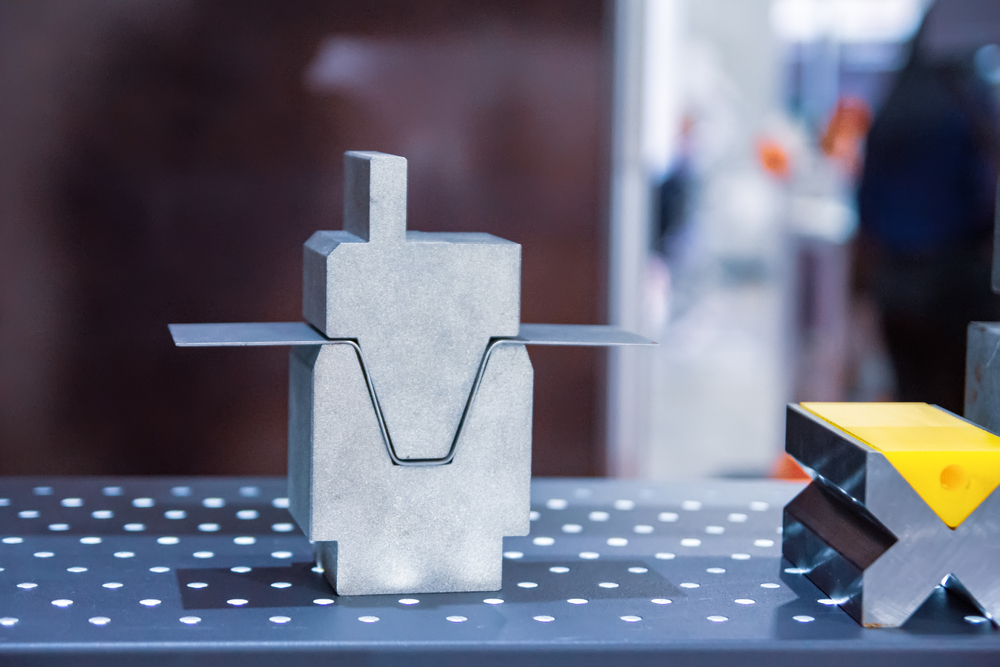
However, industries don’t simply use pressbrakes for crushing objects for youtube videos, there are a variety of tools that are applied to them that allow for sheet metal to be bent in more customisable shapes. The metal is usually positioned between two parts called a ‘punch’, and a ‘die.’ The press pushes down on the punch, into the metal, positioned above the uniquely shaped die space to allow for different bending jobs to occur. The die is created of a very strong material that can withstand the metal being pushed against it and is formed to match the desired shape of the bent metal. For example, a ‘V- die’, has an inset triangular prism shape and creates a V or edge shape, with the angle of the edge customised depending on the pressure of the punch. Meanwhile a ‘curling die’ forms a curled or coiled edge.

Hydraulic Brakepress

The material capabilities of various metals need to be considered when operating a press brake, more brittle or less ductile metals can not be bent in a sharp-angled die as it may lead to breaking, shattering, or other hazardous situations. The size and shape of the punch and die must also be considered, they must align with the brief requirements to ensure the metal angles at the correct measurements.

Press brake tools

Pressbrakes don’t simply have to be used for bending metals. There are a variety of tools that can be attached to them to change the function, such as piercing, drawing, trimming or forming tools. The function of each of these tools is straightforward based on their respective names. Some of which can be purchased directly from us at ACRA Machinery. If you don’t need an entirely new press brake but are looking for a new or repaired punch and die, ACRA Machinery has got you covered.

As with all industrial machinery, a brake press can be a dangerous piece of equipment if not operated appropriately, therefore it is crucial to have the required training before working with one. If your machine needs repair, get in contact with a professional at ACRA Machinery to perform maintenance to avoid worksite injury and ensure your equipment is running correctly and appropriately.

If you need more information on our services and products or advice on how we can help to meet your needs, simply fill out the contact form or call us on 03 9794 6674

How to Ensure Successful Industrial Machinery Repair

As much as we’d like to avoid it, industrial machinery breakdown can happen at any time and repairs can be costly and time-consuming. If you’re going to take your machine for a repair, you’ll want to make sure the repair is a success. Having to bring back a machine you thought was working again, only for it to break down or malfunction shortly after would result in double the cost and loss of time. In this article, our team of experts at ACRA Machinery will run you through some fundamental tips for ensuring a successful industrial machinery repair plus some effective maintenance tips for a longer machine life.

1.     Hire the right people

The phrase “quality over quantity” can be applied to many situations, including in industrial machinery repair. If you’re looking to penny-pinch, your machines will likely fall into the hands of inexperienced or unqualified technicians who might do more harm than good. Having the assistance of qualified professionals is key in ensuring you achieve the results you were expecting. Picking the best technician for your machine and facility can depend on multiple factors. A few you should consider are:

  • Previous experience

Some information you should research or ask before hiring a repair technician is whether they have the necessary training to handle your specific industrial machine. Understanding the technician’s previous scope of work can help you understand if they are equipped with sufficient experience and skills for your specific needs. For example, if a technician has a niche for fixing laser cutters only, they may not have the skills or equipment for other machinery types that you may be looking for.

  • Commitment to occupational health and safety

A great part about hiring professional help is that they often can assist with providing advice on how you and your team can implement and comply with necessary regulations and safety practices that can improve your machine’s life in the long run. Picking a repair technician who follows these guidelines themselves can not only ensure your machine is in good hands but establish improvements in your facility.

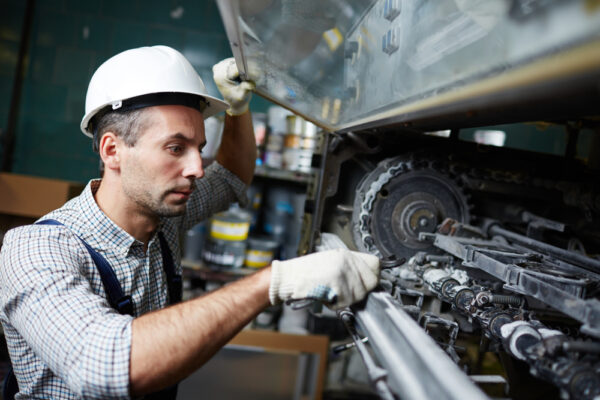
Man doing industrial machinery repair

2.     Adopt a suitable repair and maintenance strategy

Several strategies can be utilised when it comes to industrial machinery repair and maintenance:

  • Planned or preventive strategy. This is a common one that involves an early planning procedure where industrial machines are regularly checked for anomalies and repairs or maintenance are periodically conducted.
  • Unplanned or corrective strategies. The upside to this strategy is not needing to plan too far ahead as repairs and maintenance only occur when a malfunction is identified. The downside, however, is that this strategy does not prevent stoppages to your facility and can hinder your efficiency and workflow.
  • Round strategy. This strategy is often used in situations where many minor anomalies need to be fixed. It is characterised by small repairs carried out in rounds till all issues are repaired. This avoids productivity losses as production can keep going.

3.     Understand what’s going on with your machine

While it is nice to just leave your machine with someone else and hope it comes back perfect, not doing your due diligence can have consequences. Asking your technician questions or doing your research about parts of your machine’s repair and maintenance process can go a long way. This not only helps you understand the entire repair process but also how your repair bill is worked out, whether additional works need to be done and how you can prevent another breakdown.

Maintenance work being conducted on an industrial machine

4.     Write everything down!

One simple but often forgotten task is having a well-updated record of all the repair and maintenance works you have conducted for your equipment. Similar to medical records, sometimes understanding the repair and maintenance history of your machine can help improve the management of future repair and maintenance works. Looking through records is also a good way to identify opportunities for maintenance practices improvements. For example, if you find that a machine that was repaired and maintained monthly had a much longer machine life than one that is checked annually, changing your repair and maintenance schedules might reduce the need for machine replacements.

Looking for industrial machinery repair and maintenance experts in Melbourne?

Industrial machinery repair is necessary from time to time and is important to a well-functioning, productive and safe facility. Thus, ensuring your repair and maintenance works are done correctly and successful is key in helping you remain productive and efficient. At ACRA Machinery, our expert technicians are highly trained and knowledgeable from industrial machinery to casual maintenance and can impart that knowledge to you to ensure successful industrial machinery repair and maintenance.

If you’re looking for advice for better repairs and maintenance of your industrial machines, feel free to reach out to us via our contact form or call us on 03 9794 6675.


The Biggest Industrial Machinery Warehouses in the World

When most people talk about the biggest buildings in the world, skyscrapers like the ‘burj khalifa’ come to mind. What most people don’t consider is buildings that take up enormous tracts of land – and aren’t as tall – warehouses. In today’s blog, we will be reviewing some of the manufacturing warehouses with the largest metrics in the world. ‘Footprint’, ‘Cubic Meter Size’ and ‘Usable Volume.’ Here at ACRA Machinery, we have been servicing the manufacturing industry for over 40 years. Our Melbourne industrial machinery repair teams provide new and used machinery parts for manufacturing businesses across Australia – partnering with international businesses such as press brake manufacturer Durmazlar.

Largest Warehouses by Usable Volume:

These buildings have the largest amount of space that can be used for the purpose of machinery manufacturing and repair, etc. Whilst a lot of warehouses sprawl outwards, usable volume means the warehouse might compensate for floor space with height.

1. Boeing Everett Factory

Located in Everett, Washington, USA, the Everett Factory by plane manufacturing company Boeing is the largest warehouse by usable volume in the entire world. Initially built in 1967, the factory has undergone expansions over the decades and now covers an incredible floor space of 398,000m2 and a cubic volume of over 13.3 million m3. The average height of the warehouse is 33.4m to cater for the assembly, machinery repair and transportation of parts for the company’s headliner aircraft such as the 747, 767, 777 and formerly the 787.
Fun Fact: Prior to this warehouse’s construction in 1967, the record for building with the largest volume was held by the NASA Vehicle Assembly Building.

2. Jean-Luc Lagarde Plant

Another aeroplane assembly warehouse, this time located in Toulouse-Blagnac, France. The Jean-Luc Lagarde Plant is employed by Airbus as an assembly station for many of its planes. Due to the sheer size of the plane (73m in length, 80m wingspan), parts are manufactured across other parts of Europe and brought to Toulouse for assembly due to the sheer cubic volume of the warehouse. The floor space of the plant is 122500, but the usable cubic volume is 5.6 million m3, leading to an average usable height of 45m – required to build such large aircraft.

Largest Warehouse by Footprint

Simply the largest land space taken up by surface area for a single building.

1. AvtoVAZ Lada Assembly Building

With a floor space over twice the size of the Boeing Everett Factor, the AvtoVAZ main assembly building in Tolyatti, Russia boasts a footprint of 887,800m2. The building is nearly 2km in length, at 1930m, with a width of 460m and is used for the industrial manufacturing of AvtoVAZ’s car brand ‘Lada.’ The company was originally founded in 1966 and underwent privatisation in the late 1980s- early 1990s. In 2016, the Tolyatti plant manufactured 312000 vehicles.

2. Jaguar Land Rover, Solihull Plant

Another massive car manufacturing plant, this time located in Solihull, England, UK is utilised by the Jaguar Land Rover company. This site has a collection of warehouses, generating a footprint of 526,000m2, the largest warehouse spans 1500m in length. The original warehouse was bought for military manufacturing by the British Government in World War 2 but was contracted to the rover company after the end in 1945. The factory has been updated since its 1930s inception – with an aluminium body production facility installed in 2013. The factory is currently being used to manufacture and assemble range rovers, range rover sports and Jaguar F-PACEs

3. Largest Floor Area

The buildings with the largest floor areas in the world are mostly airports and shopping centres, however, the largest manufacturing warehouse regarding floor space is the TESLA Texas Gigafactory. (See a reoccurring pattern here regarding sheet metal vehicles and large factory sizes.)

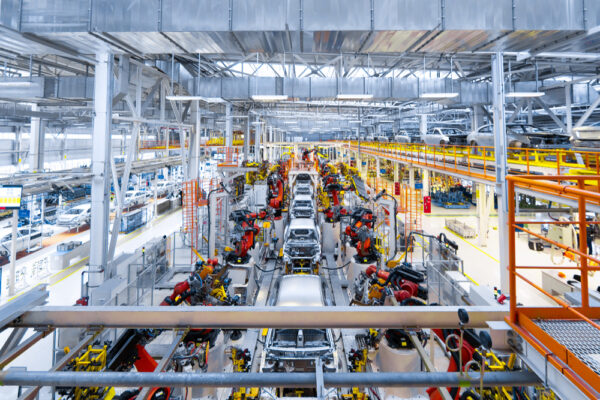
Automotive Production Line

4. GigaFactory Texas

The actual size of Tesla Gigafactory’s can be a bit uncertain as sites such as the original Nevada one are constantly expanding. The 5th Gigafactory under construction in Austin, Texas (the new home city of the Tesla company since the coronavirus pandemic in 2020), aims to boast a floor size of ‘8 million square ft’ (743,000m2).
The Texas site, alongside the other gigafactories, are manufacturing centres for Tesla’s electric vehicles. The Nevada site claims to be the ‘building [with the biggest] footprint in the world’ upon completion – with a net-zero emissions target.

ACRA Machinery Factory

Acra machinery warehouse is not one of the largest in the world, however, it boasts a floor space of ~2000m2 in Dandenong, Melbourne. For all your industrial machinery repair and maintenance needs in Melbourne, whether that be press brakes, laser cutters, or sheet metal machinery – we have you covered with both new and used products.

If you need more information on our services and products or advice on how we can help to meet your needs, simply fill out the contact form or call us on 03 9794 6674

5 ways to Improve your Bandsaw’s Efficiency and Prolong its Lifespan

The bandsaw is an essential power tool available to deliver clean and accurate cuts in sheet metal manufacturing. These heavy-duty machines are known to be economical, reliable, and user-friendly. However, despite its well-established reputation, if there is one machine on your manufacturing floor that isn’t getting the attention it deserves, it is most likely your bandsaw. In this article, we’ll discuss five ways you can prolong your bandsaw life and improve its efficiency.


1.    Pick the best blade for the job

Just like picking the right knife to cut through meat, choosing the appropriate type of bandsaw blade for a job is crucial for clean and efficient cutting. The best approach to picking the right blade is by ensuring you have a good understanding of the machine you are using and the material you intend to work on. Bandsaw machines also usually come with recommended blade size requirements which can help narrow down your search.

Once these factors are identified, you will then need to consider your blade rigidity. Thicker and harder blades generally produce straighter cuts while softer blades work better for wavy outcomes. Other factors such as the proper teeth per inch are also important as the number of teeth can impact how fine or rough your final cut will be. Using an incorrect blade, whether the wrong thickness or tooth pattern for your cut, can dramatically reduce the life of your blade and the quality of your work.


2.    Setting the right speed and feed

Once the most suitable blade has been identified, your next step is to set your bandsaw to the right speed and feed rate. Speed refers to the rate at which the blade cuts across the material’s surface while feed determines the pressure applied for each tooth penetration.

Although higher speeds achieve cleaner and quicker cuts, speed rates can be restricted by the type of material you’re working with, and the amount of heat produced during the process. Higher speeds and harder metals usually result in jagged cuts and a reduced blade and machine life due to excessive heat. Finding the right balance for your feed rate is also crucial as it can impact your chip load (the thickness of material removed by each tooth). Higher feed rates and chip loads will result in more wear and tear which reduces the overall machine life.


3.    Breaking in the blade

Most blades need to be broken in before they can operate at peak efficiency. Manufacturers often recommend running the machine at half the optimal speed and feed rate when starting your cut with a new bandsaw. Although slowing down seems counterintuitive, honing your bandsaw can prolong its life and prevent premature tooth breakage and blunted blades.

Having a proper break-in procedure in your facility is also key to ensuring that information or advice is not merely communicated by word of mouth or handed down from one employee to the next. The details of how to properly break in your bandsaw blade should be documented to prevent information from getting lost in translation.


4.    Reading the chips

Your chips are often a good indicator of whether your blade has been broken-in properly and whether you have selected the right blade type as well as speed and feed rate. By reading your chips and monitoring your chip load, you will be able to adjust and achieve the perfect balance between productivity and machine life.

Things you can look out for when reading your chips are:

  • Shape — Chips from a properly set up bandsaw should look curled — ideally reflecting a 6 or 9.
  • Colour — The colour of your chips should be very similar to the material that is being cut. A drastic colour change can indicate your speed or feed rates are too high, resulting in excessive heat.
  • Thickness — The ideal chip load should produce medium, loosely rolled chips.


5.    Regular maintenance

Much like other machines, regularly scheduled maintenance will always be necessary to prolong the lifespan of your bandsaw. Besides basic manufacturer’s maintenance instructions and avoiding common bandsaw mistakes, practising the following will help ensure long life and increased efficiency:

  • Hydraulic fluids should be checked often to ensure sufficient lubrication.
  • Chips should be regularly removed from the wheels to allow wheels to run freely.
  • The guide should be checked at the end of each day to identify chips or cracks and to ensure proper alignment for the blades.
  • A chip brush should be used to remove chips from the teeth of the blade to prevent re-entering into the cut.


Sheet metal machinery experts

Whether you’re looking for a new bandsaw or just advice on how to maintain your current one, our experienced staff at ACRA Machinery can offer professional advice tailored to your specific needs.

Feel free to give us a call on 03 9794 6675 or fill out our contact form on our website. 

Why you Should Maintain and Repair your Sheet Metal Machinery (4 Key Areas to Consider)

Keeping your sheet metal machinery in appropriate working order is a task that can be easily neglected — but one that is imperative. Our sheet metal machinery repair and maintenance services are designed to extend the life of your machinery — but failing to do so when appropriate can result in severe circumstances for your machinery, projects and staff in extreme cases. Our specialists have compiled a few critical reasons why you should repair your machine.


Maintaining accuracy

The more a machine is used the more it will wear. The wear and tear will vary between machines but it’s highly likely that this general wear and tear will affect your machine’s accuracy in one way or another. For a laser cutter, the focusing lens may move slightly periodically or even fail to stay in position as it should — causing the alignment to be inaccurate and therefore the result to differ from the calculations. Similarly, a press brake’s tooling may be misaligned or blunt and therefore produce subpar bends.

Accuracy is something that all sheet metal fabrication projects rely on regardless of the machine; a worn-out or ill-functioning machine can put your entire project at risk by producing poor results. This will cost you time and money and will only get worse the longer you leave it, so schedule your repair or maintenance session with us today.


Extending operational life

All machines (and most items, for that matter) will last longer if you maintain them. If one element requires repair, but you ignore it, then the issue will grow more severe and affect other parts of the machine. The longer you wait, the worse it will be. This may reach the point where it would actually be easier to purchase a new machine, which can often be more expensive.

This is why staying on top of your machine’s health is important. Minimising costs play a big part and, if you play your cards right and maintain the machine properly, you may never need to actually replace it. Preventative maintenance is the key to extending your machine’s operational life; regular maintenance checks can ensure that everything is in top working condition and will mitigate issues from occurring.


Avoiding accidents

Workshop accidents are more likely to occur if the machines are not functioning as they should. This may be for a number of reasons such as worn-out parts, damaged parts or even grime/dirt build-ups in key areas. The latter is an example of why it is important to clean the machines at least once a week at the minimum.

Sometimes grime build-ups can actually affect the performance of the machine and, in some cases, cause malfunctions — which may lead to accidents. Every machine is different, so for the most effective result, you should consult the machine’s manual or contact ACRA (or the manufacturer) directly for further clarification. Establishing a weekly cleaning schedule is essential and can help keep your machines in prime working condition.

As for work-out or damaged components, failing to repair your sheet metal machinery in these instances means you may risk a major malfunction. This can result in sheet metal inventory being destroyed or irreparably damaged as well as, in some extreme cases, team members being injured.


Saving time and money

The price of repairing a metal fabrication machine is not the only associated cost; if you wait until it’s too late to repair the machine, then you may risk delaying your projects or in worse cases, shutting down your entire factory (depending on the machine in question). This means that large amounts of operational costs will essentially go to waste — not to mention that if you’re on a tight deadline you may have to cover additional unnecessary overheads.

If you know you have a large project approaching, then perhaps you should contact our specialists prior to ensure that all your machines are in correct working order; that way, you won’t have to worry about any breakdowns or interruptions occurring midway through the project. Planning ahead is a crucial preventative measure and one that will go a long way.


Are you looking to repair your sheet metal machinery?

ACRA Machinery specialise in complete sheet metal machinery repair and maintenance services; we also stock new and used machinery from trusted international brands such as Jorns and Durma.

If you would like to book your machine in for a service or repair, then please give us a call on 03 9794 6675 or fill out our online enquiry form so one of our team members can get back to you as soon as possible.

Press Brake Tooling: Misalignment and Maintenance

A press brake is one of the most versatile and reliable tools in sheet metal manufacturing, but when it comes to tight-tolerance precision work and maintaining consistency, it’s all in the tooling. Press brake tooling varies to incorporate L-shape, R-shape, U-shape and Z-shape bending. When running into issues with your press brake, one of the first steps is to check if there are issues with the die or punch tooling.  Remember, the die is the only aspect of the press brake that touches the sheet metal during the bending process.

Many modern press brakes are self-aligning with fast clamps or hydraulic systems in place to allow your top and bottom die to be clamped neatly into place, every time. However, older press brakes with multi-V blocks that need manual alignment by turning front and rear handles are still reliable machines used to bend sheet metal today. For jobs that require precision, manually setting up the correct bend angles can be time-consuming, so it is best to recognise early when the tooling is incorrect or misaligned. If you suspect your tooling is not aligning accurately or not performing well, here are some simple checks that may solve the issue.


Check cleanliness of tooling

Before using the press brake, ensure the tooling appears spotless. If there is dust or debris from previous metal materials on the tooling or under the die, you risk denting the tooling or the metal sheet. Before manually aligning the V of the die in the press brake, clean all sides of the tooling and the bed with WD 40. This will prevent the metallic flakes and debris from being compressed into the tooling or the seating, causing gradual changes to the press brake tooling height that will impact your sheet metal bends and reduce accuracy.


Tooling wear and tear

If during the cleaning it is revealed that there is wear and tear on your press tooling, it is time for it to be replaced. Dies will deteriorate over time, and even slightly worn tooling will produce inaccurate and inconsistent bends for an overall poor result. Upgrading older tooling with faults will be much cheaper in the long run than the wastage of metal and time.

You can inspect for wear by measuring from the nose to shoulder on the punches and from shoulder to shoulder on the dies. To properly maintain your press brake tooling after usage, remember to store the die in a cabinet with accurately displayed markings, clean them regularly and apply anti-rust oil to avoid reducing their precision over time.


Confirm appropriate tooling in use

If the press brake isn’t performing as well as you had hoped, it may be due to the usage of incorrect or incompatible tooling. There are many tooling types and choosing the right upper die and lower die is dependent on many factors including sheet metal hardness, thickness and length. Tooling selection is also impacted by the bending method used. Generally, the slot width of the lower die needs to account for the width of the upper die and the length should be longer than the workpiece.

A wider lower die slot is also necessary when using sheet metal that has a higher density or strength. Always confirm that the tooling in place is appropriate for your material and desired shape by noting the punch angle, die angle and die opening. If you don’t check your tooling before attempting to bend sheet metal you risk damaging your tooling or exceeding the safety limits of the press brake.


Tooling seating check

If your die seems correct and in shape, take a moment to check the seating of the upper and lower tooling. When using hydraulic clamping, the tooling will always be accurately seated. With older models, an operator will need to ensure the tools are correctly seated by bringing down the ram and applying light tonnage before tightening them. After placing the tooling into the top and bottom gauges, move your machine into slow speed to check alignment.

If your press brake has front and rear handles, the operator will have to adjust them carefully while looking down the centre. It is also important to confirm that the workpiece is steady against the back gauge to prevent minor sheet metal movement. If you’ve checked the top and bottom tooling and confirmed the alignment is correct but your press brake is still not cooperating, it may be time for a maintenance check-up of the press brake machinery.


In need of new tooling?

At ACRA Machinery, we stock press brake tooling and dies alongside a wide variety of models of mechanical, hydraulic, electric and hybrid press brakes.

For assistance in selecting the right press brake model for your metal fabrication needs, or to expand your tool library, get in touch by calling us on 03 9794 6675 or filling out our online contact form.