
What is Profile Bending – A Comprehensive Guide

Profile bending is a metal fabrication technique that plays a pivotal role in various industries, including modern construction. It allows for the transformation of flat metal profiles into curved or circular forms, enabling the creation of architectural marvels, structural components, and decorative elements.

Sheet metal profile bending machine with control panel


Understanding Profile Bending

At its core, profile bending is the process of shaping metal profiles or sections into curved or circular shapes using specialised machinery. It’s a versatile and precise method that can work with various materials, including steel, aluminium, and stainless steel. The process involves several key steps:

1. Material Preparation

Before profile bending can take place, the metal profiles need to be prepared. This includes cutting the profiles to the required length and width. The initial profiles can take the form of beams, channels, angles, or other shapes, depending on the desired outcome.

2. Bending Setup

The heart of the profile bending process lies in the bending machine. Typically, these machines consist of three rollers: two positioned below the workpiece and one above it. The angles and positions of these rollers are meticulously adjusted to achieve the desired bend radius and curvature.

3. Rolling

With the material securely placed in the bending machine, the rollers are set into motion. As the profile passes through the rollers, it undergoes gradual deformation, taking on the desired curved shape. The number of passes and adjustments made during the rolling process determines the final curvature achieved.

4. Quality Control

Throughout the bending process, the machine operators watch to ensure that the roll conforms to the specified dimensions and curvature tolerances. Any necessary adjustments are made to achieve the desired result.

Applications of Profile Bending in Modern Construction

One of the most notable applications of profile bending is in the realm of modern construction. Here, it plays a pivotal role in shaping architectural designs and structural elements.

Profile bending allows architects and builders to create archways and curved facades that add a touch of elegance and uniqueness to buildings with metal elements. In large-scale construction projects, profile bending is often used to shape structural beams and columns. These curved components provide both strength and visual appeal to the structure. Whether it’s a curved roof support or an arched entrance, profile bending ensures structural integrity while adding architectural flair.

Interior and exterior staircases are often designed with curved or spiral shapes to increase space efficiency and create visual interest. Profile bending may be used for crafting metal handrails, balustrades, and support structures needed for these intricate staircases.

Profile Bending Materials and Techniques

The materials used in profile bending are as diverse as the applications themselves. Depending on the project’s requirements, metals like steel, aluminium, and stainless steel can be employed. The choice of material often depends on factors such as strength, corrosion resistance, and cost.

Cold Bending vs. Hot Bending

Profile bending can be performed using either cold bending or hot bending techniques. Cold bending is the more common method, where the metal is bent at room temperature. Hot bending, on the other hand, involves heating the metal to a specific temperature before bending it. Hot bending is often used for larger sections or when tight radii are required.

Roll Forming vs. Press Braking

Roll forming and press braking are two primary techniques used in profile bending. The former involves passing the metal profile through a series of rollers that gradually shape it into the desired curve. Three-roll and four-roll bending machines are the most common types of equipment used in this process. Three-roll machines are well-suited for simpler bends, while four-roll machines offer greater control and are capable of handling more complex profiles. Press braking, on the other hand, uses hydraulic presses to bend the profile. The choice between these techniques depends on the complexity of the bend and the material being used.


Do You Need Sheet Metal Machinery?

Sheet metal professionals understand that using sheet metal machines safely and efficiently is crucial for workshops in Australia. That’s where ACRA Machinery comes in. With 42 years of industry experience, we’re here to provide top-notch customer service and machinery maintenance and repairs for all your sheet metal machinery needs. Trust us to keep your machines running smoothly.

When you are in need of sheet metal machinery salesrepair, or maintenance, look no further than ACRA Machinery. Contact us at 03 9794 6675, or fill out our online contact form and we will be happy to get back to you.


Sheet Metal and the Rise of AI: 5 Questions Answered

Have you heard talk of AI in the news, or on social media lately? Artificial intelligence is certainly a term that is cropping up in articles and posts with more frequency these days, as the technology continues to develop, sometimes at a seemingly rapid pace. Maybe you’ve even heard about ChatGPT, the AI chatbot developed by OpenAI and launched in late 2022. ChatGPT is capable of writing essays, creating poems, and having a conversation, which has many people concerned about the future of artificial intelligence, and indeed, the future of many occupations. That’s why this month, we have decided to take a deep dive into AI technology, and what it could mean for sheet metal machinery and the wider industry. Keep reading to find out more, plus where to go for machinery repair experts.

sheet metal machinery robotics

What is the Definition of AI?

The acronym AI stands for Artificial Intelligence and refers to intelligence that is displayed by machines. Wikipedia defines this artificial intelligence as the process of ‘perceiving, synthesising and inferring information’. To be considered AI, the type of intelligence must be displayed by a machine, in contrast with that displayed by humans or animals.

What is the AI Effect?

The AI effect is a phenomenon that occurs when artificial intelligence tasks or capabilities become so mainstream that they cease to be considered AI at all. This means that the technology or the intelligence from the artificial machine becomes routine or a part of everyday use. For example, things such as online targeted advertisements on search engines, and automated recommendations on Youtube or Netflix are applications of artificial intelligence that we take for granted each day.

What is AI capable of?

This is a question with many broad and varied answers because, well, the capabilities of artificial intelligence are so broad and varied. There are several broad categories of capabilities of AI, which are also known as goals, or sub-problems. These include reasoning and problem-solving, perception, and social intelligence, among others. We will be focusing on just two of these categories.

Reasoning and Problem-Solving: This is a capability of artificial intelligence that revolves around the algorithms that imitate the reasoning and problem-solving processes of humans.

Knowledge Representation: This is a capability of artificial intelligence that allows AI programs to make deductions, and answer questions intelligently. This is an exceptionally complex concept and involves ontologies, which are the ‘set of objects relations, concepts, and properties’ which have been described so that software programs (AI) are able to interpret them. This is basically the knowledge base that AI programs access in order to answer questions or make deductions.

Where Does Sheet Metal Come In?

Sheet metal fabrication falls under the umbrella of the manufacturing industry, which is one of the areas of increasing interest and possibility in terms of artificial intelligence. It can even be said that AI technology and manufacturing naturally go hand in hand, due to the way that machinery and humans work together closely and collaborate in manufacturing environments as a matter of course.

How Can AI be Used in Sheet Metal Fabrication?

The possibilities for and applications of artificial intelligence in the sheet metal industry are many. There are several general categories that are used to describe the ways that AI can impact and be incorporated into sheet metal fabrication. Two of these categories are explained below.

Robotics: When you hear or read the word robot, no doubt many different things come to mind. But in this context, robotics refers to artificially intelligent industrial or manufacturing robots, which are capable of completing operations in fabrication settings. You may have also heard the term cobot, which refers to a collaborative robot. Cobots are capable of carrying out tasks, such as welding, and they are designed to work in collaboration, and in close proximity with humans. Thus, cobots contribute to the fabrication or manufacturing process, while humans are still involved.

Logistics and Supply Chain: Artificial intelligence can also be used for the logistics side of the sheet metal industry, as well as for managing supply chains. AI programs can assist with logistics by analysing critical data, and automating logistics processes. The result of this is often greater efficiency in tracking and predicting demand, for example. Further, artificial intelligence is capable of managing supply chains, including capacity forecasting and stocktaking. When these processes are automated thanks to AI, this can lead to greater efficiency, and allow human workers to focus their time on other critical aspects of their job.

Do You Need Sheet Metal Machinery?

Look no further than ACRA Machinery. We are experts in sheet metal machinery, and in the sheet metal industry. Backed by 42 years of continuous experience, we are proud to offer you professional expertise and expert machinery repair, alongside fantastic customer service.

So, whether you need machinery maintenance, repair, or sales, we are here to help. Call us at 03 9794 6675, or fill out our online contact form and we will be happy to get back to you.
 

Cutting Edge Sheet Metal Machinery – What Technologies Are Shaping The Fabrication Industry?

The sheet metal industry has come a long way since its origins. With new technologies and advancements in precision and automation, sheet metal machines have become increasingly sophisticated and efficient, revolutionising the way sheet metal is produced and fabricated. What can you expect from the most cutting-edge sheet metal fabrication technology today, and soon?

Sheet metal is a vital material in the manufacturing industry, used in everything from automotive and aerospace to construction and electronics. With the increasing demand for precision and efficiency, it is more important than ever to use advanced technology in the production and fabrication of sheet metal. The latest sheet metal machines are making it possible to produce high-quality products at a faster rate, and with less waste.

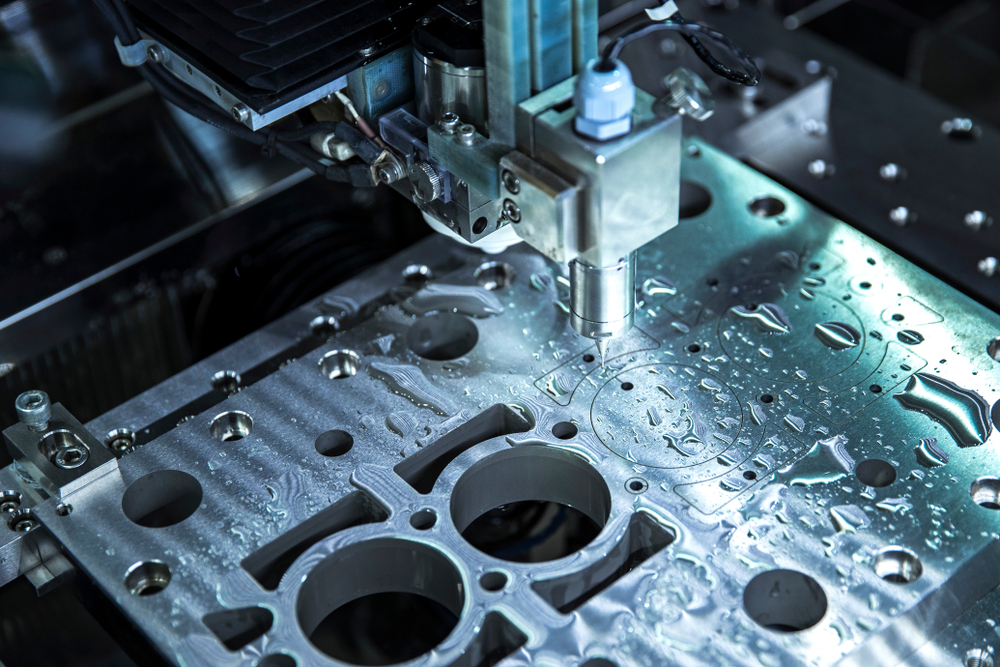
cnc sheet metal machine-working process

Computer Numerical Control

The first thing to note is the advancement in the accuracy and precision of sheet metal machines. With the use of computer-controlled machines, manufacturers can now produce parts with high precision and repeatability, eliminating the need for manual adjustments and minimising errors. This technology, known as CNC (computer numerical control) allows for faster production, and the ability to produce intricate parts that would be difficult to produce by hand. CNC technology also dramatically increases the safety of operations, as workers can operate cutting and bending machines such as guillotines and press brakes from a greater distance away from parts that can cause danger or physical trauma. CNC technology is consistently improving with the latest versions improving their interfaces to allow for an experience that is as efficient and user-friendly as possible.

Robotic Integration

Another key advancement in sheet metal machine technology is the integration of robotics. Robotics technology has come a long way in recent years and is now being used in sheet metal fabrication. Robotic systems can handle repetitive tasks, such as welding and painting at a consistent standard for an extensive period, thus increasing efficiency and reducing labour costs. Moreover, Robotic automation also ensures consistent high-quality output every time, which is vital in industries such as aerospace, where even the slightest error could have catastrophic consequences. Integration of robotic elements with CNC technologies allows machines such as plasma cutters to cut sheet metal with incredible detail and precision according to the parameters set by the operator. They can further replicate the outcome consistently and repeatedly from this point.

3D printing Sheet Metal Machinery

As 3D printing technology advances, the sheet metal machine industry has been experimenting with ways it can be implemented within manufacturing. Metals can currently be 3D printed if they are available in a powdered form. This powder is further combined with a liquid component for printing. 3D printing allows manufacturers to quickly produce small quantities of parts, even ones that are impossible to produce with traditional manufacturing methods. This technology can also be used to produce prototypes, which can then be used for testing and validation before mass production begins.

Improved Energy Efficiency

Another advantage of the latest sheet metal machines is that they have become more energy efficient. With the increasing focus on sustainability, it is vital to have machines that consume less energy while maintaining their productivity. This not only helps to reduce environmental impact, but it also helps to lower operating costs, especially given the rising electricity prices throughout 2022 and expected in 2023.

AI Integration

Another exciting development in sheet metal machines is the use of artificial intelligence (AI) and machine learning. This technology can be used to optimise production processes and make real-time adjustments, increasing efficiency, and precision. It can also be used to predict and prevent machine failures, reducing downtime and maintenance costs.

Sheet Metal Machines For Your Business

Technological advances continue to revolutionise the sheet metal fabrication industry, allowing manufacturers to produce high-quality products at a faster rate, and with less waste. The advancements in precision, robotics, 3D printing, and energy-efficiency give us an insight into the capabilities of the sheet metal manufacturing industry in the future. If you are interested in incorporating the latest sheet metal machines into your manufacturing process, our team at ACRA Machinery will be able to help you ascertain what sheet metal machines will be most efficient for your requirements.

Whether you need slicing, bending, notching, or more – ACRA Machinery has new and second-hand machinery available for purchase today to meet all your sheet metal machine needs. Not only that, but we offer maintenance and repair to your industrial machinery as well.

Get in touch by calling us at 03 9794 6674 or contact us via our online enquiry form.


Plate rolls: what are they and how do they work?

Plate rolling is a fabrication method used for rolling metal sheet plates into a desired curved shape, such as cylinders, cones, and arcs. This technique is used by many industries for a variety of applications, such as shipbuilding, aerospace, and automotive manufacturing. To achieve the desired effect, factories use industrial-grade plate rolls – a type of sheet metal fabrication machine.

plate roll machine bending sheet metal

What is Plate Rolling?

The process begins by taking a large plate of flat sheet metal and feeding it into the powerful rolling machine. The sheet is sandwiched between two or more large rollers, which are then used to bend it into the desired shape as it is fed between the rollers. Multiple pass-throughs may be required to get the sheet into the desired shape, or the machine may focus on a specific section during a pass. However, the machine has the capability to generate angled curves, such as the ones required for conical shapes. The plate roll is powered by a drive system that can be either an electric plate roll or a hydraulic plate roll. This process is overseen by a computer control screen located next to the rollers.

Advantages of Plate Rolls

There are several advantages to using plate rolling for metal forming. First, it is a cost-effective way to bend metal into complex shapes. Since the process is done with a machine, it is much faster and more efficient than manual forming. Additionally, plate rolling can be used to form thicker plates than other methods, such as press brakes. However, this will depend on the size and capabilities of the roller. This makes it ideal for heavier applications, such as shipbuilding and aerospace.

The amount of force can be adjusted to the specific needs of the application, which allows for the creation of parts with different levels of thickness and strength, alongside complex and intricate curved shapes. This can be especially useful for applications that require parts with complex designs, such as pressure vessels and tanks. Usually, materials such as steel, stainless steel and aluminium are used with the machine as they are malleable under force and not structurally brittle. However, the process can form and shape metals such as copper and titanium.

Given the mechanical nature of plate rolling operations, it is a reliable process that produces consistent results. The process is done in a controlled environment, which ensures that each part is consistent and meets the exact specifications. This can be beneficial for applications that require parts with a high degree of accuracy and is more reliable than traditional manual methods.

Safety Considerations with plate rolls

When working with plate rolling machines, there are several safety practices that must be considered. First, the operator should always wear appropriate safety gear, such as eye protection and gloves. Additionally, the machine and its components should be regularly inspected to ensure that everything is in working order. Finally, the operator should be aware of the machine’s capacity and never attempt to roll a plate that is too thick or too large. If your machine is not functioning well or hasn’t been inspected in a while, ACRA Machinery provides industrial machinery maintenance and repair for a variety of sheet metal fabrication machines including plate rolls.

Tips and Techniques for plate rolling

To get the best results when plate rolling, there are several tips and tricks to follow. First, the plate should be placed on the rollers in the correct orientation. This ensures that the plate is bent in the right direction. Additionally, the operator should use a lubricant to reduce friction and make the process easier. Finally, the rollers should be set at the correct speed and pressure to ensure that the plate is bent properly.

Plate rolling is a complex process, but it is an efficient and cost-effective way to create precision parts for industrial applications. The reliability and diverse functionality make it an essential asset to many sheet metal fabrication factories.


Sheet Metal Solutions

Does your warehouse need a plate roll? Or does your plate roll require repair or maintenance? ACRA Machinery supplies industrial sheet metal machinery to cater for all your sheet metal fabrication needs, including plate rolls. Find out more about the Durma Motorised or hydraulic roll plate range. Whether you need slicing, bending, notching or more – ACRA has new and second-hand machinery available for purchase today. Not only that, but we offer maintenance and repair to your industrial machinery as well.

Get in touch by calling us at 03 9794 6674 or contact us via our online enquiry form.

What is an Industrial CNC Plasma Cutter Machine and How Does it Work?

CNC Plasma cutters are a type of industrial machinery used to produce precise, custom die cuts in sheet metal, mild steel, and other electrically conductive materials such as aluminium. The key benefit of a plasma cutter is its ability to cut in complex shapes and patterns, including curves, straight edges, spirals and more. To be sliced using the plasma cutter, the material must have a thin, flat surface as the plasma will not be able to slice through objects after a certain thickness. CNC stands for Computer Numerical Control, meaning you will be controlling the cutting capabilities of the machine via a control panel, rather than manually slicing through materials. Digital control makes CNC Plasma cutter machines perfect for achieving consistent, repetitive custom shapes in sheet metal whilst retaining almost perfect accuracy throughout the operation.

How does a plasma cutter work?

Plasma occurs when gas is heated so significantly that it becomes ionised and electrically conductive. It transitions the gas to a new state of matter equivalent to ice transforming into a liquid form (water) when heated. A plasma cutter machine utilises the immense energy stored in plasma and transfers it to a conductive material such as steel or aluminium. The heat creates a clean, rapid, and precise cut in the material. Gases used by the cutter can include Oxygen, Nitrogen and Argon, but will vary depending on the project materials and applications. These gases are stored in large industrial tubes near the machine. When the plasma cutter is active, gas is forced into the highly pressurised nozzle whilst an electric arc is introduced from the power supply. Combining these two forces creates the plasma cutting jet, with temperatures greater than 20,000 Celsius. The piercing capacity of machines can also vary from 16mm thick all the way up to 50mm. The high pressure of the jet allows it to cut curved and custom shapes into far thicker material than other sheet metal slicing machines.

What a plasma cutter looks like?

Industrial plasma cutters are large rectangular table-like machines, with the cutting surface (AKA cutting bed) facing upwards. The plasma cutting torch nozzle is positioned to face down and opposing to the cutting surface to achieve the most accurate and clean slices. The nozzle arm is attached to two beams that allow the arm to slide vertically and horizontally respectively. This gives the cutter range across the full table and means it is not fixed in one position like larger slicing machines such as guillotines.  Accompanying the cutting table is a large standing control panel with a monitor that allows for the 3D graphical input of shapes for cutting. To create any pattern or shape with the plasma cutter, a file must be uploaded to the control panel with accurate dimensions and specifications. Cutting beds can range in size from 1.9m in length, all the way up to 4.5m; for larger, longer sheet metal operations.

Wet vs dry bed plasma cutters

Industrial plasma cutters can be split into categories of waterbed and downdraft (AKA drybed.) Waterbed systems have a cutting surface that is covered in water, the sheet metal sits on thin horizontal metal slats that the water sits in-between rather than one entirely flat surface. This technique is historically used for plasma cutters, however, modern technology allows some machines to raise and lower the water level. This allows the sheet metal to be entirely submerged or above the water entirely. So, what does the water do? When cutting plasma in water, it captures and filters smoke particulates and dust that is generated during the cutting process and removes any chance of heat distortion on your cut materials. This results in cleaner slices overall. However, the downside to this type of table is the upfront cost – and it is not suitable for slicing aluminium. Choosing the right surface or ‘bed’ for your plasma cutter will depend on what materials you will mostly be cutting with.

Sheet Metal Solutions

Does your warehouse need a plasma cutter? Or, does your plasma cutter require repair or maintenance? ACRA Machinery supplies industrial sheet metal machinery to cater for all your sheet metal fabrication needs, including CNC Plasma cutters. Find out more about the Escco ProCut Plasma and Durma Plasma cutter range. Whether you need slicing, bending, notching or more – ACRA has new and second-hand machinery available for purchase today. Not only that, but we offer maintenance and repair to your industrial machinery as well.

Get in touch by calling us at 03 9794 6674 or contact us via our online enquiry form.

What is PPE and Why Does it Matter?

As experts in industrial machinery repair and in the sheet metal machinery industry, we know the critical importance of Personal Protective Equipment (PPE). Here in Australia, we have specific laws and regulations surrounding PPE, but this has not always been the case.

We all know that safety should be the number one consideration in any workplace, especially within industries where workers encounter hazards in the course of their general work. In 2022, there are many rules and regulations that aim to protect the health and safety of people in the workplace, including the Occupational Health and Safety Act of 2004.

Keep reading to find out all about personal protective equipment, your responsibilities as an employer or an employee, and our special safety tip to keep everyone in the workplace safe.

So, What is PPE?

According to Safe Work Australia, personal protective equipment is anything that can be worn, applied, or used to protect against health and safety risks in the workplace. PPE is used in many industries and many different workplaces because there are inherent risks in numerous jobs and career paths.

Machinery repair is one of the industries in which PPE is absolutely essential. Working with sheet metal machinery requires proper PPE, but as Safe Work notes, PPE is the last resort when it comes to mitigating risks and protecting against hazards. This is due to the fact that, while necessary as a last resort, PPE is actually one of the least effective hazard-minimising measures. That’s because higher-level measures should be applied first, such as completely removing a hazard if possible. Visit Safe Work Australia to find out more about when to use PPE, and inform yourself all about safety in the workplace.

PPE can include, but is not limited to:

  • High-visibility clothing
  • Hard hats
  • Protective goggles
  • Respirators
  • Safety boots
  • Sunscreen

There are also guidelines to follow when it comes to PPE, including that the PPE must be suitable for the job being carried out.

Early PPE: The Beginnings

The origins of PPE can surprisingly, be traced back all the way to the Middle Ages, if not before then – think suits of armour and protective gear worn by gladiators in ancient times, for example, can be seen as a type of personal protective equipment.

Another example of early PPE can again, be seen in the Middle Ages, in the masks worn by doctors during the Black Death. These ghoulish, beak-like masks are synonymous with the bubonic plague and can be seen as a very early iteration of the surgical face mask that we are all so familiar with thanks to Covid 19.

Late in the 19th century, eye protection and foot protection began to become available, but these measures did not protect all workers in industries that needed them (like welding and manufacturing, for instance), as their use was not mandated.

Further along in history, we encounter the first world war, and it seems that this is one of the first and most well-documented cases of PPE use in the form of respirators. During WW1, there was actually widespread use of chemical gases like mustard gas, hence the need for protection against the painful and dangerous effects of this. It would be decades, however, until the use of PPE was written into law around the world.

Where Does Australia Stand with PPE?

So, where does Australia stand with PPE? Well, the answer is simple: if you are an employer, you’re required to provide it to your workers. And if you’re a worker, you’re required to wear said PPE in the correct manner.

That means that no matter your industry, job, or role if you’re a worker that has the potential to come into contact with hazards, you are subject to the Work Health and Safety Act’s laws about PPE.

Whether you’re in the medical field, manufacturing, food processing, hospitality, or even in the sheet metal industry, remember that your personal protective equipment is of the utmost importance to help ensure your safety in the workplace. In fact, if you do work with sheet metal machinery, make sure to read our guide to PPE in the metal workshop.

Bonus Round: What Else Can I do to Promote Safety?

Here at ACRA Machinery, we believe that one of the most crucial ways to promote safety in your workplace is to make sure that you keep up to date with machinery maintenance. We both maintain and repair guillotines, bandsaws, iron workers, press brakes, and laser cutters, just to name a few!

Need machinery maintenance or machinery repair in Melbourne?

At ACRA Machinery, we are proud to offer you the best in machinery maintenance and repair, as well as brilliant customer service and professional expertise. Call us on 03 9794 6675, or fill out our contact form, and we will happily get back to you!

Ironworker Machine 101: How do Ironworkers Function?

Here at ACRA Machinery, we are ironworker machine experts and we are a market leader in machinery repair and maintenance in Melbourne. But have you ever wondered exactly what an ironworker is, or what it does? Maybe you’re starting out in fabrication or manufacturing, or maybe you’re just curious about machinery. Either way, keep reading to find out all about ironworkers, what functions they perform, and why having one can be advantageous for your workplace.

What Exactly is an Ironworker?

Ironworkers are multi-functional machines that typically perform three tasks. In general, these machines are operated manually, however, they can be fitted with controls that allow some level of automation. That being said, ironworkers operate using either mechanical or hydraulic technology, and they are very versatile machines to which various attachments and accessories can be added, in order to enhance and increase functions.

What Functions Does an Ironworker Perform?

Generally, the ironworker machine can do three things, which makes them adaptable pieces of machinery. The three main functions of the ironworker are shearing, notching, and punching sheet metal, though sometimes they can also form and bend metal, too. These are useful capabilities for fabricators and manufacturers, and it is particularly useful to have these functions available in one machine. Keep reading to discover the ins and outs of each of the main functions of the ironworker.

Punching: When it comes to sheet metal, punching refers to the process of cut-outs or holes being created in the metal by the application of significant force. A variety of different shapes can be created, though geometric shapes are standard.

Shearing: Shearing is a process where the sheet metal is sliced with a blade attached to the ironworker. Some of the advantages of shearing are that the metal can be cut at room temperature, not requiring heating beforehand, and the fact that shearing creates less waste than other metal cutting processes.

Notching: Notching is a process that is related to shearing, and essentially involves using the ironworker to cut away material from the outer edges of the sheet metal. The process allows complex shapes to be cut from metal with precision.

What are Some Advantages of Using an Ironworker Machine?

Multi-functional: One of the great advantages of ironworkers is that they perform multiple functions in one machine – this means that they are adaptable and flexible machines that can promote productivity as they are capable of carrying out more than one task.

Efficiency: These machines are energy efficient, cost-efficient, and time efficient, due to the fact that they don’t take very many people to operate, they perform multiple functions, and they are not expensive to run. This efficiency means they are valuable machines for your workplace if you’re in fabrication or manufacturing in particular.

Precision and Accuracy: An ironworker is a machine that has the capability to smoothly cut metal, and to precisely make holes and shapes in metal, too. This precision and accuracy mean that time and labour is saved as there isn’t a need for extra manual or mechanical cutting after the fact.

How Can I be Safe Around an Ironworker?

Safety is of the utmost importance when it comes to working with and being around ironworker machines. It is important to keep in mind the safety of all workers, and anyone who may be able to come into contact with these machines, as they do pose safety risks due to the nature of the work they do.

Because ironworkers are capable of cutting, notching, shearing, and punching metal, among other functions, this means that they are also capable of causing these injuries to their human operators. As such, there are critical safety considerations to keep in mind, and procedures and rules to follow when it comes to operating or being in proximity to these machines.

Don’t forget to look into your rights and responsibilities when it comes to safety around ironworker machines and other machinery, and also check out our guides for promoting safety when it comes to sheet metal fabrication, and shearing and punching safety.

Ready to Buy an Ironworker?

Look no further than ACRA Machinery. Backed by 42 continuous years of industry experience, we are a market leader in machinery repair, sales, and maintenance. While you’re looking for your ironworker, make sure to check out our range of machinery to ensure that you are getting the very best expertise, customer service, and ongoing maintenance.

Looking for Machinery Repair Melbourne?

Whether it’s for your ironworker or your guillotine, bandsaw, or press brake, we are industry leaders in machinery maintenance and repair. Get in touch by calling us on 03 9794 6675, or by filling out our online contact form, and we will take care of your enquiry!


How Do Hydraulic Technology Systems Work?

Hydraulic power is all around us – from the water in our taps to the more complex systems of large tools and machinery. Hydraulic technology powers not only many of the modern conveniences that we take for granted but industries like farming and manufacturing.

Have you ever wondered how this technology really works? Perhaps you work with machinery that has a hydraulic component each day but would like to know more about what makes it function. Keep reading to find out all about the technology behind hydraulics and what makes those hydraulic guillotines and press brakes keep ticking over.

What is the Science Behind Hydraulic Systems?

Hydraulic systems are powered by liquid – specifically by moving and pressurised liquids that are used to move or lift things. Machinery that uses this technology transfers force from one area to another, using a non-compressible fluid. This means that the fluid cannot be compressed – that is, its volume or density cannot be reduced when pressure is applied.

The foundational scientific principle behind hydraulics is Pascal’s law, researched by Blaise Pascal. This principle notes that liquid within a closed container will be transmitted to all sides of said container, should any pressure be applied at any place. It is Pascal’s principle that underlies the theories which inform the technology of hydraulics.

hydraulic hoses used in machinery

The Components of Hydraulic Machinery

There are several components that make up your machinery powered by hydraulics, all of which work together to promote the functioning of the system. Read on to learn more about the components of hydraulic machinery.

Hydraulic Pump: Integral to the function of the hydraulic system, the pump supplies the liquid to the other components in the structure. There are different types of pumps used for hydraulics, including gear pumps, radial pumps, and vane pumps. Each has its benefits for different applications, and this is determined by the pressure output involved.

Hydraulic Actuators: Actuators are comprised of two types: motors and cylinders. The function of an actuator is to convert hydraulic energy into mechanical energy.

Control Valves: Control valves are responsible for directing the liquid to the actuator so that the actuator can perform its function. In addition to directing the fluid, the control valves also control the flow and pressure of the liquid throughout the system.

 Accumulators: The function of an accumulator is shock absorption and pulsation absorption, which allows the system to deal with the demands of the operation. Smoothing out pulsations is one example of this function.

Hydraulic Reservoir: The reservoir is designed to store excess fluid that exists due to changes in liquid volume through the operation of the machinery.

Hydraulic Fluid: Hydraulic fluid is to the hydraulic system what blood is to the human body: it’s what powers the whole system. This fluid is usually a combination of petroleum and additives – and, as noted above, it must be incompressible.

Filters: These play an important role in the hydraulic system, as filters remove undesirable elements, such as metallic particles. Filters are placed in various parts of the machinery, in order to keep the entire system functioning properly.

In addition to the components above, this technology also requires tubes, pipes, and hoses as well as seals, fittings, and connections in order to function.

Ensuring Safety Around Hydraulic Technology

Being safe around hydraulic machinery begins with knowing how to be safe around all machinery. As we all know, safety must be the foundation of every operation, and this starts with knowing and understanding your responsibilities and obligations as an employer, manager, or employee. You can check out more about these at Work Safe Victoria.

Regular maintenance is essential for the safety of all machinery, and machinery operating with hydraulic technology is no exception. It is therefore imperative that all machinery is maintained, serviced, and inspected regularly by trained professionals, as this will help to ensure that it operates safely. At ACRA Machinery, we are ready to assist you with all your machinery maintenance needs.

In addition, as per the Occupational Health and Safety Regulations 2017, it is also essential that those operating and working with the machinery are properly and fully trained, including proper supervision during training. Through their training, these workers must be aware of the potential risks associated with the machinery they work with.

For more information, check out our guide to creating a safe factory environment and for more hydraulic machinery safety tips, have a look at this guide from Safe Work NSW. Remember to always comply with the rules and regulations of your particular state.

Need Machinery Sales, Repair and Maintenance Experts?

If you’re looking for the best in machinery and world-class customer service and support, look no further than ACRA Machinery. We are backed by 42 continuous years of experience in the industry and always aim to assist our customers with honesty and integrity.

So, whether you’re looking to buy a press brake or searching for machinery repairs, we are here to help. Contact us at 03 9794 6675 or by filling out our contact form and we’ll be happy to assist you.


What is a slitter folder and how does it work?

Slitter folders are industrial machines used for manipulating thin sheet metal. They function as the name suggests, with bending and slicing capabilities. Some machines, such as the Jorns slitter folder, are very large and can be up to several meters in width. The machine’s integration with a computerised control screen allows for accurate and lengthy operations on the metal with minimal chance of mistakes.

How does a slitter folder function?

Before using a slitter folder, you will need to measure up the size of the sheet metal, so that it can perform accurate operations. Users start by sliding sheet metal onto the wide flat area (conveyer belt.) Depending on the slitter folder model, sheet metal of varying thickness can be sliced or folded. Most machines will be able to operate on material that is 1.2mm-2mm thick, with some, such as the Jorns Slitter folder, able to operate on increased thicknesses of up to 3mm. The type of material will also affect the pliability of the metal, with stainless steel usually having a thinner maximum than aluminium.

The control panel

To achieve the desired slicing or bending effect, users must input the material measurements accurately into the control panel. From here you can input the instructions for the machine to complete. The control panel has some template selections you can choose from, or you can manually input the selections you would like to make. Some more advanced and modern machines allow users to draw the profile and edit the angle of any bends down to a degree.

Bending

Bending begins by sliding the sheet metal out to where the operator wants the fold to occur. For example, they might input a bend of 60 degrees, 15cm out from the edge of the sheet into the control panel. The slitter folder slides the sheet outward by 15cm, and holds the sheet in place with the ‘back gauge’. The arms from the back gauge create a series of arches that connect into a flat, horizontal clamping beam, which drops down to clamp the sheet metal and ensure there is no movement. However, the arches mean that when the beam rises again, sheet metal can be slid and repositioned underneath easily. To create the bend, the front undercarriage will rotate outwards and upwards from underneath the front of the machine and push on the sheet metal until the desired angle is reached. The sheet metal is clamped firmly enough by the back gauge, that when the rotating bar underneath releases, a permanent bend will occur in the metal. If the desired angle is 90 degrees, the underneath bar will rotate until it is vertical and perpendicular to the flat sheet metal behind the stabiliser bar. The Jorns double bending slitter folder has two rotating bars. One is positioned above the sheet metal, the other below. This increases the angular capabilities of the bends and should speed up operations.

Slitting

This covers the other half of the slitter folders’ name. The machine has a built-in guillotine that can complete precise horizontal slices across the metal. The guillotine is only suitable for straight cuts across the entirety of the piece, for more complicated slices a different machine would be required such as a bandsaw. The steps to slice metal are pretty like bending. The requirements must be input on the control panel. The sheet metal will be slid out to the point where the cut has been programmed. The back gauge clamps the sheet metal. However, this is when the guillotine will run across the machine horizontally, creating the slice from left to right.

Safety

After any instructions are input on the control panel, the machine has a foot pedal to turn the machine on, as well as other safety switches and an emergency stop button. A foot pedal ensures that the operator is standing far enough away from the machine’s clamps and guillotine when they start. As always, operating industrial sheet metal machinery can be dangerous and should only be operated with the required training and all safety protocols in place.

ACRA Machinery supplies a variety of industrial sheet metal machinery to cater for all your sheet metal operative needs, from Durma press brakes to Jorns slitter folders. Whether you need slicing, bending, notching or more – ACRA has new and second-hand machinery available for purchase today. Not only that, but we offer maintenance and repair to your industrial machinery as well. Are you looking for a slitter folder for your warehouse, or does your slitter folder require repair or maintenance?

Get in touch by calling us at 03 9794 6674 or contact us via our online enquiry form.