All About CAM

Whilst there are some types of sheet metal machinery that require a heap of manual work to operate – there are some machines that require a lot less but can do a lot more. CAM (computer-aided manufacturing) is fundamental to the future of the sheet metal fabrication industry. CAM is a system that allows you to accurately input the relevant specifications and parameters when performing a job – whether it’s with a turret punchplasma cutter or any other machine. 

CAM is able to be used with various types of software that you can use with all types of sheet metal machinery. A CNC (computer numerical control) machine is the type of machine that uses CAM. The first CNC machine was created in 1949 by John T. Parsons for the US Air Force. As the name suggests, CAM is any type of manufacturing process that uses software to drive sheet metal machinery. This includes facilitating, assisting and automating the machinery. Let’s dive into the basics of CAM.


How does it work?

CAM translates the data and instructions that have been inputted into the software so that the machine or tool you’re using can perform the required job. The G Code is the type of code that exists within a CNC machine. It is this code that is responsible for talking to the motors and gears within the machinery – telling it exactly how to operate and where to go to complete its job.

You’ll need three fundamental components for a CAM system to work: machinery, software and post-processing. In addition to these components: human labour, experience and skill are also essential to operate a CAM system. At the end of the day, you still need a human to input the data and designs – as well as know the ins and outs of the software and hardware to ensure everything runs as it should.


What is CAD and what’s its relation to CAM?

CAD (computer-aided design) is the first step on your way to CAM. It is a program that allows you to design both 2D and 3D shapes for manufacturing purposes. With CAD, you can design the aesthetic of the product as well as how it functions. The genius thing about CAD is that it documents the process and steps required to reach the finished product. Once completed, the CAD model is then imported – generally as a .CAD file – into a CAM system. 

The software will now begin preparing the model for machining by analysing the design and data to ensure that everything is quantifiable – this includes:

  • Checking for geometric errors that may hinder the manufacturing process;
  • Charting a toolpath for the machine to follow in order to accurately manufacture the design;
  • Preparing any parameters such as voltage and cutting speed; and
  • Configuring where the part/product shall be nested in order to maximise the efficiency of the machining process.

What’s the difference between CAD and BIM?

Whilst CAD is great for individual parts and products, BIM (building information modelling) works best for large-scale projects and team collaboration. BIM actually utilises the same fundamental principles as CAD but allows collaboration between architects, engineers and other design and construction members who need to work on the same project. 

This means that different members of the design or construction team can access each other’s models and integrate them with their own. The information is imported the same way as with a CAD design – as they’re essentially the same – and then the process we explained above is undergone to ensure that everything is able to be done. 


What are the benefits of CAM?

CAM holds some great economical and practical benefits, such as:

  • Greater production speeds;
  • Significant consistency and accuracy between identical products;
  • Improved efficiency as it is a machine performing the job – meaning no fatigue or breaks required; and
  • More sophisticated as complex patterns can be manufactured with ease.

Are you in need of CNC sheet metal machinery?

If you’re looking at doing some CAM, then look no further than ACRA Machinery. We sell a large variety of both new and used sheet metal machinery – including CNC machines. Our experienced and knowledgeable staff will be able to assist you with any questions you may have regarding our products. We also offer sheet metal machinery repair and maintenance services.

So, if you’re looking for some CNC sheet metal machinery, then please give us a call on 03 9794 6675. Alternatively, you can fill out the enquiry form on our website.

Bending: Slitter Folders Vs. Press Brakes

These are both highly essential sheet metal machinery products that perform complex tasks in a workspace. One of the key similarities between the two is that they are both able to bend sheet metal – albeit through different processes. Bending sheet metal is a process that is widely-used across various different industries and can be seen in use during everyday life. Today we’ll be going in-depth with these processes and comparing the two to see how a slitter folder differs from a press brake.

Bending with a slitter folder

A slitter folder only requires a single set of tools to tackle any bending angle and will adjust itself automatically to suit the thickness of the sheet metal or other material. The piece of sheet metal is supported on a support table on the machine and a gauging system ensures that the sheet is positioned to the bending line appropriately. The majority of the sheet metal is clamped inside the machine – out-of-sight – whilst a folding beam moves from underneath and pushes the exposed part of the sheet upwards, thus bending it.

Slitter folders can withstand significant sizes of material thickness. In fact, regardless of how thick – or thin – the material is, the process will still be executed and completed the same way with a slitter folder. Bending with a slitter folder is also extremely ideal for if you’re dealing with a material whose surface you do not want to tarnish. Because the bending beam barely slides around at all when folding, no scratches are made to the material’s surface. For this same reason, the bending beam itself requires little maintenance and will rarely show signs of abrasion – even after years of use.

If you’re looking to bend angles less than 90°– for example if you’re trying to form a hexagonal or octagonal shape – then that’s also possible with a slitter folder through short bending segments. This particular type of sheet metal machinery is also able to bend sheets so that they curve – but without the visible presence of bending steps on the outside of the sheet. This essentially means that you’re able to create cylindrical–type shapes. No special tools are required for this process to be executed as well as the process of bending hems – which is also quite simple with a slitter folder.


Bending with a press brake

Bending sheet metal – and other materials – with a press brake can be a bit trickier in comparison to a slitter folder. The operator must manually hold the majority of the sheet whilst the short flange that is to be bent is positioned inside the machine. The die from the press brake presses downwards into the bending area on the sheet and it is bent to the desired angle. This can be a potential hazard as the operator must be paying full attention whilst the process is happening as they’re the ones offering the support to the rest of the sheet. 

Press brakes require multiple types of V die for different angles as well as sheet thicknesses. These dies also need to be monitored and replaced as they will deteriorate and wear over time – affecting the overall result of the bend. As opposed to a slitter folder which can manage with the single tool. Press brakes are also not very efficient for materials with sensitive surfaces as the V die will leave a considerable amount of visible scratches on the material when bending it.

Creating smaller bends and a radius with a press brake can prove to be difficult due to the way that the machine bends sheet metal. You will need well-trained operators and the process can end up taking a long time – certainly longer than if a slitter folder were to do the same thing. If you want to bend hems into a sheet then that is possible with a press brake – but you’ll need to fork out extra for specialist tools specifically designed for such tasks.


Looking for sheet metal machinery?

If you’re looking for sheet metal machinery – both new and used– then ACRA Machinery is your one-stop-shop for slitter folderspress brakes and other similar machines. Our highly experienced and knowledgeable staff will be able to direct you to the right machine for you and answer any questions you may have along the way.

If you would like to know more about our sheet metal machinery products, then please give us a call on 03 9794 6675. Alternatively, you can also fill out the enquiry form on our website.
Press Tools: The Complete Guide

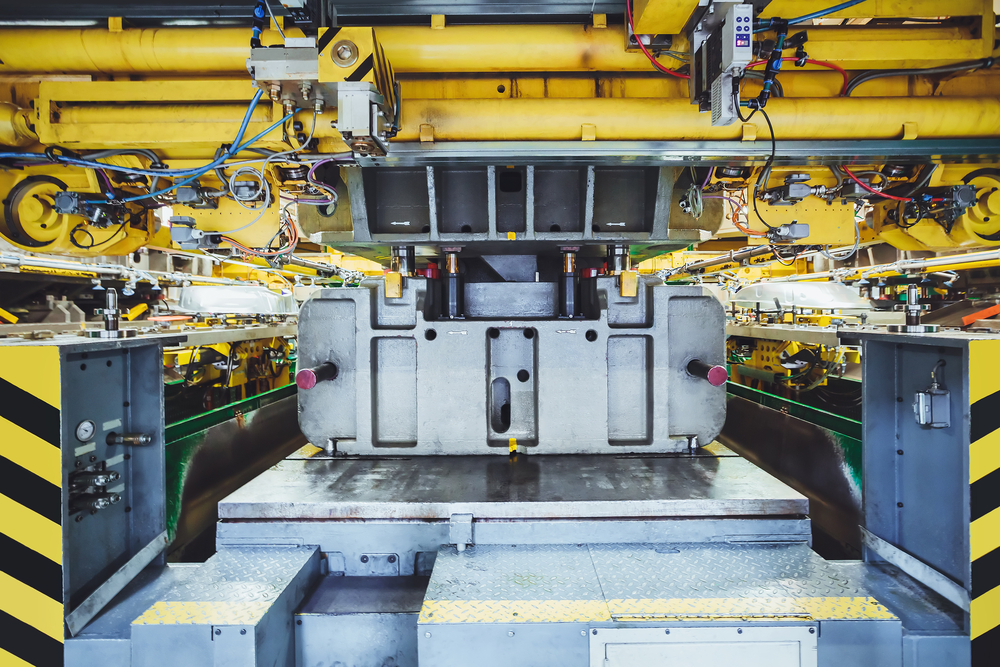
A Press tool is a particular type of tool that is attached to a press brake and is used to produce a high volume of components. These types of tools are predominantly used in mechanical, pneumatic and hydraulic presses to achieve their goals. There is a large number of press tools that can be used with a press brake and they all have their own unique features and perks. This guide is designed to help you understand what each of the different press tools does and what they’re suited for.

Blanking tool

A blanking tool is able to cut the entire outer profile of a sheet of metal in a single stroke with one punch and die. The process of blanking is when you cut a flat shape out of a sheet of metal. The leftover scraps are generally chalked up to wastage or can be recycled/repurposed for another use.


Piercing tool

When using a piercing tool, you will end up with a clean-cut hole in your sheet metal with a scrap slug. Flat holes can also be produced with a piercing tool by using a shearing action.


Cut off tool

As the name suggests, a cut off tool is used to cut off a strip of sheet metal. The dimensions of the strip are entirely up to you and what you need it for and the operation is completed in a single motion. The strips may be used for things such as further bending with other tools. There is no wastage when using the cut off tool.


Parting off tool

The parting off tool is very similar to the cut off tool. The main difference between these two is that a cut off tool uses one motion to cut off a piece and can then be fitted perfectly on the sheet. Whereas with a parting off tool, you must cut along two paths at the same time. The result is that there is some wastage and the cut off piece cannot be nestled precisely.


Drawing tool

Using plastic deformation, the drawing tool is used to turn flat pieces of sheet metal into shapes such as cups and shells.


Trimming tool

This press brake tool is designed to regulate the irregular waviness that is left in the sheet metal’s side after cups and shells are cut out of it.


Shaving tool

A shaving tool’s primary use is to shave a small amount of material off the side of a hole or shape that has already been cut into sheet metal. By shaving off the small amount of material, the sides are made smoother.


Bending tool

This is a fairly straight-forward press tool. It is able to bend metal stampings. The bending tool is only able to apply simple bends however, meaning only straight bends can be applied. Multiple bends can be applied to a single stamping.


Forming tool

Coming from the same family as the bending tool, the forming tool is able to apply more complicated bends to stampings such as those that curve.


Progressive tool

A progressive tool is any press tool that reaches its goal via multiple stages – with each stage progressing the shaping of the metal further and further until the final stage is reached. The final stage tends to just be when the shape is cut off.


Compound tool

With a compound tool, the blanking and piercing stages fused into one and the tool itself is inverted. There is no piercing die as the role is replaced by the blanking punch.


Combination tool

Combination tools are able to perform two operations simultaneously. So, an operation such as forming or drawing may be combined with a cutting operation – such as piercing, blanking and cut off. Essentially a cutting and non-cutting operation may be performed simultaneously – but two cutting operations cannot be performed at the same time.


Are you in need of press tools for your press brake?

There are many press tools out there and each one helps each individual achieve the goal they’re striving for. If you need to purchase some tools for your press brake, then why not consider ACRA Machinery. We offer a variety of press tools and other sheet metal machinery products and machines – both new and used. We also offer comprehensive repair services and expert advice, dispatched by our knowledgeable staff. 

If you would like to know more about the press brake tools that we offer, then please give us a call on 03 9794 6675 or fill out the form on our website.

Austech 2019: Product And Brand Highlight

Last month, ACRA took part in Austech 2019 – Australia’s Premier Advanced Manufacturing Machine Tool Exhibition. This is Australia’s only fair that specifically targets the metalworking, machine tool and ancillary market. It’s a great way to showcase new products and connect with other like-minded individuals and industry fellows. ACRA was there representing some fantastic brands and had some incredible sheet metal machinery on show – which we will be having a look at in today’s blog.

Austech itself is presented by AMTIL (Australian Manufacturing Technology Institute Limited). AMTIL is the highest body in Australia that represents manufacturing technology suppliers’ best interests – as well as users within the advanced manufacturing and precision engineering sector. They were established in 1999 and act as a national hub for all associated industries. 


Jorns

Jorns is a Swiss-based sheet metal machinery company that has been in operation for 46 years and manufacture 120 machines per year. 40% of the manufactured machines are double bending machines, but that number is expected to grow to 50% soon. On display at Austech this year, was the Jorns JDB Double Bending Slitter Folder. This incredible machine can bend multiple pieces of parallel, tapered or overlapped profiles into complex shapes simultaneously, giving it an edge over some other slitter folder products. 

What is great about Jorns, is the fact they’re only a small team of 70, giving the brand a unique and boutique touch. They currently have over 5,500 machines in operation and are able to manufacture machines built to custom specifications – some of which have been up to 16m in length in the past. We have been proudly partnered with Jorns for 13 years. You can watch a video of the slitter folder in action here


Durma

Established in 1956, Durma supplies to over 120 countries across the world. They have a large manufacturing space based in Turkey with over 150,000 square metres. We showcased and sold two Durma press brake’s at Austech this year and have a fantastic selection of other Durma products available on our website. Durma have been partners with us for 25 years, making them our longest partnership. Some of the other types of products that Durma manufacture are:

  • Lasers;
  • Guillotines;
  • Punch presses;
  • Plate Roles;
  • Plasmas;
  • Profile Rolls;
  • Iron Workers; and
  • Notchers.

Escco

This company manufactures and assembles their products in the UK – as it is a UK based brand. Their clientele spans a cosy eight countries but their expertise spans over 40 years. They have been partnered with us for three years and have over 3,500 products in stock and ready to ship with 300,000 shipped orders already under their belt. For this brand we decided to go with one of their ProCut plasma cutters – the 1050 CNC with Hypertherm Powermax 85A. 

This plasma cutter is 3m x 1.5m and integrates the latest technology and manufacturing processes to bring you a high-end machining tool. You can see the machine in action in this demo video. Some of the products other features include:

  • A breakaway head;
  • Water bed extraction;
  • Digital height sense control;
  • Arc voltage control;
  • Precision linear rail; and
  • Laser positioning.

Fintek

Fintek specialise in folders and pan brakes and have been in operation for 36 years. This Taiwan based brand supply machines to 40 countries worldwide and offer more than 80 different types of models – some of their folders are even capable of folding metal up to 4000mm long and 6.5mm thick. 

We showcased a hydraulic pan brake from their VH series – in which you can watch the operational video for here. This pan brake comes with a three-function foot pedal to control the clamping, bending and then unclamping of the sheet metal. It is worth mentioning that our partnership with Fintek is our newest. 


Karmetal

The final product we brought with us to Austech 2019 was the 300KDG Semi-Automatic Mitre Bandsaw from the Turkish company Karmetal. The brand was founded in 1975, but they actually supplied parts for automotive factories and the Turkish military in the 80s. They currently export their sheet metal machinery to over 40 countries around the world and over 50 different models of band saws. We have been partnered with Karmetal for three years and you can view our full range of their products here.


Are you looking for sheet metal machinery?

Whether you caught us at Austech 2019 or not, you can still get a hold of our fantastic range of sheet metal machinery here at ACRA Machinery. On top of our new and used range of sheet metal machinery, we also offer repair and maintenance services.

If you would like to get in touch with us, then please give us a call on 03 9794 6675 or fill out the form on our website.

Sheet Metal Fabrication Trends For 2019

With another year gone past it means it’s time to look towards the future. The world of sheet metal fabrication has changed a lot over the years, from techniques to sheet metal machinery upgrades and improvements. In today’s blog, we’re going to be having a look at some of the upcoming trends that will most likely be shaping 2019 in the sheet metal fabrication world – and it seems to be looking quite optimistic.


Blockchain technology

Firstly, you’re probably wondering what technology such as blockchain has to do with metal fabrication. And they don’t really have much in common at a first glance. But the potential is there. Blockchain technology is essentially like a digital ledger. It is distributed throughout a network but cannot be copied. It only has one owner who is able to update it at will. Every update creates a block. It is most popularly known as the foundation of cryptocurrency.

Now, how does it relate to the metal fabrication industry? Well, it has less to do with the physical fabrication side and more to do with the business side. Blockchain technology can essentially make it easier to track guidelines and conditions that need to be met within the individual parts of a contract. This is an efficient way of getting through terms but also identifying and resolving issues in a timelier manner

Blockchain technology can also be used by metal fabricators to verify and validate vendors’ parts in the manufacturing process. It’ll also make it possible to track the DNA of the production process. 


Steel and aluminium demands

Thanks to constant surges in areas such as automotive, aerospace and construction (amongst others), the price for steel and aluminium are going to rise thanks to this demand increase. What will ensue will be raw materials going up for sale at volatile costs and everyone wanting a piece of it – which in turn will drive the prices up higher. With more of these materials being in demand, it means that more virgin steel and aluminium is having to be created which in-turn releases high quantities of carbon emissions into the environment.

The good news though, is that there have been new developments and advances in CO2 reduction technology. The new process uses inert anodes instead of carbon-rich anodes which leads to the production of oxygen instead of carbon dioxide. This will also further the production of aluminium in the future if it is more cost-effective and has a less harmful impact on the environment. 


Artificial intelligence

Though as a society we’re not completely there yet – especially not the metal fabrication industry – artificial intelligence is something that is on the horizon. In a few years’ time there will be AI machines that will be improving the efficiency and productivity of sheet metal machinery and the fabrication of sheet metal. Whether they’ll be performing the actual fabrication or simply advising on how improvements can be made – artificial intelligence technology will have a big impact on the sheet metal fabrication world in the not too distant future.


3D printing

This technology is so widely available now that the wonder of it has died down quite a lot since its inception. We mentioned it in our blog on trends for 2018 last year and it’s still as relevant now as it was back then. It is becoming more cost-effective and accessible for businesses to take on 3D printing and begin to create remarkable things with it. It is also a viable method for metal fabrication, as we mentioned last year.


Employment

The sheet metal fabrication industry continues to throw out jobs that need filling with the problem not being that the jobs are disappearing, but that people aren’t qualified enough to do them. In an earlier blog, we wrote that welding in particular is one of these jobs. In fact, it could very well be the job that this applies to the most.

The primary age bracket for welders seem to be above the age of 35. In Australia, it was found that a lot of welders are being outsourced from overseas to work on domestic jobs because our own workers fail the tests. The problem being that a lot of them don’t finish the adequate studies and are offered lower grade jobs before they graduate – which they take.


Looking for sheet metal machinery in Melbourne?

If you’re looking to purchase some new or used sheet metal machinery in Melbourne than ACRA Machinery is the perfect company for you. We specialise in a variety of sheet metal machinery products as well as employing expert staff and technicians for when you need them to be serviced.

If you would like to know more about the sheet metal machinery products that we offer, then please give us a call on 03 9794 6675 or send us a message through our website.

Shear And Punch Machine Safety Procedures

Just like with any type of sheet metal machine, there are certain safety procedures that must be adhered too before and during the operation period. In today’s blog, we’re going to take an in-depth look at the safety procedures surrounding punch and shears. Punch and shear machines are metal fabrication machines that are used for cutting shapes and punching holes in sheets of metal. So, before you use one of them, be sure to stick to the following guidelines and you’ll be good to go.

Pre-operational safety checks

Before you get the machine going, there are some steps you’ll want to follow to make sure everything is in order.

  • Make sure you’re wearing the appropriate protective gear – Safety glasses, ear muffs, leather gloves, appropriate footwear and tight-fitting clothing should be worn during operation. Hair must be tied back to avoid getting it caught in the machine and don’t forget to take off any rings or jewellery as well.
  • Make sure to observe the area for any other personnel and make sure it’s safe to start.
  • Use all the supplied safety guards, material hold-downs and punch strippers.
  • Make sure all safety guards and devices are in place.
  • Make sure to familiarise yourself with the instructions to ensure you know what all the buttons and functions of the punch and shears are.

Operational safety checks

Now that you’ve completed the pre-operational safety checks, you’re ready to use the machine. Whilst using the machine, it’s important to adhere to these rules closely.

  • Only one operator should be using the punch and shears machines at a time. This is very important as they’re made to be operated by a single person at a time. A supervisor should be present to observe. Note – the supervisor should be qualified to do so.
    If the machine is large enough then it is appropriate for it to be operated by two users if it has two separate roving pedals.
  • Know the limits of the machine. Do not use them in a capacity that’ll overextend their capabilities because it could cause damage to the machine, the sheet or metal and in some cases to yourself and others.
  • Whilst the punch and shears are operational, keep far away from any moving parts.
  • Make sure that both of your hands are far away from any pinch points in the machine.
  • You must always pay attention to what you’re doing. Do not be on your phone or be distracted by others whilst the machine is being operated. You must always be ready to take your foot off the roving pedal control in case a mistake is made.
  • As well always paying attention, you must never leave the machine alone whilst it is operational.

Post-operation procedure

After you’ve finished using the machine there are some things that you should do to effectively and appropriately power down the machine.

  • Make sure all the switches are turned off and the machine – and the area around it – is left clean and tidy.
  • Before any maintenance is done on the machine, lock it out and unplug it from the main power supply.
  • If maintenance is required, it must be carried out by a licensed and qualified professional. Everything done must follow the processes and procedures described in the manual.

Potential hazards and injuries

There is a variety of hazards that can cause serious injury if the above steps are not adhered to closely. Some of the potential hazards include:

  • Pinch, crush and squash points
  • Electrical and hydraulic components
  • Manual handling
  • Striking and shearing

The injuries that can be sustained from punch and shear machine-related accidents can vary from heavy bruising to loss of limbs. So, be sure to follow the above rules to the letter and always be careful when operating this sort of heavy machinery.

Are you after punch and shears in Melbourne?

If you’re looking to purchase some hydraulic punch and shears machinery in Melbourne, then ACRA Machinery has you covered. We sell used and new sheet metal machines and also administer maintenance and repairs. Our qualified and passionate staff will be able to assist you with whatever sheet metal machinery related questions or queries you may have. 

If you would like to know more about sheet metal machinery safety procedures, purchasing new and used sheet metal machinery or just enquire about our repair and maintenance services, then please do not hesitate to give us a call on 03 9794 6675 or send us a message through our website here.

Alternatives To Welding

We all know that welding is a fantastic way to fuse to pieces of metal together. There are various types of welding techniques – each with their own benefits, pros and cons. But what about alternatives to welding? Sometimes welding can be expensive or perhaps you don’t have the necessary skill to perform a weld. When this happens, you’ll need some alternatives to welding. In today’s blog, our sheet metal machinery experts will take you through different substitutes for welding and what separates them from this age-old art.

Brazing

Brazing is similar to welding but instead of melting two pieces of metal to join them together, you melt a filler metal that you place between the two metals that you want to join together. A silver alloy is used as the filler metal and brazing uses a high-intensity flame torch to melt the metal. The filler metal is melted and spreads across the two adjoining pieces where it cools and sticks the two together. For this process to work the filler metal’s melting point must be lower than the metals being joined to ensure they’re not accidentally melted.

Brazing can take place in the following atmosphere’s:

  • Air
  • Combusted fuel gas
  • Ammonia
  • Nitrogen
  • Hydrogen
  • Noble gases
  • Inorganic vapours
  • Vacuum

Soldering

Soldering is pretty much the same thing as brazing but on a smaller level. So, a filler metal is melted to join two other pieces of metal. Soldering is a popular technique when it comes to crafting computer boards. The key difference is the smaller scale projects that you’d use soldering for in comparison to brazing.

Riveting

This is an old and reliable technique of binding two pieces of sheet metal together. This works by inserting a rivet with a head on one end through the holes on both the pieces of metal. Once through, the other end is bent or manipulated so that it cannot fall through, stapling the two pieces together. This is a solid technique and there are a couple of different types of rivets that are used:

  • Blind rivets – These are the easiest to use rivets and only require application from one side. If they’re set correctly then you won’t need to hammer them in as you do with solid rivets. Two pieces make-up a blind rivet: the tubular body and the setting mandrel. The rivet is placed into the hole and using a tool named the Riveter, the mandrel is squeezed until it expands on the other end of the material. When the mandrel breaks off, the rivet has been installed correctly.
  • Tinner’s rivets – These rivets are used predominantly for thinner pieces of sheet metal. They have a flat head and are typically made of soft iron or steel. The tinner’s rivet is inserted from the underside through the two metals’ holes and then set against solid bench or anvil. A Rivet Set is then put against the shaft of the rivet and it is then hammered until it is flat, securing it in place.

Metal stitching

Metal stitching is a cold technique alternative to welding that concentrates purely on the repair side of sheet metal machinery like joining cracks. This process was created in the late 1930s as a way to repair cast iron. It is used nowadays for steel, bronze and aluminium structures, but since cast iron is considered quite difficult to weld on, metal stitching is predominantly used on cast iron. Here are the steps involved in the metal stitching process:

  • Using specially designed clamps and fixtures, the fracture is realigned and held in position.
  • Holes are drilled in groups across the line of the fracture. The depth varies depending on the depth of the casting.
  • The holes are joined to form the shape of a Metalock Key.
  • Layers of Keys are individually inserted into the shaped holes and are happened into the metal.
  • More holes are drilled along the line of the fracture. These holes are tapped and filled with studs. To ensure a pressure tight join, the studs are fitted so they bite into their predecessor.
  • The last step is to hammer everything in – ensuring a flush surface – and to scrape away any excess material.

Looking for sheet metal machinery?

ACRA Machinery houses a large range of new and used sheet metal machinery products. Our experienced staff are able to cater to all your sheet metal machinery needs whatever they may be and offer a variety of services including machine repairs.

If you would like to know more about our products or the services that we offer, then please do not hesitate to give us a call on 03 9794 6675 or contact us through our website here.

Is Welding A Dying Art?

Welding has been around for over 2000 years in one form or another. It is a crucial technique within the metal fabrication world. But with other sheet metal machinery tools and methods becoming more popular, is this old art form losing its place in modern society? Or is there a future for it yet? In today’s blog, we’ll be having a look at whether or not welding is a profession worth following.

Welding is predominantly performed by older people

In the U.S, the average age of welders is around 55 years old. Of the 450,000 welders in the United States, less than 20% of them are under the age of 35. It is feared that there are not enough welders to replace the current batch, forcing many of them to delay their retirements to continue to do what not many young people can.

The problem seems to be that even if young people study welding, many of them are offered jobs before they can complete their studies. The temptation of going into a paying job without finishing the course is great – even though they can earn much more by completing the course and learning more skills.

This is not just happening in the USA, but also here in Australia. Weld Australia is working with Tafe institutions – which have not been receiving sufficient funding for proper welding courses – to improve the quality of the courses. This is in the hope that the future generation of welders can have the necessary skills to work on large scale projects and government defence contracts. The reality is that at the moment, welders are being outsourced from overseas to fill these positions, not because we lack the welders, but because they lack the skills.

Testing welders for jobs cost’s around $1000 per test. This can cost companies a great deal when it is required each time there is a job. Especially when the failure rate for AS 1554 is 80% and almost 100% for ISO 9606-1. The constant testing, just for them to most likely fail, is something that can be avoided with the appropriate training. This is something that Weld Australia is hoping to fix with their new partnership with Tafe’s in Australia.


So, are welding jobs on the rise?

Yes. It seems like they are on the rise. Unfortunately, though, there just aren’t enough people to fill the spots. The U.S Bureau of Statistics has estimated that the welding industry will grow by 26% by 2020. As 80% of welding students are offered jobs before they even graduate, it makes it harder for the industry to move forward.

Hands-on experience is extremely useful to have when it comes to things like welding and sheet metal machinery but learning new skills and adapting modern welding gear is not something that can always be learnt out on the job. A lot of the higher paying and more technically demanding welding jobs are not being sufficiently filled because a lot of today’s welders end up leaving their course without finishing because of the temptation of a job.


Is it a worthy career to go into?

Not only will there always be welding jobs that need filling locally – but also internationally as well. If you learn the right skills, treating it as a career as opposed to just a job, then it can take you all around the world. The pay does vary based on your skill level but for the more experienced and knowledgeable welders, the rewards can be quite attractive, as it can be quite dangerous at times.

It’s important to note that underwater welding is considered amongst one of the most dangerous professions in the world. Even welding a gas pipeline during its construction is deemed a difficult task that favours the more veteran welders. So, yes. Welding is a career worth going into as there are many jobs going around. But that being said, it does seem like the art of welding itself may be on a downward slope with the current generation of welders being – on average – less experienced and lacking the patience to learn more techniques that could further their careers and knowledge.


Looking for sheet metal machinery?

ACRA Machinery has all your sheet metal machinery needs covered. We specialise in both used and new sheet metal machinery and can offer a variety of services and advice.

If you would like to know more about our products and what we offer then please give us a call on 03 9794 6675 or contact us through our website here.

Setting Up Your Own Metal Workshop

Whether or not it’s for professional use or as a hobby, creating your own space for a metal workshop can be a fun, yet sometimes overwhelming task. Figuring out the layout of it and the logistics of moving and installing the sheet metal machinery can be a bit of a headache. But the good news is it doesn’t have to be. With a bit of planning, creating your workshop can be easy and simpler than you’d think. In today’s blog, we’re going to go through the initial steps as well as what some of the essential tools you’ll need are to get started.

Laying it out

First thing’s first, plan ahead. This is not something you’ll want to go into blindly and start improvising as you go along, you’ll need a solid plan. Presumably, you already have a space available, but if you don’t, here are some things to consider when selecting a space:

  • Bigger isn’t always better – The more room you have the larger utility costs are going to be. There’s no point having extra space if you aren’t going to use it. Try and get the best optimisation out of your workspace.
  • Factor in if you’ll need an office section or an on-site bathroom.
  • Look at heating and cooling capabilities. Do units or air ducts need to be installed?

If you’re looking at a smaller, personal workshop then a basement or garage are good locations to set-up shop. You should have – at the very least – a rough idea of the types of tools and sheet metal machinery you’re going to have in your workshop. With those in mind, you can start mapping out a layout on paper with accurately scaled dimensions to ensure everything will fit properly.

The machines/tools

As mentioned above, you should know what sort of tools you want – even it is just a rough idea – before you start to build your workshop. Which machines you purchase depend entirely on what you want to do with your workshop. If you’re looking at metal fabrication, then there are definitely some basic sheet metal machinery products that you’ll want to get:

  • Bandsaw– A bandsaw can be used to cut through metal and with both vertical and horizontal models available they’ll be sure to satisfy your basic sheet metal cutting needs.
  • Press brake– This machine is an absolute essential when manipulating sheet metal. A press brake has been used to easily bend sheet metal for over 100 years with precision and is very reliable. There are a variety of different types of models that you can purchase to suit your need best.
  • Turret punch– This particular machine fabricates and forms sheet metal by punching holes into it.
  • Cutter – You’ve got a few different options on not only models but types of cutters here. You can go with either plasma or laser cutters. The primary difference between the two is that laser cutters offer a much more precise cut as it is a concentrated light beam that is doing the cutting. A plasma cutter, on the other hand, uses ionised gas to produce an electric arc that superheats the metal resulting in the cutting. For a full list of the differences between the two types refer to one of our previous blogs.

Building from scratch and applying for a permit

If you’re actually going to build the workshop from scratch, meaning the structure itself, then you’re going to most likely need a permit. Check with your local council to establish the exact parameters and conditions you’ll need to adhere to in order to build your workshop. Be sure to consider the different materials and benefits they may offer you.

This is the same sort of thing you should do even if you’re looking at purchasing an already existing structure, but if you’re building your own from scratch then you have the advantage of a larger amount of options. Some things to consider are:

  • Insulation
  • Solar panel installation
  • Skylights and windows
  • Entrances and exits

These are all much easier to manage when you’re building your own workshop as it’ll be just like you planned and envisioned it, as opposed to searching around for something that fits what you need.

Do you need sheet metal machinery for your workshop?

Whether you’ve just started on a new workshop or need more sheet metal machinery for your existing one, ACRA Machinery has all your needs covered. With an extensive range of both new and used sheet metal machinery and tools, we’re your one-stop-shop destination when it comes to filling up your workshop.

If you would like to know more about setting up a workshop – or some of our other services – then please do not hesitate to give us a call on 03 9794 6675 or send us a message through our website.