
4 Alternative Uses For Sheet Metal

Sheet metal is a highly versatile material. We know that it is used heavily in the construction industry, automotive industry and even aeronautical industry. Sheet metal machinery can be battered, bent, folded and cut (just to name a few) in several different ways to fit the application. However, sheet metal is also a very broad term.

The term could refer to several different gauges (sizes) or even materials. Different types of sheet metal materials are suitable for different applications. In today’s blog, we’re going to be having a look at some of those less-mentioned applications and how sheet metal is utilised in those industries.
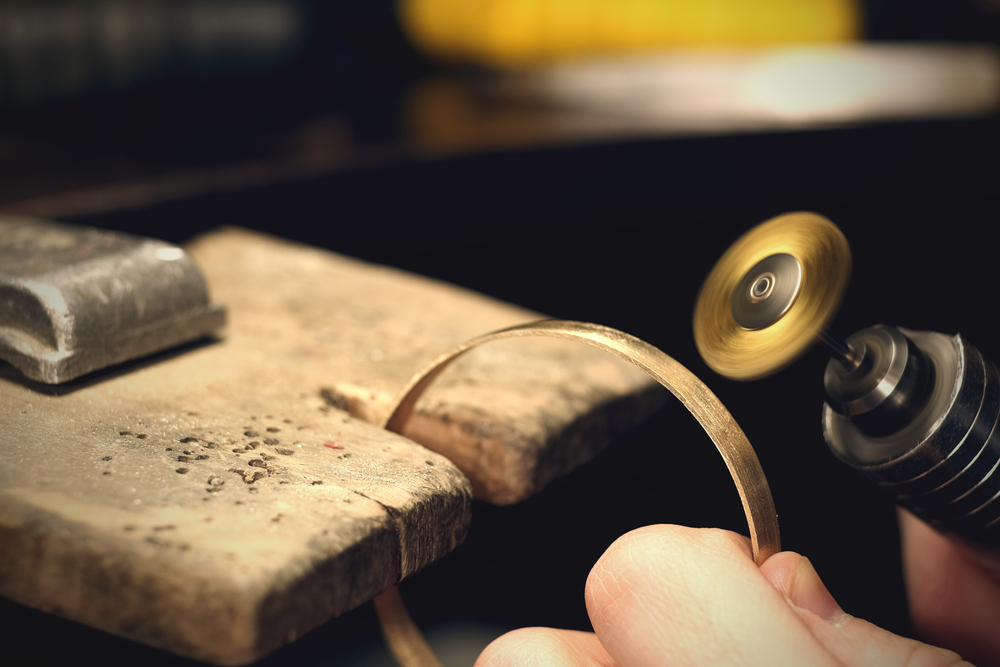
1.    Jewellery

Whilst we know a great deal about steel and iron sheet metal, we don’t often talk about precious metals that come in sheet form. Gold and silver metal sheets do exist, they’re just used in a different industry – predominantly, the jewellery fabricating industry. Precious sheet metal is generally much smaller in size as jewellery is produced on a much smaller physical scale in comparison to more mass-produced sheet metal applications.

Jewellery is also produced using other forms of precious metal such as granules and wire – not just sheet metal. The need to use different forms of metal depends on the type of jewellery that is being crafted. The sheet metal machinery that is used for fabricating jewellery is also different and much more refined in both size and delicacy as more precise care must be taken with jewellery.

2.    Armour

I know what you’re thinking – doesn’t that sound a little medieval? Well, technically yes, but people still use medieval armour in today’s society. This is done most-commonly through LARPING. A live-action role-playing game is where people essentially dress up as fantasy or medieval characters and battle against each other. Communities and clubs organise skirmishes and campaigns and all sorts of people can participate and compete.

A big part of LARPING is dressing up – and some people invest a lot into it. This means full battle armour, which utilises pieces that have been made using sheet metal for authenticity. Some people even go as far as manufacture their own armour pieces if they have the resources to.

Another similar instance where personal armour is still used and manufactured from sheet metal is for historians and teachers, who put on educational performances and research medieval culture.

3.    Movie props

Nowadays, special effects have evolved to an incredible level. If you have enough funding, then you can create anything with technology, and it’ll look incredibly realistic. The thing is, even with technology being at the level it is today, more and more directors are opting for practical visual effects as they believe they look better overall. It’s also a lot more rewarding when you physically build something and watch it come to life in your film.

Sheet metal can be used for any sort of prop piece really. Whether it’s a structure, vehicle or a fictional object, there’s a chance that metal will be used in its creation – giving it a sense of realism. This could be a large-scale object or even a miniature model that is made to look mammoth in the film. The possibilities are endless when it comes to the magic of cinema.

4.    Art and decorations

Similarly to jewellery, sheet metal can be made into decorations for various purposes such as horse tack, chandeliers and lighting, art and photo frames and other similar residential items. Sheet metal can also be used to make sculptures and artwork. This works especially well for achieving rustic pieces – where iron sheets can be utilised to achieve a tarnished look.

Are you looking for sheet metal machinery in Melbourne?

Sheet metal can be used for many different applications – and as we’ve discovered today, not all of them are your stock standard construction and automotive industry applications. Steel and iron sheet metal can be used for hobbies, art and props whilst more precious sheet metals such as gold or silver can be used for jewellery and decorations. Different sheet metal machinery is even required for the finer applications such as jewellery.

ACRA Machinery are sheet metal machinery stockists that can help you find exactly what you need when it comes to bending machines, slitter folders, saws and other heavy-duty machines. We stock both new and used machines as well as offer repair and maintenance services. Our knowledgeable technicians will direct you to the right tool that suits your application.

If you’re interested in our range of sheet metal machinery, then please give us a call on 03 9794 6675. You may also contact us via the enquiry form on our website.

Durma’s Latest CNC Machine (And A Bit About The Company)

Turkish company Durma have released an incredible new panel bending CNC machine and the crew at ACRA are excited to share it with you. This mammoth machine is capable of achieving some pretty amazing things – so we thought we’d dedicate a blog to exploring its features. Seeing as Durma is our oldest brand partnership, we also thought we’d have a glimpse at some of their history as a sheet metal machinery company.

The CNC Panel Bending Centre

Durma’s latest release is an absolute goliath of a unit. The CNC Panel Bending Centre is specially designed to maximise the time it takes to fabricate sheet metal whilst still maintaining safe, high speeds. The sleek, ergonomic design screams classic Durma and is coupled with a vigorous frame and high-level of precision.

It boasts high productivity levels whilst also exploring new technologies such as its smart consumption system which minimises energy consumption – meaning you save on cost. It does this by determining what the optimum amount of required energy is and uses that – which stops it from expending unnecessary energy.

One thing to understand about this machine is that it’s not like a standard bending machine at all. It’s completely automatic with 28 servo-controlled axes and 40 pneumatically controlled motion and positioning axes. This makes for a highly efficient and versatile machine that is capable of bending thicknesses ranging from 0.5 mm to 4 mm.

The CNC Panel Bending Machine is also capable of automatically changing tools to accommodate for various dimensions – further improving overall efficiency. The loading and unloading device automatically unloads freshly bent pieces and loads the next item. As you can see, this machine truly is a fully automated marvel with very little set-up time required.

The control panel that comes with this unit is the Sinumerik 840DSL CNC controller. It features an integrated PC with Windows 7 as well as a Durma interface for the controller. It comes pre-loaded with basic bending parameters for common thickness ranges for general materials such as steel, stainless steel and aluminium. Through these, you can easily adjust the parameters accordingly to suit your needs.

It also comes with several optional features such as the auxiliary bending device – which allows the machine to take on larger bending jobs using an accurate and dependable belt driving system. The auxiliary holder device is another optional feature which lets the upper tool change into an alternative tool when necessary. The best part is it does this automatically and whilst the bending cycle is active.

Durma’s latest bit of sheet metal machinery works to minimise labour and energy costs with its maximised efficiency. Utilising CAD/CAM software, it is capable of effortlessly bending some complex profiles automatically.

A glimpse at Durma

ACRA Machinery has been partnered with sheet metal machinery giants, Durma, for 25 years. The company was established by Ali Durmaz in 1956 in Turkey under the name Durmazlar Machinery. Nine years after the company was established, they made their first international export to Germany. Over the next few years, Durmazlar Machinery had produced their first motorised up-cut shear – with their first hydraulic up-cut shear and press brake being produced two years later in 1980.

Four years later and they were at the International Hannover Fair representing their brand and sharing it with the world. Five years after that, in 1989, they produced their first-ever CNC hydraulic press brake. In 1999 the patent for Durma Brand was acknowledged – which is the branding we know and use today for their sheet metal machinery.

Over the last two decades they have produced laser cutting machines, turret punches, have received multiple awards and certificates and were also ranked amongst the top 100 most valuable brands in Turkey in 2015 – according to the Brand Finance report from the International Assessment Organisation. In-house cloud-based machines and technology are also being developed by Durma.

Looking for sheet metal machinery?

ACRA Machinery stock a full range of Durma products include press brakes, guillotines, plate rolls and of course the new Durma CNC Panel bending Centre. As well as new products, we also sell several used Durma machines if you don’t necessarily need a new product. Our expert engineers will be able to help you pick the right machine for you and will be glad to lend their advice and knowledge.

If you’d like to enquire about the new CNC Panel Bending Centre – or any other Durma products – then please give us a call on 03 9794 6675. You may also fill out the contact sheet on our website.

Understanding Sheet Metal

Depending on the type of fabrication you’ll be doing and the sheet metal machinery that you’ll be working with, there are several elements that you’ll need to consider when selecting what type of sheet metal you’ll be fabricating. Factors ranging from thickness to tensile strength are important and need to be considered when fabricating sheet metal. You also need to understand the properties of the type of sheet metal that you’re working with as each type of metal holds its own unique properties.

Differentiating between metals

When it comes to selecting sheet metal, you should know the properties of each of them so you can determine which type is easiest to work with and best suited for your project. Below are several common metals as well as some of their pros and cons.

Stainless steel

  • 100% recyclable.
  • Resistant to corrosion as well as several acids.
  • Its high strength makes it possible to use thinner sheets than required.
  • Is difficult to fabricate due to its heavy weight.
  • Can warp easily during welding.

Steel

  • By far the cheapest metal that can be machined.
  • Has a very high structural integrity and is able to withstand temperatures of up to 1000 °C.
  • Not resistant to rust or corrosion so requires extra treatment.
  • Not the easiest metal to cut.

Copper

  • Highly conductive for both electrical and thermal energy – making it highly desirable for electronic parts in machines.
  • Can be shaped easily and welded to other metals.
  • Very resistive to corrosion.

Aluminium

  • A layer of oxide coating means it’s resistant to rust and corrosion.
  • Cheap to fabricate and very light.
  • Limited CNC availability in comparison to other metal types.

Gauging thickness

Sheet metal thickness is measured in gauges – the lower the number, the thicker the sheet is. Determining the gauge of your sheet metal is crucial to the fabrication process as you’ll need to prepare your sheet metal machinery accordingly. This can get a little confusing, however, as the gauges can mean different things depending on the type of metal.

For example, gauge 14 translates to .0641 inches for aluminium – but .0781 for stainless steel. To help determine the thickness of the different types of metal there are specific tools that measure the actual thickness as well as give you the corresponding gauge.

The four properties of metal

As we know, metals have interesting properties in general. Some are great conductors of electricity and others have high boiling points. There are four unique and distinct physical properties, however, that affect all types of metal in the fabrication world. It’s important to understand what these properties are as they can affect the fabrication process.

Machinability

This property deals with how easy the metal is to machine and fabricate. Some metals are quite easy to machine – for example, cut and shape – and do not require costly equipment to do so with ease and efficiency. As we mentioned above, aluminium is the easiest type of sheet metal to work with and copper is the hardest due to its high malleability.

Tensile strength

This quality pertains to the metals ability to withstand stresses without breaking. Steel and stainless steel are both the best metals in this category with copper once again falling short along with aluminium.

Ductile strength

If you’re going to be doing a lot of bending, stretching or hammering to make the sheet thinner, then you’re going to want a metal with high ductile strength. This is particularly useful when shaping wire – which is why copper is such a perfect metal for creating wire as it’s both highly conductive and has a high ductile strength. Stainless steel is also highly ductile but does not conduct electricity very well.

Weldability

As the name suggests, this quality is indicative of how easy it is for metals to join together. If you’re looking at doing some quick welding with inexpensive equipment and little experience, then steel is ideal and very weldable. If you’re looking to weld copper or stainless steel then more high-end and specialised tools will be needed such as a plasma welder.

Are you looking for sheet metal machinery?

ACRA Machinery are premium sheet metal machinery stockists that specialise in both new and used products for a wide variety of metal fabrication applications. Not sure what you’re looking for? Our experienced and skilled technicians can advise you on what machine will best suit your needs. We also offer machinery repair and maintenance services for all your current sheet metal machinery.

If you would like to know more about our sheet metal machinery products and services, then please give us a call on 03 9794 6675. Alternatively, you can also contact us via the enquiry form that’s found on our website.

Maintaining Your Laser Cutter

Sheet metal machines are effective, durable and capable of achieving great things – and a laser cutter is no exception. However, they’re not invincible. If they’re constantly pushed past their limits, then they will break down. It’s not uncommon for fabricators to keep putting off maintenance as it’s essentially viewed as a waste of time that could be put towards a job.

It’s highly essential to maintain your laser cutter though as it can end up causing a mountain of problems for you down the road. Today, we’re going to give you some tips on how to do that and why you should.

Does it make a difference?

Yes, it makes a huge difference. A laser cutter will attract a lot of dirt over its operational life – causing its overall productivity to go down. This quality of the work falls significantly as well as the efficiency of the machine. In addition to this, the machine could break down which will slow everything down and end up being costly to fix.

 It’s a lot more economical to maintain it as you go than to have it break down – or worse, catch fire and cause other permanent damage – and deal with it after the fact. Maintaining your laser cutting machine ensures a longer operational life as well as keeping up the level of quality.

Key maintenance practises

The machine should be visually inspected at the end of each working day for signs of wear or physical deterioration. As with most machines, you’ll need to make sure that it’s well lubricated using the manufacturer’s recommendation for lubricant as well as generally making sure that there isn’t any dirt build-up and that the machine is overall clean.

Air and oil filters should also be checked and replaced accordingly. The pre-filters inner pad should be changed roughly once a week depending on how much use it gets. The pad is usually very white, so it’ll be easy to tell when it’s dirty (on both sides). HEPA filters should be changed yearly at the minimum.

Onto more specific maintenance for laser cutting machines – the optics must be spotless. Because laser cutters use glass, the optics must be checked daily for any dirt, spots or marks and should be cleaned accordingly. Smoke produced by the laser cutter can also cloud the optics. Both the smoke and other particles will affect the intensity and quality of the beam – dampening the overall project efficiency.

Beam quality tests should be performed weekly to ensure that the beam is performing at the highest quality. Use offcuts and keep them to see how the cut compares with a test cut performed when the machine was new. This is an easy way to ascertain the level your beam is at.

Because laser cutting machines employ water cooling systems, the water needs to be changed regularly. Cooling coils should also be cleaned to ensure the system runs at optimal capacity.

Spare parts

Keeping excess stock of anything can be a hassle as it takes up unnecessary room. However, spare parts are something that should definitely be kept in case of emergencies. There’s no point in just buying every spare part, though, as that can get quite expensive.

This is where you must determine which are the integral parts of the machine and which will need replacing often. Obviously, the pre-filter will need replacing regularly so that’s definitely something to keep in mind.

Plan ahead

If you know you’re about to take on a big order that will involve using the laser cutter a lot, then perform a full maintenance inspection. Go through every detail and ensure that it’s all in working order. The same goes for regular clients, as well – if you know the machine is going to get more use than the others than plan ahead accordingly to ensure the nothing goes wrong.

Looking for a laser cutter?

ACRA Machinery stock a variety of laser cutting machines for your workshop. Our expert technicians will be able to help you pick out the best machine for you and also teach you all about maintaining it. We stock both new and used laser cutters. We’re also able to administer repair services on your sheet metal machines.

If you’re looking at purchasing a laser cutter, then please get in touch with us by calling 03 9794 6674. You can also contact us via the enquiry form on our website.

Plasma Cutting Machine Maintenance

Plasma cutting is a staple machine in the metal fabrication world. Since its inception in the ‘50s, it’s been an effective method of cutting through all types of metal. Using a combination of electricity and gas, an electrical arc is formed as it fires out of the nozzle at high speeds. This generates a sufficient amount of heat to cut through any type of metal.

Plasma cutting, like any other machine, is susceptible to damaged parts, however. This is primarily due to components naturally wearing out over time. The best thing you can do to prevent this is aim to keep your machine in the best shape possible and stick to a rigid, preventative maintenance checklist. This is to ensure that your machine is running optimally and prolong any wear from breaking down the machine. This blog will be looking at those methods.

Clean the torch

Disassemble the torch body and inspect each part for any damage or wear. Clean the parts as well as the inside of the torch with a cotton swab and the appropriately corresponding cleaning product. Disconnect the torch from the system and slide the tube back to examine the leads for any leaks or damage.

If these connections are damaged, then it could spell trouble for the efficiency of the machine. Look for exposed wires or pierced/kinked hoses. Make sure to check for metal dust as it can affect the voltage needed to form a stable plasma arc. Don’t forget to give it a good dusting as well.

Clean the power supply

Metal dust should be blown away using compressed air as it can damage the power supply’s components. Other components that are similarly affected by metal dust include the relays, spark-gap assemblies and air filters.

Check the gas quality

The quality of the gas you’re using to power your plasma cutter is crucial to maintaining an effective system – for both the cut quality and its longevity. Hold a clean, paper towel under the torch and expunge air through the system whilst in TEST mode to check the air quality.

You’ll know if the unit fails the test because there’ll be evidence of contaminants on the paper towel. Some of the contaminants could be water, oil or particulate. Take a look at the filters weekly. If the moisture traps accumulate water, then they should be emptied immediately.

Clean the rest of the machine

Whilst it’s the plasma torch that performs the bulk of the task, the rest of the machine is still essential to the operation. Components such as rails, gears and racks should be cleaned thoroughly and kept in good condition using degreasing agents and an abrasive pad or cloth. Grease, dirt and metal dust build-ups are not uncommon and are easily removed with a degreasing agent. The gears and bearings should be lubricated – but avoid lubricating rail sections as it will attract unwanted contaminants.

Ensure everything is aligned and secured

Check to see that the rail sections are aligned accurately and that the distance between the rails is constant across the whole system. An accurately aligned rail system will run smoothly and not drag or put any strain on the drive motors. When it comes to gears there should be no gaps between them and the racks – there needs to be a tight fit to function effectively.

Alignment bearings should have no gaps between them and rail either – they should be adjusted to the point where there is no visible light between the bearings and rail surface. Be sure not to overtighten them though. The torch-mounting component should be sturdy and not have any play as vibrations will give you a wavy cut.

Looking for a plasma cutting system?

If you stick to this maintenance guide, then you should be able to prolong your plasma cutters life. If your machine does need repairing or replacing, then that’s where we come in. ACRA Machinery specialise in efficient and effective plasma cutting systems from trusted industry-leading brands such as ESSCO. Our highly trained staff will be able to assist you with any help you may require when looking for a new plasma cutter.

Does your current system need repairs? Our engineers and technicians are experienced sheet metal machinery maintenance workers and can take a look at your machine. We also stock a large range of other sheet metal machines in both new and used condition from other trusted brands.

If you’re looking to purchase a new plasma cutting system or need your current one repaired, then please get in touch with us by calling 03 9794 6675. Alternatively, you can also contact us via the enquiry form on our website.
Jorns: A Look At The Company

It’s no secret that we love Jorns here at ACRA Machinery. When it comes to reliable sheet metal machinery companies – Jorns A.G is up there in design, reliability, and durability. Their high-calibre single and double slitter folders are unparalleled in the industry. But what about the company itself? Where did they start and how did this small, family-run business come to be an industry leader in the sheet metal machinery world? Today’s blog is going to be concentrating entirely on the history of Jorns and how they operate as a company.

Beginnings

Jorns A.G has always been in the sheet metal fabrication industry, and more specifically, the bending machines industry – manufacturing them and sheet metal machinery accessories from the beginning. In 1973, master mechanic, Kurt Jorns, took over the company Konrad. At the time, Konrad was a tiny company consisting of four people. This is where it all began.

Two years later and Jorns had developed and built their first NC-controlled bending machine. These numerically controlled bending machines featured motorized backstops and electric shears. They were the 78 and 77 series. Over the next few years, new features were added to their machines – such as a rolling spindle stop and the PC-3000 screen control system.

In 1982, their engineers developed the new 82 series which was capable of bending sheet metal up to 3 mm thick. This new series – as well as the others – were soon replaced in ’87 though by the freshly developed Norma-line, Maxi-line and Super-line.

The jump to CNC

Computer numeric control (CNC) is essentially the same principle as NC – but the computer can monitor the progress of the action and relay the information back to other parts of the machine. This makes for an effective and more precise process. NC systems were commonly used until the late 1960’s – when CNC systems became more advanced as well as the industry standard.

Jorns A.G didn’t manufacture their first CNC system until ’94 when they came out with a bending machine issued with a CNC400 control system. Whilst they were a little late to the party – six years later they’d equipped all their bending machines with completely automated CNC systems. These CNC control systems even had an in-house developed graphic interface as well as specialised software that was used for calculating sheet metal.

Double bending machine and the passing of the mantle

One of the trademark products from Jorns A.G is their double slitter folder. This was first shown to the world in 2002 at the EuroBlech exhibition. Its unique capabilities allowed it to manufacture roof and wall profiles without the need for them to be turned over or around. Three years later, Kurt Jorns passed the mantle to his son, Marc, who continued to manage the company using his experience as a machine mechanic and business economist.

Moving towards the future

By 2012, all Jorns bending machines that featured graphic controls had B&R hardware installed. This allowed the machines to be controlled remotely. Fast forward two years and the “J-Bend” app is developed and released. It was met with critical acclaim and received the “Best of Swiss Apps” award. The application simplified productivity and workflow for all Jorns users – giving everyone a glimpse into the potential of future technology.

At EuroBlech’s 2018 exhibition, Jorns A.G unveiled their JDB double bending machine. This machine featured a new design as well as individually driven clamping fingers. With the ability to simultaneously bend several parallel, tapered or overlapped profiles – the machine was a big hit and impressive feat. Jorns’ innovative and forward-thinking actions got them where they are today. They are an industry leader because of their constant adaptation to the market.

Are you looking for Jorns sheet metal machinery?

If you’re looking for a Jorns single or double slitter folder, then ACRA Machinery is the place for you. We stock a wide variety of new and used sheet metal machinery products. Our experienced technicians and engineers will be able to offer you any advice you may need as well as offer repair and maintenance services to your current machines.

If you’re looking for sheet metal machinery or would like to know a bit more about what we do, then please give us a call on 03 9794 6675. Alternatively, you can also fill out the enquiry form on our website.

The Future Of The Sheet Metal Fabrication Industry

The sheet metal fabrication industry is key to our society in both an economical and infrastructural sense. Metal fabrication itself has been around in one form or another for centuries. In today’s blog, though, we’re going to be talking all about the future and where the industry can go from here. With the rise of automated machines and developments in artificial intelligence, will the metal fabrication industry continue to thrive?

Automated machinery

Automated machinery is nothing new. However, it has been remarkably refined in the days since it’s inception. A lot of sheet metal machines nowadays utilise CAM – which allows you to input very specific instructions and parameters so that the sheet metal machine may then perform the job. This is an example of modern automation as the operator simply has to input the instructions and the manual labour is performed by the machine.

Automated machinery and robots have seen low-level tasks in a factory environment be made redundant. With that in mind – and with technology constantly pushing the boundaries of what is possible – it’s a safe bet that soon more complex jobs will also be made redundant with these innovations.

If we look at an example put forth by The Boston Consulting Group in 2015, the average welder earnt around $25USD an hour (approximately $37AUD), whereas the equivalent operating costs of a robot to do the same job would’ve been more like $8USD an hour (approximately $12AUD).

When shown using numbers, it’s a startling fact that robots and automated machinery have cheaper overall operating costs. They are also immune to human error – which is something that compromises the quality of a product on occasion. Robots and automated machines are also immune to harm, in a manner of speaking.

3D printing

We briefly mentioned 3D earlier in the year, and rightly so. It truly is a remarkable development – no matter the fabrication industry. With the ability to print metal such as titanium and steel, the process is starting to become even more attractive for metal fabricating businesses.

To be able to 3D print metals, you’ll need to utilise one of two techniques – Direct Metal Laser Sintering (DMLS) and Selective Laser Melting (SLM). Both of these techniques can be used to manufacture steel. DMLS uses a laser to slowly and steadily disperse a powder as it moves across the base that you’re printing on. The laser fuses the powder particles. The laser used during DMLS does not heat the powder enough for it to reach its melting point. 

SLM, on the other hand, uses a high-powered laser to melt the powder layers – as opposed to just sintering it. SLM printed products are significantly denser and stronger in comparison to DMLS products. SLM can only be used to create certain metals such as titanium, stainless steel, tool steel, cobalt chrome and aluminium. It is important to note that SLM utilises a large amount of energy as the powder is heated to beyond the melting point of the metal.

NASA has experimented with SLM to craft parts for rockets. It is a highly desirable and practical form of manufacturing as it allows whole pieces to be created – as opposed to individual components. 

Artificial intelligence

Now, when we say artificial intelligence, we’re talking about a computer mind that learns on its own. Assistants in our smart devices such as Siri can learn and make more accurate suggestions based on your history and activities. It’s the same thing with the future of metal fabrication. It’s already happening. 

This article published earlier in the year talks about how machines were connected to a central cloud network and would analyse data to become more efficient and automated every time they were used. There are some obstacles still in the way and they’re not widely available at the moment, but the technology is certainly there, and it is on the agenda for future metal fabrication workshops.

Does your workshop need a new sheet metal machine?

Whilst the future of the sheet metal fabrication world is looking very impressive, there’s still a long way to go. In the meantime, ACRA Machinery can help you out with all of your sheet metal machinery needs. We offer new and used sheet metal machines as well as repair and maintenance services.

So, if you require sheet metal machines or related services, please give us a call on (03) 9794 6675. Alternatively, you may also get in touch with us via the enquiry form on our website.

4 Common Issues That Occur In A Workshop

Whilst sheet metal machinery is capable of achieving great feats and producing fantastic products – there are instances where things can sometimes go wrong. There are a variety of reasons as to why certain issues may occur. There’s a lot that goes into sheet metal fabrication – not only do the operators have to exercise extreme care and conscientiousness, but they must also ensure that the machines themselves are in prime operating conditions. Today we will be discussing four of the more common issues that can occur when working with sheet metal machinery.

1.    Machinery quality

No machine is perfect. All types of machines will degrade in one way or another over time – and sheet metal machines are no exception. There are a variety of reasons that sheet metal machinery could lose its quality, from excessive operation to not being operated correctly. A metal guillotine will not be able to produce a quality product if its blade is dull. It is important to inspect all sheet metal machinery before and after it is operated to ensure that it is still in useable condition. Strive to maintain your equipment as best as you can.

At some point, your sheet metal machinery will get to the point where it needs to be repaired by a professional. ACRA Machinery’s experts are authorised and highly experienced in repairing a variety of sheet metal machinery.

2.    Communication amongst peers

As they say, communication is key. A lot of sheet metal machines require two people to operate it efficiently. These two operators must be in sync with each other and communicate at all times. This is to ensure that the job you are doing goes as smoothly as possible and you produce a quality product and that no one is hurt in the process.

The other benefit of effective communication when sheet metal machinery is being operated is that it alerts nearby workers to what you’re doing as well – encouraging them to be extra vigilant around your operating area. This issue can lead to a poor product being produced as well as serious injury.

3.    Damaged or marked sheet metal surfaces

Now, what we mean by this is any form of tarnish, scratch or dint that the machine makes into the sheet of metal that you’re fabricating. This could be due to human error or the quality of the machine not being the best it can be, but physical marks are not usually welcome signs when fabricating sheet metal. Marks can also be found on the sheet metal at before it is used – so it’s important to inspect the sheet you’re about to use beforehand to avoid working on damaged goods.

As well as the issue of aesthetics in the final product – other visible tarnishes can sometimes lead to other issues down the track such as corrosion. Other forms of tarnishing that you should look out for include:

  • Grease;
  • Oil;
  • Paint;
  • Grinding dust; and
  • Weld splatters.

4.    Correct training

All sheet metal machinery operators should be sufficiently trained and well-versed with the machines that they are working with. Each machine has its own set of rules and safety procedures that need to be followed quite strictly – such as those needed to operate punch and shears. A lot of things can go wrong if a machine is being operated by someone who lacks the skills and knowledge to do so correctly.

One of the issues that can often occur is an operator – even a highly-skilled and trained one – will handle a machine that requires two to operate by themselves. This can lead to the operator being seriously injured. Even if a machine can be operated by a single person, you may still be required to have someone supervise you in case anything goes wrong.

Is your sheet metal machinery up to scratch?

The best we can do to reduce the risk of incidents occurring the metal fabrication work is stay diligent, follow the correct processes and ensure that equipment is in fine working condition. These are all easy things to do, and if you follow them, your production process will go without a hitch.

In the off chance that your machinery needs to be repaired or maintained, then ACRA Machinery will be able to handle that for you. Our experienced and passionate staff can administer repairs and maintenance on a wide variety of sheet metal machines. ACRA is also home to a large number of new and used sheet metal machinery.

So, if you require some machinery for your workshop – or simply some repair solutions – then give us a call on 03 9794 6675. You can also get in touch with us by filling out the enquiry form on our website.

Building A Metal Fabrication Company From The Ground Up

Whilst you don’t often hear of new companies in the metal fabrication world – it can be a wise decision if the knowledge is there. Entrepreneurs often shy away from this industry as it relies so much on prior knowledge in order to be a profitable venture. This is why if you’re considering starting a metal fabrication company, you should make sure that either you or a business partner has more than sufficient knowledge on things like the various metal fabrication methods and sheet metal machinery. Today, we will be exploring some fundamental steps and things to think about when building a metal fabrication business from the ground up.

Establishing a plan

A physical plan or strategy is essential. A business plan will help you stay on track in the early stages. It is also great at amalgamating things like budgets and market research into one file. If you’re looking at gaining outside financial aid, then a business plan will most likely be required as they will help convince your potential financer why your company is worth investing in. Your plan should be concise and to the point. You must be able to find a way to include all the essential facts, figures and information in the plan without making it too wordy or dense.


Funding your company

If you’re not funding your new business yourself, then you will need to source the funds from elsewhere. There are a variety of different loaning solutions that you can consider – whether they be from big banks or smaller firms that specialise in self-owned business loans. It’s important to note, though, that no matter what option you go with, you’ll need a business plan to back-up your claims and convince them.


Picking a path

This is something that you will need to establish when you write up your business plan. Within the metal fabrication world, there are a few different paths that you can go down. You may choose to be a company that specialises in one particular type of metal fabrication method or one that can deal with a broad range of them. Be sure to pick one and stick with it. If you pick a single method – then you can always expand further down the track with other types as your business grows.


Purchasing tools

Knowing what type of metal fabrication your company will be performing is essential to this point as you’re going to want to only purchase the appropriate sheet metal machinery. Safety equipment such as gloves and helmets are vital – regardless of what type of fabrication you will be doing.

The list of machinery needed will begin to grow as the more types of fabrication techniques that your company decides to employ grows. Regardless of if you’re concentrating on one method or multiple – be sure to only spend on what you know you’ll need to use immediately.

Things like slitter folders or plasma cutters are great tools for new workshops. Don’t waste your money on specialised equipment that you’ll rarely use. Sheet metal machinery and tools such as these are unlikely to be a good investment as they will only apply to a few niche jobs.


Ensure that the business side of things is in order

It’s one thing to have all the knowledge of the industry and purchase the appropriate tools and sheet metal machinery – but you’ll also need to set-up your business and licence it officially so you can be recognised as an official business. This involves registering your business name with the Australian Securities & Investment Commission (ASIC) as well as ensuring all your finances and taxes are in order. The fees for registering a business name in Australia are $36 for a year and $85 for three. Please note that you are only required to register a business name if you’re running a business under a name that is something other than your own.


Do you need sheet metal machinery for your business?

Whether you’re upgrading your equipment or purchasing some for your new business – ACRA Machinery is here for all your sheet metal machinery needs. We specialise in a wide range of sheet metal machinery both new and used, including slitter foldersturret punchespress brakes and plasma cutters. Our experienced staff are also authorised to perform repairs and maintenance on sheet metal machinery.

If you would like to know more about our sheet metal machinery products and the services that we offer, then please give us a call on 03 9794 6675. Alternatively, you may also fill out the enquiry form on our website.