7 Common Reasons Why Machinery Breaks Down (And How To Prevent It)

Machinery breakdowns can put a serious dent in your business’ budget – not to mention they are extremely inconvenient. As trusted sheet metal machinery repair experts, we know many different reasons why metal machinery breaks down. Since knowing how to prevent downtime is the key to staying on track with production and budget goals, we thought we’d share some of the most common reasons why breakdowns happen – and how you can prevent them in the future.

#1: Proper training has not been provided

The number one reason for machine breakdowns is a lack of experience or improper training. Anyone who is operating machinery needs to have read and understood the manual. Manuals not only include information on operating the machinery, but also maintaining, calibrating and troubleshooting it.

Business owners and managers also need to take responsibility for providing the right training to employees. Providing occupational health and safety training is a legal requirement as outlined in the OHS Act in each state of Australia. Training may include hazard identification training, induction training, and manual handling training.

#2: The workshop is dusty, wet and dirty

A workshop that is dusty, overrun with rats and full of rubbish is a recipe for disaster. Maintaining a dust-free and dry environment is vital for the protection of your electricals. Not only can a filthy workshop cause your machinery to break down, but it can also trigger a number of safety hazards for your employees. Therefore, it’s important to create and enforce a strict regime for cleanliness, which should involve:

  • No drinks in the workshop
  • Using a dust collection system
  • Checking regularly for water leaks and dust build-up (especially around wires).

#3: Poor attention to detail when it comes to maintenance

A lack of maintenance is responsible for poor machine performance and – if prolonged – can also lead to a machine breaking down. Maintenance inspections need to be carried out with close attention to detail for any issues that have the potential to further develop.

Maintenance may include:

  • Checking for signs of wear (such as vibrations or high temperatures being emitted by the machinery)
  • Assessing machinery for signs of poor operator technique
  • Looking for a build-up of excess lubricant or oil.

#4: Lack of machine lubrication

Lubrication is an essential part of operating machinery because it reduces the friction between moving parts and helps to prevent damage. Without lubrication, the friction creates heat, which erodes the surface of the metal over time. Frequent lubrication thus extends the life of your machinery by keeping it intact. To find out which type of lubrication is best for your metal machinery, check the manufacturer’s recommendations.

#5: Machines are overrun

Pushing machines to their operational limits every time they are used can cause them to wear out quickly. Due to the constant physical stress involved in overrunning machines for extended times, the friction can fast-track machine aging (such as loose bolts and cracking seals). As a result, you may find yourself having to replace or repair machinery much sooner than expected.

#6: Warning signs of damage are ignored

Business owners, managers and machine operators all need to pay attention and tend to a machine’s warning signs – no matter how minor they may seem. For example, an on-screen warning for low hydraulic pressure should be investigated immediately as it may be indicative of a more serious root issue.

#7: There isn’t a clear check-up schedule

There needs to be a regular schedule for checking on and maintaining the machinery in your workshop. Without one, problems can go unchecked and manifest over time. Eventually, this can result in a breakdown, and you’ll need to look into sheet metal machinery repair.

Your daily check-up list should include all the specific things that need to be reviewed in your workshop. Some examples of what you may need to check include:

  • Gear lubrication
  • Oil testing (including filters)
  • Machinery sealing.

Sheet metal machinery repair services in Melbourne

Pinpointing the reason for your machinery breaking down is going to save you time and money in the future. However, if you find that your machinery has already broken down, the next step is to hire a professional that will be able to conduct sheet metal machinery repair.

ACRA Machinery has been repairing and maintaining machinery since 1977. We are passionate about supporting business owners and managers in the metal fabrication industry with quality repair services and expert advice. We also stock a wide range of new and used metal machinery, which you can view online.

Call us today on 03 9794 6675 to find out more about our sheet metal machinery repair services.

Is Welding A Dying Art?

Welding has been around for over 2000 years in one form or another. It is a crucial technique within the metal fabrication world. But with other sheet metal machinery tools and methods becoming more popular, is this old art form losing its place in modern society? Or is there a future for it yet? In today’s blog, we’ll be having a look at whether or not welding is a profession worth following.

Welding is predominantly performed by older people

In the U.S, the average age of welders is around 55 years old. Of the 450,000 welders in the United States, less than 20% of them are under the age of 35. It is feared that there are not enough welders to replace the current batch, forcing many of them to delay their retirements to continue to do what not many young people can.

The problem seems to be that even if young people study welding, many of them are offered jobs before they can complete their studies. The temptation of going into a paying job without finishing the course is great – even though they can earn much more by completing the course and learning more skills.

This is not just happening in the USA, but also here in Australia. Weld Australia is working with Tafe institutions – which have not been receiving sufficient funding for proper welding courses – to improve the quality of the courses. This is in the hope that the future generation of welders can have the necessary skills to work on large scale projects and government defence contracts. The reality is that at the moment, welders are being outsourced from overseas to fill these positions, not because we lack the welders, but because they lack the skills.

Testing welders for jobs cost’s around $1000 per test. This can cost companies a great deal when it is required each time there is a job. Especially when the failure rate for AS 1554 is 80% and almost 100% for ISO 9606-1. The constant testing, just for them to most likely fail, is something that can be avoided with the appropriate training. This is something that Weld Australia is hoping to fix with their new partnership with Tafe’s in Australia.


So, are welding jobs on the rise?

Yes. It seems like they are on the rise. Unfortunately, though, there just aren’t enough people to fill the spots. The U.S Bureau of Statistics has estimated that the welding industry will grow by 26% by 2020. As 80% of welding students are offered jobs before they even graduate, it makes it harder for the industry to move forward.

Hands-on experience is extremely useful to have when it comes to things like welding and sheet metal machinery but learning new skills and adapting modern welding gear is not something that can always be learnt out on the job. A lot of the higher paying and more technically demanding welding jobs are not being sufficiently filled because a lot of today’s welders end up leaving their course without finishing because of the temptation of a job.


Is it a worthy career to go into?

Not only will there always be welding jobs that need filling locally – but also internationally as well. If you learn the right skills, treating it as a career as opposed to just a job, then it can take you all around the world. The pay does vary based on your skill level but for the more experienced and knowledgeable welders, the rewards can be quite attractive, as it can be quite dangerous at times.

It’s important to note that underwater welding is considered amongst one of the most dangerous professions in the world. Even welding a gas pipeline during its construction is deemed a difficult task that favours the more veteran welders. So, yes. Welding is a career worth going into as there are many jobs going around. But that being said, it does seem like the art of welding itself may be on a downward slope with the current generation of welders being – on average – less experienced and lacking the patience to learn more techniques that could further their careers and knowledge.


Looking for sheet metal machinery?

ACRA Machinery has all your sheet metal machinery needs covered. We specialise in both used and new sheet metal machinery and can offer a variety of services and advice.

If you would like to know more about our products and what we offer then please give us a call on 03 9794 6675 or contact us through our website here.

15 Terms Everyone In The Metal Fabrication Industry Should Know

When it comes to sheet metal machinery and fabrication, there is no shortage of technical terms, and each is as important as the next. Hence, it’s essential for any professional in the metal fabrication industry to know what certain key terms and phrases mean. In this blog, we’ve compiled a glossary of the most important techniques, terms and tools you will come across in any metal fabrication workshop.

#1: Machinability

Machinability measures how easily a material can be shaped without using the assistance of cutting or abrasive tools. Materials with good machinability, for example, require little machine power to cut.

#2: Shrink flanging

Flanging is the process of forming or bending metal so that it sits at a 90-degree angle. Shrink flanging is when the breakline of the bend is smaller than the trim line, while stretch flanging is when the breakline is greater than the developed trim line.

#3: Die set

Although it may sound like a pair of dice, die set is actually a term that refers to the fitting together of the upper and lower die assembly (or the punch and die holders). This typically includes heel blocks, guide pin bushings and guide pins. This assembly can be purchased commercially as a unit.

#4: Welding

Welding is the process of joining materials (typically metals) together using tools that apply heat and/or pressure to fuse surfaces together.

#5: Material utilisation

This term describes the difference in weight between the raw materials that are used to produce a part, and the finished part. Essentially, a higher percentage of utilisation that is the outcome from this calculation indicates the economic efficiency of the stamping.

#6: Slitter

This piece of equipment appears in the slitting line in a metal workshop. Its slitting tools cut or shear the metal after it has unwound from the coil.

#7: Base metal (or parent metal)

The base metal is the primary piece of metal that other parts of metal are welded to.

#8: PPE

Personal protective equipment (PPE) is the protective gear that everyone in a metal workshop should wear at any given time. Workers, business owners and managers all share the responsibility of knowing how to enforce and follow PPE guidelines. There are many different types of PPE, including protective headwear and footwear.

#9: Case hardening

Case hardening is the term given to a treatment by which an iron-base alloy is heated so that its exterior (case) is made harder than the interior (core). Heat treatments can include flame hardening, carburising and cyaniding.

#10: Punch and die clearance

This refers to the space that sits between cutting edge of the die block and the cutting edge of the punch. The punch and die clearance is determined by the type of material being cut and its thickness.

#11: Surface roughness

The surface roughness refers to the fine cuts and scratches on the surface of a material after it has been through the production line. It is usually reported as a figure of micrometres or microinches.

#12: Lancing

Lancing is a cutting process and technique in which the material is cut without separating the workpiece or producing a slug (also known as scrap).

#13: Tensile strength

Tensile strength is the measurement of the greatest force or stress a material can withstand without breaking. It is often measured in pounds per square inch (PSI) or kilo-pounds per square inch (KSI or KPSI).

#14: Alloy steel

Any type of steel that contains additional elements in amounts between 1% and 5% is alloy steel. Adding these extra elements (which include nickel, boron and manganese) typically improves the strength, toughness and resistance of the steel.

#15: Elastic deformation

The term ‘elastic deformation’ is given to a deformation in materials that is recoverable or reversible when the applied force ceases. That is, the material’s changes are directly proportional to the amount of force that is applied and responds to both increases and decreases in force.

Enquire about our range of sheet metal machinery today

ACRA Machinery has been in the metal machinery industry since 1977. We are dedicated to providing the best service and advice for our customers. This includes everything from our metal machinery repair and servicing, to the range of new and used sheet metal machinery that we sell.

To explore the new and used sheet metal machinery we have on offer, browse our online collection or get in touch with us on 03 9794 6675 today.

Setting Up Your Own Metal Workshop

Whether or not it’s for professional use or as a hobby, creating your own space for a metal workshop can be a fun, yet sometimes overwhelming task. Figuring out the layout of it and the logistics of moving and installing the sheet metal machinery can be a bit of a headache. But the good news is it doesn’t have to be. With a bit of planning, creating your workshop can be easy and simpler than you’d think. In today’s blog, we’re going to go through the initial steps as well as what some of the essential tools you’ll need are to get started.

Laying it out

First thing’s first, plan ahead. This is not something you’ll want to go into blindly and start improvising as you go along, you’ll need a solid plan. Presumably, you already have a space available, but if you don’t, here are some things to consider when selecting a space:

  • Bigger isn’t always better – The more room you have the larger utility costs are going to be. There’s no point having extra space if you aren’t going to use it. Try and get the best optimisation out of your workspace.
  • Factor in if you’ll need an office section or an on-site bathroom.
  • Look at heating and cooling capabilities. Do units or air ducts need to be installed?

If you’re looking at a smaller, personal workshop then a basement or garage are good locations to set-up shop. You should have – at the very least – a rough idea of the types of tools and sheet metal machinery you’re going to have in your workshop. With those in mind, you can start mapping out a layout on paper with accurately scaled dimensions to ensure everything will fit properly.

The machines/tools

As mentioned above, you should know what sort of tools you want – even it is just a rough idea – before you start to build your workshop. Which machines you purchase depend entirely on what you want to do with your workshop. If you’re looking at metal fabrication, then there are definitely some basic sheet metal machinery products that you’ll want to get:

  • Bandsaw– A bandsaw can be used to cut through metal and with both vertical and horizontal models available they’ll be sure to satisfy your basic sheet metal cutting needs.
  • Press brake– This machine is an absolute essential when manipulating sheet metal. A press brake has been used to easily bend sheet metal for over 100 years with precision and is very reliable. There are a variety of different types of models that you can purchase to suit your need best.
  • Turret punch– This particular machine fabricates and forms sheet metal by punching holes into it.
  • Cutter – You’ve got a few different options on not only models but types of cutters here. You can go with either plasma or laser cutters. The primary difference between the two is that laser cutters offer a much more precise cut as it is a concentrated light beam that is doing the cutting. A plasma cutter, on the other hand, uses ionised gas to produce an electric arc that superheats the metal resulting in the cutting. For a full list of the differences between the two types refer to one of our previous blogs.

Building from scratch and applying for a permit

If you’re actually going to build the workshop from scratch, meaning the structure itself, then you’re going to most likely need a permit. Check with your local council to establish the exact parameters and conditions you’ll need to adhere to in order to build your workshop. Be sure to consider the different materials and benefits they may offer you.

This is the same sort of thing you should do even if you’re looking at purchasing an already existing structure, but if you’re building your own from scratch then you have the advantage of a larger amount of options. Some things to consider are:

  • Insulation
  • Solar panel installation
  • Skylights and windows
  • Entrances and exits

These are all much easier to manage when you’re building your own workshop as it’ll be just like you planned and envisioned it, as opposed to searching around for something that fits what you need.

Do you need sheet metal machinery for your workshop?

Whether you’ve just started on a new workshop or need more sheet metal machinery for your existing one, ACRA Machinery has all your needs covered. With an extensive range of both new and used sheet metal machinery and tools, we’re your one-stop-shop destination when it comes to filling up your workshop.

If you would like to know more about setting up a workshop – or some of our other services – then please do not hesitate to give us a call on 03 9794 6675 or send us a message through our website.

Common Bandsaw Mistakes

The bandsaw is a highly versatile power tool that can be used for both industrial-grade projects as well as personal hobbies. The primary use of a bandsaw is for cutting irregular shapes in surfaces such as wood and metal – provided the appropriate blade is being used.

But have no illusions, there are many things that can go horribly wrong if you don’t know how to properly use this power tool. Here are some common mistakes that people make whilst using a bandsaw as well as some tips on how to prevent them.

Watch your speed

It’s not easy to resist the urge to crank it up to 11, but if you don’t then you could run into some serious issues. You could dull or destroy your blade, snap welds or even creak teeth. It’s important to know the parameters that are required when cutting a certain piece of material.

Whilst you should always consult the charts and manual that come with your bandsaw, a good, general rule of thumb to follow is if it’s a thicker material than use a slower speed and a faster speed for a softer material.

Check your fluids

Bandsaws require specific fluids to be applied to the blade. These are known as cutting fluids. They’re applied to cool the blade, lubricate the teeth and wash away any chips. Some of these fluids must be mixed with water before application to the bandsaw blades and so it’s crucial that you constantly check on the solutions to see if there are any leaks. The water within the mixture will also evaporate as the machine is used so be sure to replace it when needed.

Break in your blade

This is an important step as you can’t use a new blade to its full potential if it hasn’t been broken in. To do this, set the speed of your blade to the manufacturers recommended speed and reduce the feed pressure to around 50% of the normal rate.

Cut 50 – 100 square inches of softer, easier to cut material and around 25 – 75 square inches of harder to cut material. If you don’t break in your blade correctly then you will run into a variety of problems such as dulling the blade quicker than usual and stripping its teeth.

Don’t break your blade

There are a number of factors that can contribute to your blade breaking. Some of these include:

  • Incorrect blade tension
  • Using the wrong blade for your tool
  • Excessive feed
  • Smaller sized wheel diameter than what is required
  • Blade rubbing on the wheel flanges

These are all big things you’ll want to keep an eye on when cutting. So, make sure you go through a checklist for all these things before you start cutting. A great way to check if your blade tension is right – without using the gauges – is to tighten it and then pluck it. Ideally, it should give off a clean tone as opposed to a muddled thud sound.

Maintain your blades

It is important to maintain your bandsaw and more importantly, its blades. Making sure you’re using the correct blade and where its strengths lie is a good start. You don’t want to push the blade in an area that it’s not made for. Schedule regular maintenance regardless if you think it needs it or not. Not maintaining your blades can lead to degradation and poor performance quality.

Know what you’re cutting

As mentioned above, different blades are used for different types of materials. Make sure you know exactly what you’re cutting before following through with it. Ensure you have the correct blade and that all other parameters are in check as it can severely damage your blade if done incorrectly. Hard spots within certain materials can also damage your blade and strip your teeth.

Don’t strip your teeth

As well as hard spots in materials, this can also be caused by not breaking in your blade – as mentioned earlier – or running your bandsaw at a high feed pressure. The teeth are what do the actual cutting, so you’ll want to make sure you keep them in the best condition possible. Make sure to follow the other steps and stay within the required parameters for cutting the materials and you’ll be fine.

Looking for a bandsaw?

ACRA Machinery offers a fantastic selection of new and used bandsaw products. Our experienced staff also offer a range of services and professional advice on all industrial machinery to suit all your needs.

If you’re after some more bandsaw advice or products, then please do not hesitate to give us a call on 03 9794 6675 or message us through our website.

6 Things You Probably Didn’t Know About Sheet Metal

Sheet metal is a piece of metal that can come in varying thickness’ and cover a wide range of metals such as titanium, aluminium and steel. Sheet metal is used with industrial machinery and has many other practical applications. It is used on the wings of aeroplanes, car bodies and also as a material for roofs. Sheet metal actually has a pretty interesting history though. So, here are 6 things you probably didn’t know about sheet metal.

1.    No matter the type of metal, the construction process is the same

Sheet metal can be made from:

  • Aluminium
  • Steel
  • Copper
  • Brass
  • Nickel
  • Tin
  • Copper
  • Sterling Silver
  • Titanium

The process for creating sheets from all of these types of metals is the same. The metal is first melted and then poured into a mould where it can cool and take the shape of an ingot. It is important for the metal to be kept hot as it is being poured so it doesn’t cool outside of the mould.

Once it has cooled, it is dipped into some chemicals which clean the metal – a process known as pickling. It is then rolled repeatedly by a large press. The press will then heat up the metal in what is called the annealing process, whilst still rolling over it. Once the desired thickness is reached the sheet is ready to be shipped out.

2.    They come in varying thickness’

Whilst this may seem like an obvious one, there are certain parameters that sheet metal thickness follows for it to be useable. These are identified as gauges, and each sheet metal size has a different gauge. The gauge number doesn’t have any relation to the actual size of the thickness but is simply an industry standard for identifying them.

There are different gauges depending on the types of metals being used. For example, a 10 gauge of steel sheet metal is different from a 10 gauge of aluminium sheet metal. This is due to the fact that the gauges, whilst they identify the thickness of the sheet – the higher the gauge the thinner the sheet – they’re determined based on their weight. So, an aluminium sheet may be the same thickness as a steel sheet, but they would weigh differently.

3.    Sheet metal is not a modern marvel

Whilst it may seem like something that is only a few hundred years old, the reality is that sheet metal has been manipulated by sheet metal machinery for thousands of years. In fact, the earliest known use of sheet metal is from around 4,000 B.C when people would use large stones to roll the metal into their desired shape. The ancient Egyptians used sheets of gold and silver to craft magnificent jewellery for themselves.

A historic and iconic use of sheet metal is the construction of armour and weapons. It wasn’t until the 1400s where Leonardo Da Vinci designed a device capable of rolling sheet metal that the industry took a huge leap. This device was not properly completed until 1590 however, after Da Vinci’s death.

4.    Decorative sheet metal exists

Whilst you can find the most common type of sheet metal to work with listed above, there are also decorative, softer materials such as gold, platinum and silver that can be made into sheet metal. For obvious reasons these are not very common and are not generally not used in the same industries the more run-of-the-mill metals are used in. These are instead used for adornment purposes and cost quite a bit more.

5.    Sheet metal is responsible for other industry inventions

It’s true! Sheet metal machinery such as press brakes and hydraulic press’ were created for the express reason of being used with sheet metal. Whilst a press brake is used to bend sheet metal, a hydraulic press applies pressure to sheet metal in order to compress it. The first press brake was created around the mid-1600s, whilst the hydraulic press first came into existence in 1770 thanks to Industrialist Joseph Bramah.

6.    Sheet metal is in its own category

Sheet metal is actually classed as a medium thickness metal, typically ranging from .2mm to 6mm in thickness. Foil – or leaf – metal is the thinner sheet, which is anything under .2mm. The thickest of the three is plate metals and are predominantly 6mm or thicker.

Looking for sheet metal machinery?

ACRA Machinery is the only place you’ll need to find both new and used sheet metal machinery. Whatever your needs are, we offer a range of services and products to satisfy all your sheet metal machinery needs.

If you’d like to know more about our quality sheet metal machinery, then please give us a call on 03 9794 6675 or send us a message through our website.

PPE Guidelines In The Metal Workshop

Whether you specialise in laser cutting, plasma cutting, or general metalwork, staying safe in your metal workshop should be your number one priority. Business owners, managers and workers all have a shared responsibility to use equipment safely and take the right steps to avoid any potential hazards in the workshop.

Wearing the right protective gear is one of the measures you can take to avoid and prevent laser cutting hazards – but it isn’t as simple as donning an apron and gloves. To help metal workshop workers and business owners understand protective gear, we’ve put together this guide of everything you should know about it.

What is PPE?

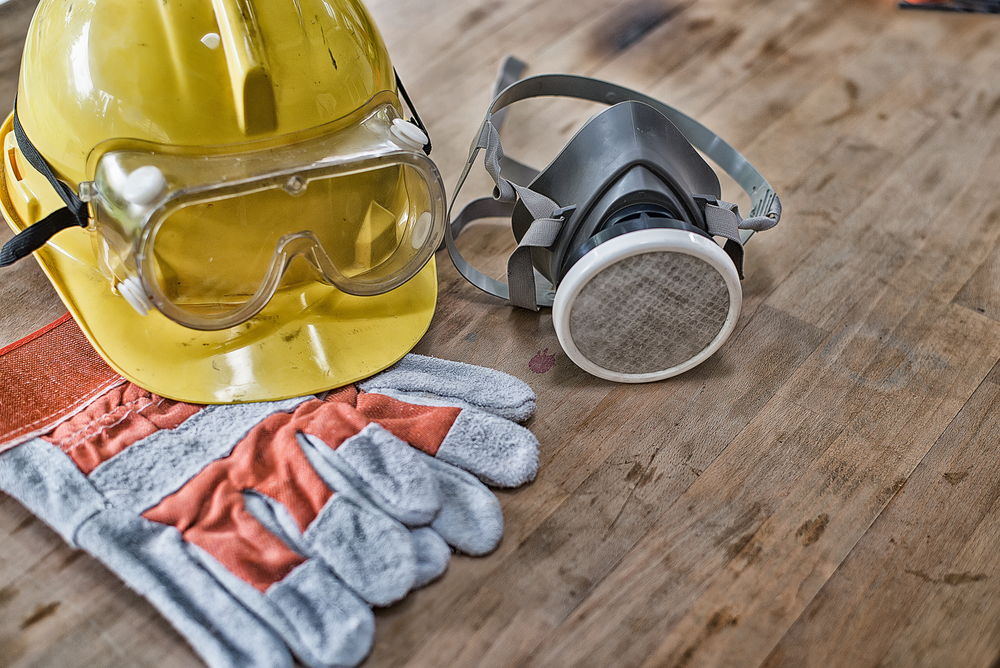
PPE (otherwise known as personal protective equipment) specifically includes clothing worn or equipment used by workers that protects them against hazards in the workplace. It can include things like:

  • Respiratory protective equipment (such as respirators or dust masks), which helps protect the respiratory system from harmful toxins and dust in the workshop
  • Hearing protection (such as earplugs or earmuffs) that will help to prevent hearing loss or impairment
  • Protective eyewear and headwear, including goggles, helmets and welding hoods
  • Harnesses (if working at heights)
  • Skin and hand protective equipment (including sunscreen, gloves and wristlets), which assists in preventing burns, cuts and electric shocks
  • General protective clothing, such as high-visibility vests, aprons, coveralls and well-fitting tops and pants
  • The right footwear (ideally non-slip, insulated with rubber and steel-capped to prevent damaging impact on toes).

To know what type of PPE you might require for your workshop, we recommend you take some time to review what you are currently using.

Risk management and PPE

So, where should PPE fit into your overall plan for risk management?

First, you need to consider your workplace health and safety (WHS) laws and regulations. Safe Work Australia is the national policy body responsible for the development of the model WHS laws, which include the model WHS Act, the model WHS Regulations and the model Codes of Practice. It’s easy to check which jurisdiction you fall under for your specific WHS regulations.

According to Safe Work Australia (with reference to the model WHS Regulations), PPE is actually one of the least effective risk management techniques. This is because PPE relies on human behaviour and supervision.

Therefore, PPE should be something you consider after you have formed a plan for risk management. It should act as a last resort, back-up or supplement to your overall plan – as opposed to being the main feature of your risk management strategy.

Business owner and manager responsibilities

A PCBU (person conducting a business or undertaking) is anyone who is in a partnership that involves conducting a business. This can include a company, a self-employed person, an unincorporated body or association, or a sole trader.

It is the responsibility of the PCBU to assess the safety conditions of a workplace and to implement the appropriate control measures to deal with risks that cannot be fully eliminated. One of these control measures may include PPE.

If PPE is not already being provided, it is the PCBU’s responsibility to do so for the workers. Apart from providing PPE, the PCBU must also:

  • Ensure adequate training and information has been provided on the use, storage and maintenance of the PPE
  • Ensure that workers are using their PPE
  • Consult with workers regarding size and fit when selecting PPE.

Worker responsibilities

Under regulation 46 of the model WHS Regulations, workers who are provided with PPE have the following responsibilities:

  • They must use and/or wear the PPE in accordance with the training, information and guidance provided by the PCBU
  • They must communicate with the business owner or manager if they notice the presence of any PPE defects, damage or contamination
  • They must not misuse or intentionally damage the PPE.

A business can take disciplinary or legal action against workers who refuse to wear (or intentionally destroy) their PPE. This is to protect their own safety, as well as the safety of others in the workshop.

Laser cutting machinery in Melbourne

At ACRA, we are dedicated to sourcing quality new and used metal machinery. Currently, we are proud to source our new laser cutters from Durmazlar, currently one of the largest and most renowned press brake manufacturers in the world.

In search of backup machinery or machinery at a better price? Our wide range of used machinery has something for every metal workshop. We ensure that all our used machinery is in reliable and safe working condition, compliant with your workshop’s safety guidelines.

The expert team at ACRA is committed to providing great service and high-quality machinery to our customers. If you want to find out more about our laser cutting machinery and more, we are more than happy to answer your questions and queries online or through our hotline, 03 9794 6675.

What Are The Different Types Of Welding Techniques?

A weld is a useful and practical machine tool that has been around for many decades in one form or another. In our last blog, we spoke about what welding is and some interesting facts about the art. Today, we’re going to have a look at some of the welding techniques that are used in the industry and what makes them so unique.

Metal inert gas welding (MIG) or gas metal arc welding (GMAW)

Considered one of the easier types and common introductory technique for beginners, metal inert gas welding (MIG) – also known as gas metal arc welding (GMAW) – is suited for welding stainless-steel, mild steel and aluminium.

The process is fairly simple – a wire that is being constantly charged by an electrode current is fed through your weld to the two pieces of metal you wish to fuse. A shielded gas then runs along the wire to heat up the two metals, fusing them into one.

Shielded metal arc welding (SMAW)

This technique is a very basic and common technique. Whilst it is still considered a little trickier than MIG welding, it is a much smaller welding machine and can be picked up for use in a home environment – provided the proper precautions and safety measures are taken.

SMAW is alternatively known as stick welding. The stick uses electric current to form an electric arc that joins the two pieces of metal together. This technique is great for welding iron and steel sheet metal together, as well as general repair, construction and manufacturing purposes.

Tungsten inert gas (TIG) or Gas tungsten arc welding (GTAW)

Sometimes referred to as micro or precision welding, tungsten inert gas (TIG) is the process of melting the base sheet metal using the welding machine, and then fusing it together with the second piece of metal. This is done by superheating a very precise area using a tungsten electrode.

Most common metals can be welded together using this technique, but it is worth noting that this is probably the most difficult and time-consuming technique. This is a fairly new technique and is used for small-scale tasks predominantly. One of the notable features of this technique is that because it is so precise it usually does not require any extra clean-up –such as sanding – because it is not meant to leave any mess or residue.

Plasma arc welding (PAW)

Just like TIG, Plasma arc welding utilises a tungsten electrode, which is held inside the nozzle and acts as a constrictor. Plasma gas is then ionised within the nozzle and – due to the constrictions from the electrode – exits the nozzle at high speeds. Plasma arc welding has a high heat input, meaning the affected weld zone is quite wide – which may be considered an advantage or disadvantage depending on what you’re going for.

Electron beam welding (EBW)

This technique is quite a bit different from the more traditional ones we’ve been looking at. A high-speed stream of highly focused electrons from the welding machine bombards the sheet metal and superheats it via kinetic energy, allowing you to fuse the two desired pieces together.

This ultra-high energy beam allows for both a widely affected area as well as a small one for great precision. A vacuum setup is required to remove any possible gas related contaminations as well as to control the diameter and flow of the electron beams accurately.

Laser beam welding (LBW)

LBW is a very fast technique where the base metal is continuously blasted by a focused beam of photons. Because the concentrated photon beam can bring the sheet metal to its liquid state rapidly, the beam itself does not need to be sustained for very long and also has a smaller affected zone.

There are a few different output methods that LBW uses such as continuous waves and pulsing waves. The continuous wave – as mentioned before – can heat sheet metal very quickly and therefore doesn’t need to be used for very long. The pulsing wave does take a little longer but allow the metal to cool in between pulses – which can be useful if you’re fusing together a heat-sensitive metal.

Looking for sheet metal machine welders?

ACRA machinery has a large range of new and used sheet metal machine products including used welders. We supply a range of services and high-quality sheet metal machine solutions for all your needs.

If you require any further assistance with sheet metal machine products or information on welding then please do not hesitate to call us on 03 9794 6675 or contact us through our website here.

6 Facts About Welding

Welding is a process that involves connecting two pieces of metal together. It uses extreme heat – and occasionally additionally metals or gases – to solder two separate pieces together to become one. There are multiple different welding methods such as spot welding, shielded metal arc welding and gas tungsten arc welding.

These are only a few popular types of welding techniques that are used today. Welding can be used in conjunction with sheet metal machinery to alter sheet metal into a desired shape or variation. Our sheet metal machinery experts have put together a list of facts about welding that you might not know.

1.    It’s a 4000-year-old process

Circular boxes have been discovered that date back to the bronze age – approximately 2000 BC – that were created by hammering two pieces of metal together to form the single component. An early incarnation of what we call welding today.

2.    Robots have a history of welding

In 1961, the Unimate was installed at a General Motors factory. The Unimate was the world’s first industrial robot and its job was spot welding on an assembly line. The robot itself was basically just a giant arm that weighed around two tonnes and followed commands that were stored on a large magnetic drum.

3.    Welding can be done underwater

Whilst this is considered to be a very dangerous occupation, welding can actually be done underwater. There are a couple of ways this can be done. In an ideal situation, a dry chamber is used – in which a temporary hyperbaric chamber is set up to prevent water from entering the workspace. Oxygen is constantly monitored and replaced by another crew to keep the working conditions safe and minimise the effects of the welder being affected by the pressure.

The other option is the more dangerous of the two and is known as wet welding. Wet welding uses an electric arc as its source of energy. A thick layer of bubbles is created whilst welding due to the flux on the outside of the rod evaporating. This shields the weld from oxidising compounds and the water.

This is considered to be a temporary or last resort technique as there is often very little visibility whilst performing wet welding. In addition to this, a hazard known as Delta P– otherwise known as differential pressure – can be a fatal hazard to wet welding divers. There is really no way of detecting Delta P’s until it is too late, making them all the more dangerous. When two bodies of water intersect – each of them holding a different level of pressure – it can potentially drown anyone who is caught in between.

4.    Metals in space automatically weld upon contact

Believe it or not, it’s true. It’s a process known as cold welding. Anytime two pieces of metal in space come into contact with each other, they instantly weld themselves together creating one piece. This will only apply to metals without any coating on them – so either bare or highly polished metals. This is a phenomenon that cannot happen on Earth however because our atmosphere creates a layer of oxidisation between two metals. It is this lack of oxidisation layer that causes cold welding to occur in space.

5.    Welding advanced during the second world war

Gas tungsten arc welding (GTAW) was an idea to weld in a non-oxidising gas atmosphere. It was patented in 1890 by C.L. Coffin. This concept was refined by H.M. Hobart and P.K. Devers in the 1920s who used helium and argon, respectively, for shielding. But it wasn’t until 1941 when it was patented by Meredith, that it was perfected. GTAW is now a popular – yet complex – welding technique that uses a tungsten electrode to produce the weld.

The SS Robert E Peary was a ship built in 1942 that only took 4 days, 15 hours and 27 minutes to complete. This was the record for the fastest built ship in the world, and the record still stands today. The ship operated in the Pacific and Atlantic oceans before it was scrapped in 1963.

6.    NASCAR cars need a lot of welding

If you added up all the time welding is used on a NASCAR car before it hits a track it would amount to over 950 hours. Every part of a NASCAR car from the suspension through to the drive train is welded together to meet the NASCAR standards required.

Need a welder?

Here at ACRA we supply all sorts of machine services as well as industrial equipment from used welders to sheet metal machinery. With experienced and passionate staff, we’re ready to help you with any welding or sheet metal machinery questions you may have.

If you have any further questions regarding our equipment or maintenance requirements, please do not hesitate to give us a call on 03 9794 6675 or send us a message here.