New Press Brake Technologies: Why They’re Worth the Investment

For most sheet metal manufacturers, investing in a new press brake is not usually at the top of their priorities list. For a long time, press brake technology has lagged behind other sheet metal machinery in terms of automation. As a result, most companies have a manually operated press brake that requires a substantial amount of programming on the floor and as a result, is unable to keep up with the other machines speed of production. However, over the past couple of years press brake technology has evolved substantially to the point where many functions are automated and modern machines have uptime comparable to other sheet metal technologies. This week, we look at exactly what those technological advances are and the impressive impact they can have on productivity.
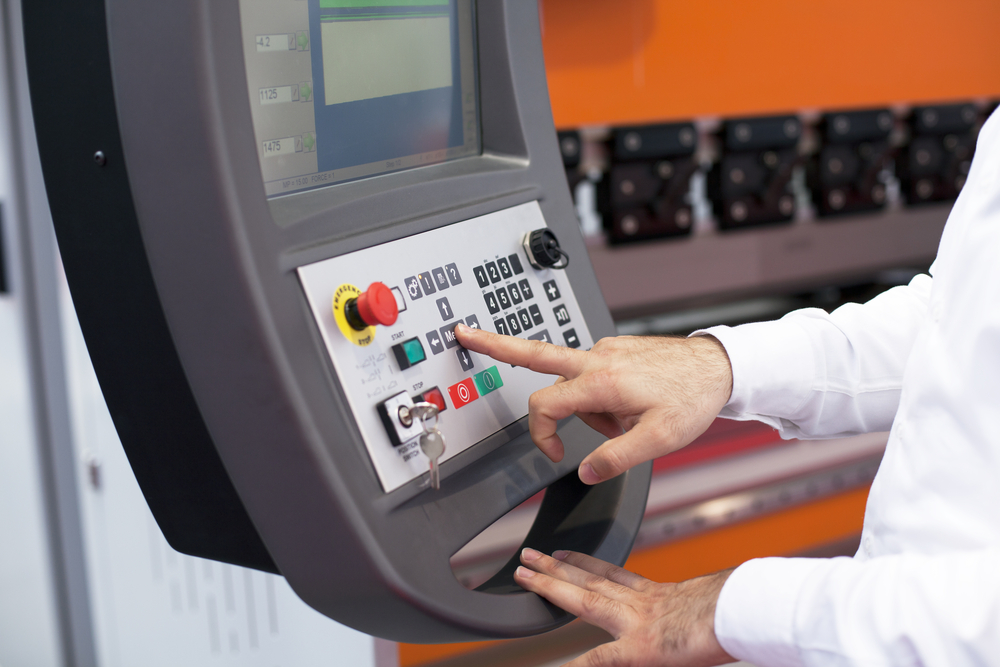
advanced press brake technology

Repeatable press brakes

The most common upgrade choice for businesses is the repeatable press brake which draws from material databanks to automate press brake moves and limit the amount of manual calculation required.


Software that adapts according to material behaviour

The software behind press brake technology has also become substantially more sophisticated. One exciting innovation is the software’s ability to adapt to material behaviour in real time. Using internal sensing and external laser sensing, this software can account for material variations including crowning and deflection.


Adaptive bending

Many new press brakes not only make it easy to calculate spring back and deflection before bending, but can also account for varying tensile strengths and adjust both deflection and calculation errors during the bend. This deflection adjustment is achieved through either mechanical or hydraulic means on the lower beam. Some systems also continuously monitor tonnage throughout the cycle and if an adjustment is required, the crowning cylinders are engaged whilst the cycle continues.


Offline programming

Offline programming eliminates manual programming on the factory floor and thus enables the press brake to remain in constant production. Whilst previous offline program technologies struggled to manage variables such as the bend radii of the available tooling, the newer breed of offline programming develops the press brake program directly from a 3D drawing, but before the blank size is determined. This way the properties of the press brake can be quickly programmed in by the operator to ensure accuracy.


ACRA are establishes suppliers of quality new and used sheet metal machinery including press brakes. To learn more about our range, please don’t hesitate to get in touch with us by calling 03 9794 6675.

Can lean manufacturing work in small run job shops?

Lean manufacturing has its origins in the Toyota Productions System (TPS) philosophy of the 1980s, in a low-mix, high-volume world. However, many small run job shops around the world are adapting the lean methodology to suit their high-mix, low-volume business. Today, we find out what lean manufacturing is and how this methodology can be used in a small run metal fabrication job shop. Continue reading

Working Safely with Sheet Metal Guillotines

Sheet metal guillotines are an important piece of equipment in sheet metal fabrication; they can be used to create clean, accurate cuts in sheet metal and are relatively easy to maintain. Unfortunately, they can also be dangerous machines if not used and treated correctly. Proper safety precautions must be adhered to when operating this piece of machinery otherwise severe physical harm can occur to the user and others around them. That’s why ACRA Machinery has decided to tackle the topic head on and give you a rundown of a sheet metal guillotines safety procedures and what you should and shouldn’t do.

guillotine

Common associated injuries

The most common injury associated with metal guillotinesis crushed or amputated fingers – believe it or not. It’s easy to assume that such injuries are usually caused by the blade of the guillotine, however, this is not the case. These accidents actually occur when fingers get caught between the clamps used to hold down the pieces of sheet metal or are accidentally jammed under the sheet metal workpiece. 

Other injuries such as strains can occur when handling large, awkward sheet metal workpieces. Of course, it is not unheard of for blade-related injuries to occur when using guillotines so always be sure to operate the machine with caution. Remember, these are blades that can cut through pieces of metal – so they can do some serious damage.

Safety procedures – machinery

Heavy sheet metal machinery such as metal guillotines must be set up and maintained according to strict safety standards. All sheet metal guillotines have guards in place to ensure that all openings are blocked. There are also guards around the blades and clamps to ensure no one can touch them. 

Routine safety checks should include ensuring all guards are strong, rigid and securely attached so that they can only be removed from the guillotine with specialist tools – as opposed to a regular person being able to remove them with their own strength alone. This gives the machine an extra layer of security.

The back of the guillotine should be guarded in order to prevent a worker from reaching the blade from the rear and all dangerous moving parts such as the flywheel, gears and/or shafts should also be properly guarded. The fabrication plant should be fitted with appropriate lighting – at least 400 lux – to avoid direct glare and reflections and emergency stop controls must always be within reach of machine operators.

In addition, the foot pedal is designed so that it is clearly visible and should be placed in an area where it cannot be accidently activated. Similarly, the power indicator clearly shows whether or not the machine is powered on or not. These features are often overlooked but are designed specifically to increase safety around the usage of the machine.

Safety procedures – workers

Sheet metal fabrication workers must be properly trained in safety procedures and regularly reviewed to ensure their skills and knowledge are up to date. It is considered unsafe for two workers to simultaneously operate a guillotine unless both operators are provided with interlocked actuating devices. Guards must only ever be adjusted by an authorised person and all workers must know the correct safety steps for stopping and starting the machine, especially in an emergency. 

All trainee guillotine operators must be closely supervised by an authorised person until their training is complete and all workers should be provided with proper safety equipment including gloves and protective clothing. Regular checks should be undertaken by trained supervisors for reasons such as maintenance and safety. 

After the end of each use, a supervisor must ensure that all the guards are adequately attached and firmly in place to avoid any unnecessary accidents from occurring. In addition, programs should be implemented to ensure that the inspection and maintenance of the machines are being recorded properly for future reference.

The maintenance itself should be carried out by a professional who has thoroughly studied the manual of the machine and carries the necessary qualifications to be able to carry out the maintenance. The maintenance will address old and worn out parts – replacing them if necessary – as well as ensuring all safety protocols are in place and are being adhered too correctly.

Are you in need of a sheet metal guillotine?

ACRA Machinery are supplier of sheet metal guillotine products – in addition to a variety of other sheet metal machinery – both new and used. Our highly knowledgeable staff will be able to help you pick the machine that’s right for your needs. Here at ACRA, we also specialise in sheet metal machinery maintenance and repair, so you can rest assured that we know our way around all metal fabrication machines.

If you’re interested in purchasing one of our products – or just need some advice on some machinery – then please get in contact with one of our friendly staff members by calling us on 03 9794 6675. Alternatively, you can also fill out the enquiry form on our website.

How to Successfully Relocate your Sheet Metal Manufacturing Plant

There are a few reasons why you may need to relocate your sheet metal fabrication plant: your business may have expanded, requiring more space, your location may no longer be convenient to access, or you lease may have finished. Any kind of factory or industrial relocation is a momentous task, with a lot of logistics and planning to be considered, so we’ve prepared a guide designed to make the process as smooth as possible.

sheet metal machinery

Draft a layout of the new location

You’ll need to draft a detailed layout/plan of your new facility in order to determine what will go where. Once you’ve drawn an accurate representation of the building’s existing floor layout, start adding in details like where your machinery will be housed, where you’ll need to add in features like shelving or other storage units, proposed break rooms, emergency exits, loading zones for stock distribution and more. By mapping out each section of your new sheet metal fabrication plant on paper, you’ll be able to gauge how appropriate your plans are, allowing you to effectively trouble-shoot before the big move.

Review your machinery and materials

The less you have to move to your new location, the better, so now is a great time to get rid of any old, faulty, or inefficient sheet metal machinery and equipment. Conduct a comprehensive audit of all your factory machinery, parts, and materials to determine which items should be relocated (this applies to machinery that needs to be refurbished), and which items need to be on-sold or scrapped. Getting rid of unnecessary machinery and materials, either through scrapping or liquidation, will not only lower your moving costs, it will also ensure your new facility is leaner and more efficient.

Develop a detailed schedule and pass this info on to contractors

Industrial relocations can take days, even weeks to be completed, so you’ll need to come up with a detailed schedule that staggers the move in the most efficient way possible, minimising downtime and disruption. This detailed schedule should not only outline which tasks are to be completed on each day, but also how each item is to be disassembled, packaged, loaded, and unloaded. If you’re working with contractors, be sure to communicate your plans and factory to them so that everyone is on the same page.

Create an inventory for the move

Before you begin packaging up your sheet metal machinery and other equipment, you should log each item to be transferred in the move. Create different stages for each item in the inventory e.g. disassembled, packed, loaded, unloaded, reassembled. This list will ensure you know the status and whereabouts of each item throughout the entire moving process.

If, after moving, you decide you need to replace or repair some of your sheet metal machinery, ACRA is here to help. We stock a huge range of new and used sheet metal machinery, including press brakes, punch and shears and laser cutters.

How to Boost Employee Morale in a Factory Setting

Maintaining employee morale is an important element of business management that is often overlooked. Poor employee morale can have a significant impact on the operations and bottom line of a business and is associated with poor cooperation, increased turnover and low productivity. In the metal fabrication industry, maintaining employee morale is just as important as in an office or shop so this week, we thought we’d look at a few simple and cost effective ways you can strengthen morale.

Learn to boost your emplyoee morale

Keep your employees focused on the bigger picture

Everyone wants to know that their work is contributing to progress or a greater good but it can be hard to keep a larger vision in mind on a day to day basis. As an employer, it’s your jobs to keep employees focused on the bigger picture. Some ways of doing this might be by sharing positive customer feedback, or sharing wins on a company level like good publicity or a spike in sales.


Find creative ways to celebrate accomplishments

Taking time out from the daily grind to acknowledge the hard work of employees lets them know they are valued and appreciated. It might be as simple as getting other employees to nominate their peers for good deeds or accomplishments during the week and then reading out the submissions on a Friday afternoon.


Let employees pursue their passions

Letting employees pursue a personal project can be a great way to re-energise employees and serve as a source of innovation.


Mix up the routine

Departing from the monotony of day to day workplace routines can be a great way to build morale. Although differing from procedure is not possible on the factory floor due to safety regulations, other elements like lunch breaks and meetings can be re-imagined as team events that gets your employees out of the office. Team building games, office lunches in the local park, or even a little friendly competition can go a long way to helping you employees see their workplace in a more positive light.


Train employees to think positively

Positive thinking is a skill that can be taught, so why not include it in your training procedure just like any other vital workplace skill.


Acra specialise in selling and servicing both new and used sheet metal machinery in Melbourne. To learn more about our capabilities, please don’t hesitate to get in touch with us by calling 03 9794 6675.

Laser cutting vs Plasma cutting – which metal cutting method is better?

At Acra, we often get asked by our customers “which type of cutting machine should I use to produce my parts – laser or plasma? The answer depends on the specific requirements of your metal cutting project or application. Let’s consider how laser cutting and plasma cutting work and the advantages and disadvantages of each metal fabrication process.

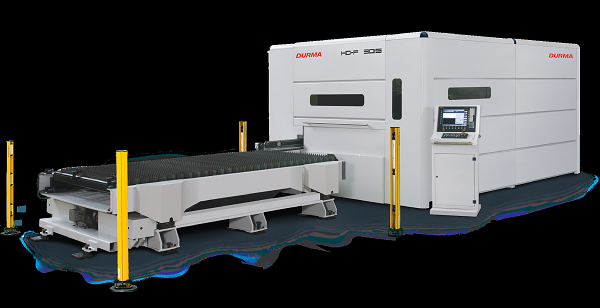
Durma Fibre laser cutter - fiber laser cutting

What is plasma cutting?

The oldest form of cutting, plasma cutting, dates back to the 1950s when it was developed as an alternative to flame cutting. Plasma cutting works by firing a superheated, electrically ionised gas i.e. plasma out of a nozzle at high speed towards the workpiece. An electrical arc is then formed within the gas. This electrical arc ionizes some of the gas, creating an electrically conductive channel of plasma in the process. As electricity from the cutter torch travels down this plasma, sufficient heat is generated to melt through the work piece. The plasma and compressed gas blow the hot molten metal away, resulting in separation of the work piece.

What is laser cutting?

Laser cutting is a technology that was developed in the 1960s as a way to cut holes in diamond dies. This thermal cutting process uses a computer-directed high-power laser along with oxygen, nitrogen, and compressed air, to burn, melt, vaporize, or blow away the material being cut. The laser beam is emitted from a tube and is reflected by several mirrors up into the laser head. There is a lens inside the head which focuses the beam onto the surface of your material for the cutting or engraving process. There are two types of lasers, CO2 and Fibre lasers.

Key Differences between laser cutting and plasma cutting

  • Plasma cutters use a mixture of gases with an electrical arc whereas laser cutters use a focused beam of light to carry out cutting process
  • There are some cutting jobs that high-definition plasma cutters can’t handle e.g. a plasma cutting a finely detailed saw blade (this kind of job requires a laser cutter).
  • Laser cutters offer a much higher level of precision compare to plasma cutters
  • The capital investment required for a laser cutter is considerably higher than for plasma cutting machinery
  • Fibre laser cutters are best for cutting a thin metal sheet, and they can cut all metal types. CO2 laser cutters cannot cut through copper, brass and aluminium as they do not work on reflective surfaces.
  • Plasma cutters are limited to cutting, however they can cut all types of metal; laser cutters can cut, engrave, and weld.
  • Laser cutters can generally cut metal quicker than plasma cutters and use less energy, making them a more eco-friendly metal cutting option.
  • Laser cutters generally cannot cut materials as thick as plasma cutters can, and usually can only efficiently cut materials that are up to 25mm in thickness. Plasma cutters can generally cut through any type of metal up to 80mm in thickness.

How do I decide which cutting machine is right for the job?

You need to consider what material you need to cut and the thickness of it. Laser cutters offer greater accuracy and consistency. Plasma cutters offer greater versatility and require a lower capital investment.

Laser cutters are generally suitable for: parts with tight tolerance specification, which require highly precise cuts, or are thin to medium thickness.

Plasma cutters are generally suitable for: parts with highly reflective metals, thicker materials, or which require simple shapes.

At Acra, we evaluate your cutting requirements on a case-by-case basis and can advise you on the best cutting machine for your project. We stock a range of fibre laser cutters which are sourced from our long time manufacturing partner Durmazlar, currently the second largest press brake manufacturer in the world. Meanwhile, our Durma plasma cutters (also sourced from Durmazlar) are characterised by superior performance, efficiency, and an intuitive operating system. Speak to one of our metal cutting experts today on (03) 9794 6675 to ascertain whether a laser cutter or plasma cutter is the right machine for you.

View our product range:

Laser Cutters

Plasma Cutters

4 Sheet Metal Fabrication Safety Tips

When working in the sheet metal fabrication industry, exhaustive safety precautions must be taken to prevent against accidents, injuries and even fatalities. Sheet metal fabrication involves a lot of heavy machinery, as well as heavy lifting, so employees must be well-briefed on safety procedures and provided with the appropriate safety equipment. If you’re in the sheet metal industry, here are some important safety tips to consider.

sheet metal machinery

Stay alert

Because the sheet metal fabrication industry involves working with large, heavy machinery, it is imperative that sheet metal workers are alert, cautious of safety hazards, and concentrated on the job at hand. Anything that could accidentally get caught in the sheet metal machinery, for example jewellery or long, loose hair, should not be warn, and workers should be mindful of the changing properties of the workpiece (i.e. sheet metal can become extremely hot and sharp during the manufacturing process).

Protective clothing is a must

All sheet metal workers should be equipped with the appropriate protective gear, including gloves, goggles, hard hats, clothing that covers the arms and legs, and non-slip safety shoes. Protective clothing is extremely important, as debris and small shards of metal can enter the air during sheet metal fabrication with the potential to cause blindness. Metal machinery and metal workpieces heat up a lot during metal fabrication and bare skin should be protected at all times.

Safe lifting

Two of the most common injuries experienced by sheet metal workers are neck and back injuries, which usually occur as a result of improper lifting. Sheet metal workers should be trained in safe lifting techniques, learning to lift using the leg muscles, rather than the back, neck and arms. There are usually mechanical lifting machines in sheet metal fabrication factories, and these should be used wherever possible in place of manual lifting.

Regular inspections

Regular inspections of all sheet metal machinery (including grinders, punch and shears, press brakes etc.) should be undertaken to ensure the machinery is in good working order and meets safety requirements. Machinery and tools should also be regularly services to keep them in optimal condition. The entire factory should be subject to routine safety inspections, with continual training updates for all staff.

By taking these safety precautions, you can minimise the risk of accident and injury in your sheet metal fabrication plant, resulting in a more efficient work environment. ACRA sell a huge range of sheet metal machinery, all of which meets stringent safety standards. To find the right machinery for your needs, call us today on 03 9794 6675.

How To Choose The Right Press Brake

When deciding which Press Brake will meet your metal bending needs, there are a range of different factors to consider due to the great variety of sheet metal characteristics and options available. Let’s take a look at 5 of the critical questions you should ask yourself before investing in a new Press Brake for your fabrication shop.

1. What type of material do you need to bend?

Start by thinking about the metal bending projects you will be taking on and which type of metal will be used. You need to consider all the specifications of your metal and finished parts in order to choose the right press brake for the job including:

  • the maximum thickness and length of the metal you’ll be working with
  • the flange lengths required
  • any particular characteristics which need to be taken into account when calculating a bend

The aim of the game is to invest in the machine with the shortest worktable and lowest tonnage while ensuring it will be able to accomplish the processing task at hand. If you choose the wrong machine you will responsible for higher manufacturing costs so it is critical that you evaluate your production needs carefully.

Acra Press Brake.docx

Durma AD-S Series CNC Synchro Press Brake

2. Which is the best machine to handle your tonnage?

One of the most important factors to consider when purchasing a new brake is the tonnage, that is the bending force or capacity of the press brake. In general, the thicker the material the more tonnage required to bend it. Softer metals such as aluminium require less tonnage compared to materials like high-strength steel. To calculate tonnage you also need to factor in length, the width of the die opening (smaller Vees mean higher tonnages) and the process (air bending requires less force than bottom bending and coining).

To work out the tonnage required by your job you can consult a press brake air-bending tonnage chart like the one supplied in Durma’s Press Brakes product specifications pdf (refer to page 7).

Please note: you should always oversize the press brake capacity by around 20 – 30% with respect to your data in order to allow for the variability in the characteristics of the metal and so that you are not in danger of working to the limits of the machine’s capacity.

3. How much deflection is likely to occur?

You also should consider the amount of deflection likely to occur in a particular machine.

Normal deflection is the amount of deformation of the press brake ram and bed that occurs naturally under a load. Under the same load, a longer machine will have greater deflection in the bed and ram than a shorter machine. For the shorter machine, that means less shimming is required to get decent parts.

Acceptable industry stress standards for materials is 8.5 kg/mm2 stress. All Durma machines are required to meet a value of 5-6 kg/mm2 . These stringent standards reduce deflection and improve frame durability and the capacity to hold tolerances over long periods of heavy use. All incoming plates must meet Durma’s strict standards and requirements. Durma’s high frame rigidity and robustness ensure long-term accurate bending.

4. What is the inside bend radius of your parts?

If you can calculate bend allowances, outside setbacks and bend deductions accurately you are much more likely to being a good part the first time around. However, in order to achieve this you need to consider every factor in the equation including the inside bend radius. The smaller the inside bend radius, the greater the flexibility of the material.

The inside bend radius differs according to the method of bending on a press brake. If you can determine the precise bend deduction required for a particular radius, you can facilitate manufacturing and reduce the number of inherent mistakes.

In you are bottom bending or coining, use the punch nose radius as the inside bend radius in your bend deduction calculations. But if you are air bending, the inside bend radius is calculated as a percentage of the die opening.

For the lowest required tonnage, you should aim for an inside radius greater than metal thickness and air bend where possible.

5. Do you have the right tooling?

They type of tooling you’ll require will depend on the materials you will be bending. It’s important to select the tooling which will achieve the strongest tooling profile that is most suited for your metal fabrication project. Having said that, you must take care not to exceed the tooling or press brake load limits.

If you intend to use your current tooling with your new press brake, you should check that your tool is compatible and in good condition. When inspecting for wear you must measure from nose to shoulder on the punches and from shoulder to shoulder on the dies.

For assistance with choosing the right press brake for your metal fabrication needs, contact our friendly team today on 03 9794 6675.

Click here to view our range of press brakes

Your Guide to Plasma Cutters

Plasma cutters are an incredibly useful and versatile piece of sheet metal machinery; it is able to pass through sheet metal with very little resistance and extreme precision, producing clean cuts of sheet metal that go on to be used in construction, transport and more. In this blog, we give you the basics on how plasma cutters work, as well as how to use them in order to achieve different sheet metal cuts.

plasma cutters

What is Plasma?

Plasma is one of the four states of matter (the others being solid, liquid, and gas) and can be achieved by heating gas to extremely high temperatures. Plasma differs to gas in that its electrons are negatively charged and are not bound to the nucleus (which is positively charged). Instead, plasma electrons are able to move freely around the atom. Because plasma is ionised (made of charged particles), it is strongly influenced by magnetic and electrical fields, and is able to carry an electric current. This ability is what makes it so useful in sheet metal fabrication.

When was the first plasma cutter invented?

Plasma arc technology was first harnessed in the 1940s during World War II as a means to aid the production of aircraft for the U.S. military. Traditional forms of welding were not fast or accurate enough, so the concept of using an inert gas fed through an electric arc in order to form sturdier, more precise joints was born. This technology was further developed and soon it was discovered that by restricting the opening of the inert gas flow to the nozzle, the particles of the electric gas arc could be altered to be much hotter and faster, allowing the electric gas arc to not only weld metal, but cut through it with extreme precision. Different gases were experimented with, along with voltage, nozzle size and flow rate, allowing plasma cutters to cut through many different grades of sheet metal.

How do plasma cutters work?

Today, there are many varieties of plasma cutter, from industrial sized plasma cutters with robotic arms, to compact handheld plasma cutters. Despite the many types of and uses for plasma cutters, they all work using the same principle. First, pressurised gas (such as nitrogen, argon, oxygen etc.) is sent down a small channel, the centre of which holds a negatively charged electrode. When power is applied to this electrode and the tip of the nozzle is applied to the metal workpiece, an electrical circuit is created, resulting in a powerful spark between the electrode and the metal. This spark heats the inert gas as it passes through the channel, turning it into a stream of extremely hot (around 16,649 C), incredibly fast (6,096 m/sec) stream of plasma. When this plasma comes into contact with the metal it reduces the metal into molten slag, cutting it away from the rest of the workpiece. The plasma itself conducts an electrical current, allowing a continuous arc as long as power is supplied to the electrode and the plasma is in contact with the metal. The cutter nozzle has a second set of channels that release a constant flow of shielding gas, which control the radius (and in turn, thickness of cut) of the plasma beam, and protect the cut against oxidisation.

Plasma cutters in industry

Plasma cutters are used in many industries, from industrial scale construction and transport fabrication (automobiles, ships and planes), right down to small business (for example, locksmiths) and the arts. Although plasma cutters face competition from the newer technology of laser cutting, they are generally more affordable and are still an evolving technology with the introduction of modifications like CNC (Computer Numerical Controls).

If your business requires a plasma cutter for sheet metal fabrication, ACRA is able to help. We stock a range of new plasma cutters and can advise you on the best machine for your needs.