How to Safely Use a Plasma Cutter

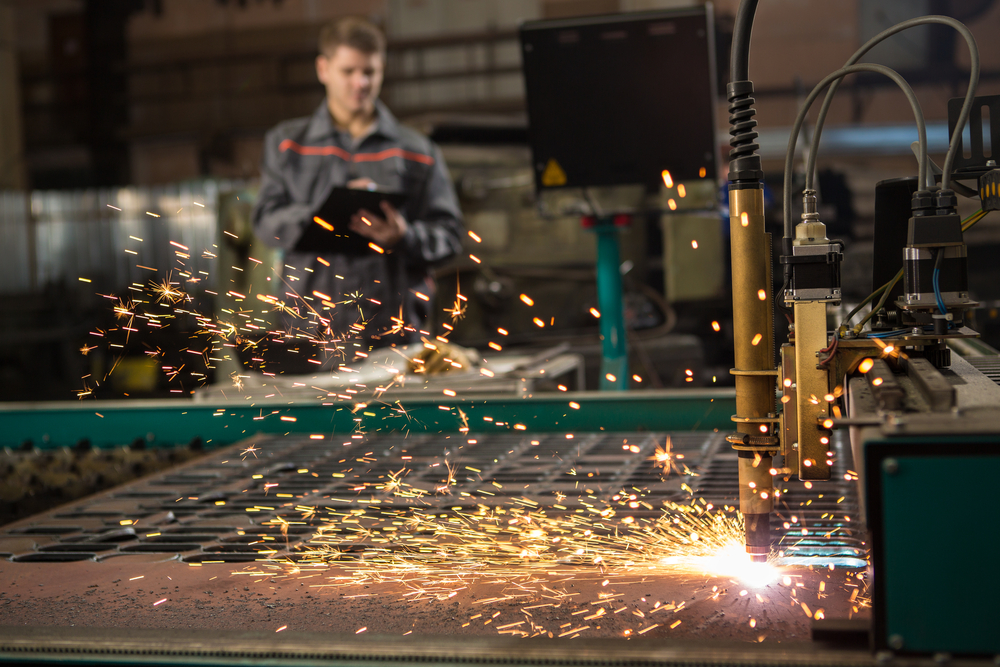
Plasma cutting is a simple and efficient way to cut metal. Due to the technology becoming increasingly convenient and user-friendly, plasma cutter use has grown exponentially. From artists and sign makers to farmers and metal fabricators, plasma cutters are now used by many. Yet there are still important safety procedures that must be adhered to when engaging with this technology. In this blog, we break down how to safely use a plasma cutter.

Plasma cutter

General Safety Information

Firstly, ensure that an authorised personnel with supervision or permission is using the plasma cutting equipment. Before you even begin, warn others around you that you’re about to start operating with a plasma cutter. Also make sure those around you are wearing protective gear, such as goggles and heat resistant clothing.

Wear Protective Gear

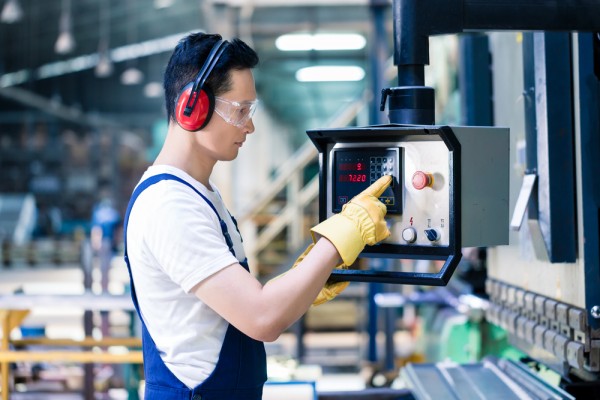
Exposure to high molten metal, fumes and other potentially harmful substances can be dangerous. Protect yourself and others by wearing protective plasma cutting gear. This includes: appropriate eyewear, such as a plasma cutting helmet, non-flammable welding aprons and clothing, buttoned up clothing, welding gloves and appropriate footwear, such as leather top steel toe shoes or boots.

Dim Lights

The plasma cutter arc can generate intense light rays which can burn your eyes and skin. To protect your skin, it’s imperative that you wear proper clothing as mentioned above. However, eyes need extra protection. This should be in the form of a face shield or safety glasses fitted with an accurate lens shade.

Protect Yourself from Potential Fire Hazards

To protect yourself from potential fire hazards, keep a lengthy distance between your cutting area and any flammable materials, such as fuel, wood and paper. The appropriate distance between your cutting materials and surroundings should be at least 8 metres. Remember to always have a fire extinguisher around in the case of an emergency.

Be Well Grounded and Avoid Electrocution

Plasma cutters have the potential to cause fatal shocks. To avoid this, always wear rubber gloves while cutting in addition to welding gloves. Also be sure to not work in a wet environment. Your plasma cutter should also be correctly grounded and wired by an electrician.

At ACRA Machinery, we have a range of advanced plasma cutter systems. With a combined experience of more than 150 years in the sheet metal manufacturing industry, our team are experts in providing you the right machine for your needs. Call one of our friendly staff members at 03 9794 6675 to get started today.
Assessing Tonnage: Press Brake Tooling

One of the most important parts of the press brake process is choosing the right tools. But what are the best tools for the job? And how do you best assess tool capability, such as the kind of loads they can withstand? With the following advice, we’ll go over how to make sure the tools of your choice can manage the tonnage required.

press tool

Straight Punch Tonnage


Estimating the maximum allowable tonnage for a given tool depends on material type, tool hardness and tool geometry. A standard straight press brake punch will endure far more tonnage for every meter than what the press brake itself can withstand. As a rule of thumb regarding how much a press brake tool can withstand, never apply full machine tonnage over a length less than 60 percent of the distance between side frames.


Gooseneck Punch and V-die Tonnage


There are variations when it comes to gooseneck punch tools, but standard throat depths begin at about 20 percent of total tool width past the centre, leaving about 30 percent of the tool to take the tonnage at the bend. With any increase in throat depth, there is decreased tool capacity for tonnage. As for V-die tools, the maximum tonnage is 30 tons per foot, with consideration to the maximum load.


When in doubt, make sure to use the above advice as a guideline for the estimating the tonnage capabilities of press brake tooling equipment. For personal safety, and to ensure longevity of the tool, ask the manufacturer to explain the deflection factor for the tooling length and tonnage application of the particular equipment, and substitute the specified values in the formula.


ACRA Machinery have a full team on site, offering services for maintenance, machinery repair and servicing requirements. ACRA’s press brake tooling is built upon the values of precision and efficiency, and they’re sure to offer you the best tools for what you need. Get in touch today by calling 03 9794 6675.


The Benefits Of Anti-Fatigue Mats

Anti-fatigue mats are an important feature in factory settings with heavy machinery, as they provide a safer, more comfortable environment for employees, which in turn can boost productivity. In this week’s blog we look at how anti-fatigue mats work and how they can benefit your workplace.

anti-fatigue mats

How Do Anti-Fatigue Mats Work?

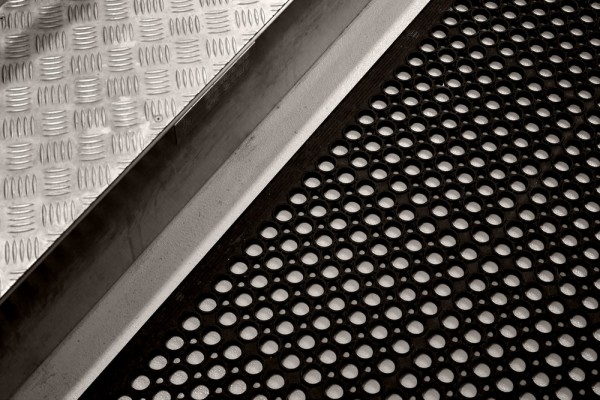
Anti-fatigue mats look like regular mats, however they are much more beneficial. Anti-fatigue mats are designed to be stood on for multiple hours at a time, as they encourage movement which is essential for improving circulation, maintaining good joint health and reducing fatigue and muscle pain. Standing still in one spot for an extended period of time (either on a regular floor mat or another surface) takes a toll on the body and can lead to circulation problems and back pain and foot problems, which may develop into long term musculoskeletal disorders. Anti-fatigue mats work to combat these issues as their design encourages micro-movements and improves circulation through extra padding. An anti-fatigue mat also doubles as a regular floor mat, preventing slips and falls through providing traction – which is extremely important considering a high percentage of accidental workplace deaths are caused by slip and fall accidents. Anti-fatigue mats can be made using a variety of materials including vinyl, rubber and foam, all of which are suited to different locations and purposes.

Specific Benefits of Anti-Fatigue Mats

Reduce Accidents

Anti-fatigue mats work to reduce slip and fall accidents by providing a non-slip surface that workers can comfortably stand on for hours at a time. Anti-fatigue mats are particularly useful during spills as they work to make the surface of the factory floor less slippery and can even be linked together to create a path that lets employees avoid the affected area.

Prevent Fatigue

As you would guess by their name, the main purpose of anti-fatigue mats is to prevent worker fatigue. Anti-fatigue mats reduce pressure on joints and muscles, making it easier for employees to stand in one place for longer periods of time, which boosts productivity.

Reduce Damage of Materials

Floor mats can reduce the damage of materials, products and machinery, as they act as shock absorbers and lessen the impact in the event of something falling to the floor. If something does break upon impact, however, the anti-fatigue mat makes the clean up easier.

Increase Productivity

Because these mats prevent fatigue and discomfort, they make your workers much more productive. Instead of taking breaks to ease their aches and pains, they can work through a shift, which will increase your output.

There is another reason productivity is affected. By limiting back pain, anti-fatigue mats keep employees healthy. This keeps them working and limits the amount of sick days they need to take.

Absorb Sound or Vibrations

If you’re looking to muffle noise or limit vibrations, anti-fatigue mats can get the job done. They can be very effective when placed under heavy-duty equipment. Instead of sound or vibrations transferring throughout a building, they are absorbed by the mats and don’t travel as far. The mat’s ability to do this depends on the type of mat you choose; not all anti-fatigue mats are equipped to muffle sound or vibrations.

Anti-fatigue mats keep your employees comfortable, productive, and healthy, which benefits all levels of your business. ACRA highly recommend the use of anti-fatigue mats to everyone in the sheet metal fabrication industry. We sell and service a huge range of sheet metal machinery and can work with you to make your factory as safe and productive as possible.

How to Cultivate a Safe Factory Environment

Factory based businesses must ensure a safe working environment for their staff, adhering to strict guidelines and implementing rigorous training programs in order to minimise the risk of accidents and worker injuries. To improve the safety standards of your industrial factory, be sure to follow these four tips.

safety

Equipment and safety gear

If your workers need to be able to access certain pieces of equipment to fulfill their daily tasks, they must be supplied with appropriate safety gear. Ensure all workers are supplied with hard hats, gloves, full length clothing, safety footwear and goggles and enforce the wearing these items when machinery is in use.

Training

Training is an essential part of ensuring the safety of your staff, especially when it comes to operating heavy machinery. New employees should be subjected to rigorous training programs detailing equipment, manual handling, fire and emergency training and general protocols before commencing work and all staff should undertake refresher courses every few months. All accidents and/or injuries should be recorded in a logbook so that further accidents can be prevented in the future.

Clear signage

No matter which industry you’re in, your factory will need to be fitted with clear signage covering safety warnings and reminders as well as general guidelines and factory protocols. Signs must also be set up in the event of spills or routine cleaning so that staff are notified of possible safety risks.

Waste disposal

Proper waste disposal is extremely important in an industrial setting as improper procedures pose a health risk. Even in an industry like sheet metal manufacturing, it is vital that your employees know how to dispose of waste in a manner that prioritises their own safety, the safety of others and the environment. In some cases, outsourcing your waste disposal is the safest option.

Machinery maintenance

All factory machinery must be properly maintained to ensure it is always in top condition and isn’t a risk to your workers. Safety checks on all machinery and equipment should be conducted routinely and records should be kept to show when these checks were carried out and by whom. By having your machinery regularly maintained and serviced you will be able to pick up on any problems before they escalate.

If you run a sheet metal fabrication factory, ACRA is your first point of call for all sheet metal machinery repair, maintenance and servicing. We pride ourselves on our professional service and will ensure your machinery is in top condition for reliable, safe performance.

The Latest Innovations in Turret Punch Technology

This week, we look at some of the latest innovations in turret punch technology that is enabling sheet metal manufacturing fabricators to provide better delivery and higher quality.

turret punch

Combination tools

A revelation in terms of turret punch productivity, suppliers are beginning to combine different tools in a single machine. Not only is this more cost effective and takes up less space, it also means there is no need to individually index the turret for each tool.


Self-stripping

Traditionally a ram was used to both actuate the punch press and pull it away from the metal. Although this was fine from a quality perspective, it increased production time as well as wear on the ram. The introduction of self-stripping punch tools means that the ram only needs to move in one direction (when actuating the punch) as an internal spring is used to retract the punch automatically.


CNC punching technology

CNC punching technology has made an enormous difference in terms of turret punch productivity. The latest CNC innovations have been focused on reducing cycle time and speeding up the machinery but the technology has also been used to simplify sheet metal manufacturing through user friendly programming systems which reduce the demand for skilled workers and reduce the number of steps in the operation process.

Stroke setting

New tool designs make compensating a punch after it has been re-sharpened a much less time consuming job. Instead of using shims in the punch guide assembly to set the optimum length, the new push button adjusting system eliminates the need for shims and instead guides tool assembly in increments of 0.0001 inch. The push button setup speeds up the process substantially and also ensures consistency.


Stripper plate setting

The push button system has also used to hold the stripper plate in the guide. Instead of using screws to fasten it in place, a push button locking system is used to keep it secure. This eliminated the need for installation tools and can reduce setup times by as much as 15 minutes per tool.


Acra stocks a quality range of new and used turret punch machinery. To learn more about our product range of the additional maintenance services we can provide to Melbourne sheet metal manufacturers, please don’t hesitate to get in touch with us by calling 03 9794 6675.


How to Properly Maintain your Bandsaw Blades

In the sheet metal fabrication industry, bandsaw blades are one of the most widely used tools, but their maintenance needs are often overlooked as unlike more complex technologies, they tend to remain relatively functional until the point of breakdown. Establishing a proper maintenance schedule for your bandsaw blade not only results in increased uptime (and therefore productivity), it can also reduce overall maintenance costs in the long run. This week, we examine the key steps involved in proper bandsaw blade maintenance.

bandsaw blade

Understand how your bandsaw works

Different bandsaws are designed to cut different thicknesses and widths of metal, so it’s important to understand what the machine you have is good at and what it’s limits are before you begin working with it. Whilst this advice might sound obvious, the most common reasons bandsaws fail is because they are overloaded beyond their parameters.

Follow the instructions

Make sure you perform the standard maintenance and adjustments every day in accordance with the manufacturer’s guidelines. Regular lubrication and fluids are also important to use to avoid damage.

Inspect and document

Although it might seem like unnecessary downtime if your machine is performing well, scheduled maintenance should be prioritised. All functions of the bandsaw should be tested, bearings checked for wear, and safety functions examined. The outcome of these inspections should then be documented. Documentation allows you to analyse the reports to identify patterns and emerging problems, so you can get them fixed before they cause downtime.

Make sure the blade clearance is properly set

Setting the proper clearance not only ensures a high cut quality, it also helps to protect the blade from damage and extend the life of the bandsaw. If the clearance is too low, the blade will break, if it is too loose, it will cause more wear and tear than is necessary and if it is set too high, the cut will be compromised.

If your bandsaw needs repairing, don’t wait

If you notice unusual wear or your bandsaw blade needs adjusting, call in an expert to fix it as soon as possible. Minor problems can quickly become expensive disasters if ignored.


ACRA stock a range of quality new and used bandsaws in Melbourne. To learn more about our range and the additional maintenance services we offer, please don’t hesitate to get in touch with us by calling 03 9794 6675.


10 Things you Didn’t Know About Hydraulic Technology

Hydraulics are one of the most commonly utilised technologies in sheet metal machinery. This week, we thought we’d take a look at this simple, yet highly effective technology through ten interesting facts.

hydraulic guillotine

  1. Hydraulic systems don’t actually create energy, they simply convert existing energy into another form.
  2. There are three types of hydraulic energy. These are kinetic energy (produced by the moving liquid), the heat energy (produced through flow resistance), and there is also the pressure energy.
  3. Hydraulic systems don’t ‘pull’ the liquid, it is pushed through by air pressure.
  4. Liquid flow must be unrestricted for a hydraulic system to work. If the flow is blocked or has an alternate route, the pressure in the hydraulics will drop and it is this pressure that produces the energy.
  5. Energy used by the hydraulic system is converted not just in the operation of the system but also lost as heat produced by flow resistance.
  6. There are two different types of hydraulic systems: open centre systems which have varied pressure and a constant flow, and closed centre systems which have a varied flow and constant pressure.
  7. In the sheet metal manufacturing industry, hydrostatics is what is used to produce power. This involves using fluids at low speeds but high pressure. The other type of hydraulics is hydrodynamics which uses fluids at high speeds but lower pressure. A propeller is an example of a system which uses hydrodynamics.
  8. Incredibly powerful hydraulics are what is used to power NASA’s space shuttles. The pumps NASA uses have an RPM of 3600, each potentially holding 3050 PSI.
  9. The term hydraulics is derived from the Greek work for water which is hydros
  10. The principles of hydraulics where established as far back as the 17th The first hydraulic presses were commonly used to pump beer up from the cellars up to the bar tap in pubs.


Acra stock an extensive range of new and used sheet metal machinery including guillotines. To learn more about our product range and capabilities, please don’t hesitate to get in touch with us by calling 03 9794 6675.

Plasma Cutter Fact File

This week we give you a run down on one of the most popular types of cutting technologies used in the sheet metal manufacturing industry – the humble plasma cutter.

plasma cutter

What is it?

Plasma technology uses pressurised gas (usually nitrogen, argon or oxygen) which is sent down a small nozzle containing a negatively charged electrode. An electrical circuit is created when the tip of the nozzle comes into contact with a metal workpiece, creating a spark which heats the gas to the point that it becomes a stream of plasma.

How does it work?

When the super-heated plasma comes into contact with metal, it reduces the metal to molten slag which then falls away, creating a cut. The plasma stream is controlled by shielding gas, released by other channels in the nozzle. These can be altered to vary the thickness of the cut as well as protect against oxidisation.

Which industries are plasma cutters best suited to?

Plasma cutting technology has a wide range applications from industrial scale construction such as transport fabrication (vehicles, ships and planes etc.)  to small business (i.e. locksmiths).

What are the advantages?

Perhaps the biggest advantages of plasma cutting technology is its affordability when compared with more advanced cutting technologies. As it has been used in the sheet metal manufacturing industry since the 1980s, plasma technology is much more affordable when compared to newer innovations such as laser cutting but is able to remain competitive from an operational standpoint as it has been integrated with modern technologies such as CNC. Other advantages of plasma technology include it’s fast production speed, adaptability, versatility, low cost operation and good automation.

What are the disadvantages?

There are only two key disadvantages of plasma cutting technology. The first is a much wider kerf than laser and water jet technologies. The second is restrictions on dry cutting of up to 160 mm for dry cutting and 120 mm for cutting under water.


Acra sell high quality plasma cutter machinery in both new and used condition. To learn more about our range, or to chat with one of our knowledgeable consultants about the best technology for your needs, please don’t hesitate to get in touch with us by calling 03 9794 6675.


How to Run a Successful Manufacturing Business

The level of manufacturing across Australian industries has rapidly declined in recent years, with many manufacturing plants closing down and outsourcing their requirements to overseas factories. In order to maintain a successful manufacturing business in Australia, business owners and managers should focus on a few key factors, including innovation, productivity, investment, and funding, designed to keep them competitive in a gloabalised market.

manufacturing

Innovation

In order for local manufacturing businesses to remain viable, they need to put a strong focus on innovation. Innovation is often applied to issues like development and new technologies, however it also comes in handy for problem solving and business transformation. Examples of innovation specific to the manufacturing industry include refining supply and distribution channels, or exploring more efficient and cost effective ones­, improving processes, working to provide a better customer experience, finding ways to incorporate more environmentally friendly practices and technology, and establishing exciting new business offerings and connections.

Productivity

Boosting productivity in the manufacturing industry isn’t just about cost cutting – it’s also about increasing revenue. The best way to boost productivity is to develop a deep understanding of your industry and your customer base, and to discover ways to expand your services to meet market expectations. Making your internal processes more efficient and embracing new production technologies is a great way to further boost productivity.

Strategic investment

All successful businesses require investment in order to grow and survive industry pressures. One of the best investments a manufacturing business can make is in the workforce, hiring people with the skills and knowledge needed to stay ahead of worldwide trends. In manufacturing, your workforce is your biggest asset, so it pays to keep them happy and work to improve and expand their skills.

Funding

Of course, even when following all of the above, it’s unrealistic to expect manufacturing businesses to continuously turn over huge profits, so backup funding is needed to support the business when short-term dips in cash flow occur.

Focusing on these key areas will help your manufacturing business not only survive, but thrive in a globalised market, where quality at skill is more valuable than ever before. If you run a sheet metal fabrication business, look no further than ACRA for the highest quality sheet metal machinery.